Dear Colleagues; I wanted to share with you this formula published by the American Pharmacists Association, which provides pain relief in anal fissure conditions and leads to healing within 2 to 8 weeks.
As you may remember, in my article dated 04.08.2013, I wrote about the formula prescribed in Germany under the name HYDROPHİLE GLYCEROLTRİNİTRAT-REKTALCREME 0,2 % (NRF 5.10.) . This time, we will examine together how the same formula is prescribed in the United States.
0.2% Nitroglycerin Ointment
Rp
Nitroglycerin 2% ointment …………10.0 g
Anhydrous Lanolin ………………13.5 g
White Petrolatum ……………………76.5 g
Preparation: Each ingredient is accurately weighed. Anhydrous (water-free) lanolin is added to the petrolatum and mixed thoroughly. Nitroglycerin 2% ointment is added to the petrolatum-anhydrous lanolin mixture and mixed thoroughly. Packaged and labeled.
Indications: Used in the treatment of Anal Fissure.
Packaging: Must be packaged in tightly closed containers. Recommended containers for these products include tubes, but jars can also be used. The headspace of the ointment jars to be used in the formula should be minimized. Therefore, small ointment jars should be used. This is important for nitroglycerin volatility (to prevent loss and evaporation).
Labeling: Store at controlled room temperature. Protect from light. Use as directed.
Stability: Can be used for 6 months
Discussion
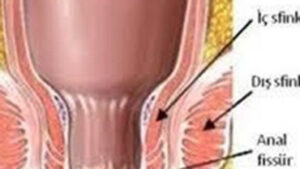
Anal fissure is commonly located as a linear tear in the distal anal canal. Considering the typical size of an anal fissure lesion, it generally produces disproportionately severe pain. Additionally, pain during defecation, spasm, and bleeding in the internal anal sphincter are defined as chronic anal fissure.
Chronic anal fissure can become ischemic due to poor blood supply and spasm in the internal anal sphincter. Patients have high maximum anal resting pressure.
One of the treatment methods for chronic anal fissure is surgical internal anal sphincterotomy.
In up to 30% of patients, incontinence disorders may occur as a complication. As is well known, the internal anal sphincter appears to relax in the presence of nitric oxide, an inhibitory neurotransmitter. Consequently, it is possible to provide a source of nitric oxide to the area through reversible chemical sphincterotomy. Nitric oxide is released following the application and absorption of glyceryl trinitrate around the anal sphincter, which results in pain relief and the healing of anal fissures. In various studies, an efficacy rate of 65–70% has been reported for ointments containing glyceryl trinitrate in the concentration range of 0.2%–0.5%. Pain is relieved almost immediately following application, and healing of the fissures typically takes about 2–3 weeks. The ointment is generally applied to the anal canal 2 to 6 times daily. Pain relief has been reported to last 2–6 hours; therefore, the frequency of application varies. The amount applied also varies. The ointment should be applied in an adequate but not excessive amount, generally in the range of 0.5–1 g, covering the affected area.
In some clinical studies, dietary fiber supplements, especially psyllium husk, are recommended. By using a 10–12 hour drug-free interval between doses, the incidence of developing nitroglycerin tolerance can be minimized.
Nitroglycerin (glyceryl trinitrate, trinitroglycerol, 1,2,3-propanetriol trinitrate) is a pale yellow, odorless, oily liquid with a sweet, burning taste. It is commercially available as a lactose dilution. Its molecular weight is 227, its boiling point is 145⁰C, and its density is 1.6. It has a solubility of 1.73 mg/mL at room temperature (in liquid form) and is completely soluble in acetone, ether, glacial acetic acid, and chloroform. However, its solubility in petrolatum is limited.
Anhydrous lanolin (purified lanolin, refined wool fat) is obtained from cleaned sheep’s wool; it is pale yellow, unctuous, and has a characteristic odor. It is widely used in topical formulations and cosmetics. When melted, lanolin is a clear or almost clear yellow liquid. Lanolin has a density of 0.94 and is practically insoluble in water. It should be stored in well-filled, well-closed containers protected from light in a cool, dry place.
White petrolatum is white, translucent, soft, unctuous, odorless, and tasteless, and is widely used in topical pharmaceutical formulations. It is non-irritating and non-toxic.
Its unreactive natural hydrocarbon components must be protected from light. It should be stored sealed in a cool and dry place.
Wishing you a good week…
Specialist Pharmacist Ahmet Nezihi Pekcan
Pekcan Pharmacy – Konya
[email protected]
Tel: (332) 3520657
http://www.majistralformul.com/