
CHILDREN’S FORMULARY
DEXAMETHASONE SUSPENSION CF-1 mg/ml
Dear Colleagues, if you recall from my article last week, I mentioned that from time to time I would feature extemporaneous compounding formulas used in pediatrics in my articles. This week, we will examine together the Dexamethasone Suspension, which is included in the Australian Pharmaceutical Formulary (APF), is not available in our country, but is highly sought after and of vital importance in pediatric therapy; and we will see that it can be easily prepared in our pharmacy laboratories when prescribed.
Regrettably, the pediatric syrup form of this preparation, which is prescribed for the treatment of allergic diseases (allergic rhinitis, bronchial asthma, serum sickness, drug or hypersensitivity reactions, etc.) and respiratory system diseases (fulminant and disseminated pulmonary tuberculosis, aspiration pneumonia, etc.), is not available in our country. For this reason, compounding this formulation in our pharmacies is of vital importance.
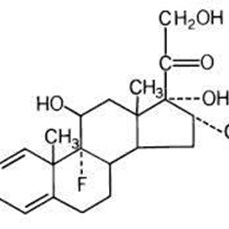
Dexamethasone Suspension CF-1 mg/ml
Dexamethasone ………………………100 mg
Ethanol 90% ………………………….15 ml
Glycerol …………………………………40 ml
Compound hydroxybenzoate solution APF.. 2 ml
Methylcellulose mucilage APF ……. to 100 ml
Dexamethasone – dexametasona – hexadecadrol – 9alpha-Fluoro-16alpha-methylprednisolone: Dexamethasone is a white or almost white crystalline powder. It is practically insoluble in water; sparingly soluble in alcohol, acetone, dioxane, and methyl alcohol; slightly soluble in chloroform; very slightly soluble in ether. The United States Pharmacopeia (USP) specifies the pH of its ophthalmic solution as 5–6. Dexamethasone and its derivatives, dexamethasone sodium phosphate and dexamethasone acetate, are synthetic drugs with anti-inflammatory or immunosuppressive effects. Dexamethasone has very weak mineralocorticoid activity and is therefore not used in the treatment of adrenal insufficiency. Because it penetrates well into the central nervous system, it is generally preferred in the treatment of cerebral edema. As a glucocorticoid, it is approximately 20–30 times more potent than hydrocortisone and 5–7 times more potent than prednisone. It is one of the longest-acting corticosteroids used in clinical practice. It is available in oral, parenteral, topical, ophthalmic, and inhalation pharmaceutical forms. While dexamethasone is generally used in its oral preparations, dexamethasone sodium phosphate and dexamethasone acetate are used in parenteral and topical solutions. Glucocorticoids are natural hormones that prevent or suppress inflammatory and immune responses when administered in pharmacological doses. Dexamethasone is rapidly absorbed when administered orally. Peak effects are observed within 1–2 hours via the oral route. The systemic bioavailability of topically applied dexamethasone is closely related to the condition of the skin at the application site.
Compound hydroxybenzoate solution; Compound hydroxybenzoate solution
Has a preservative effect at high concentrations in syrup, glycerol, and ethanol.
Methyl hydroxybenzoate …….. 8 g
Propyl hydroxybenzoate ………2 g
Propylene glycol ……………to 100 ml
1 ml per 100 ml of oral liquid provides 0.1% parabens.
Methyl hydroxybenzoate is also known as methyl parahydroxybenzoate or Methylparaben.
Propyl Hydroxybenzoate is also known as Propyl Parahydroxybenzoate or Propylparaben. Propyl hydroxybenzoate is also known as propyl parahydroxybenzoate or propylparaben.
Methylcellulose – methylcellulose – cellulose methyl ether: Methylcellulose is an excipient frequently used in oral and topical pharmaceutical preparations. In tablet formulations, low or medium viscosity grades are used as binders, and high viscosity grades are used as disintegrants. In sustained-release tablet formulations, it functions as a matrix material and as a coating agent to mask unpleasant tastes of core tablets or to protect core tablets from moisture prior to sugar coating. In addition, it is useful as a viscosity enhancer in suspension formulations and as an emulsifier in oil-containing formulations. High-viscosity grades are utilized as thickening agents in topically applied cream and gel-type formulations. Methylcellulose is a long-chain substituted cellulose derivative. It occurs as white or yellowish-white, hygroscopic, odorless, fibrous granules or powder. It is practically insoluble in hot water, anhydrous alcohol, acetone, chloroform, ether, and toluene; it dissolves in cold water, forming a colloidal dispersion. It also dissolves in glacial acetic acid and in equal volumes of an alcohol-chloroform mixture. The pH of its 1% aqueous solution is between 5.5–8.0.
Methylcellulose solutions are stable between pH 3–11 at room temperature. However, below pH 3, its viscosity decreases. When heated, the viscosity of its solutions decreases until gelation occurs. Methylcellulose has been reported to exhibit incompatibilities with chlorocresol, mercuric chloride, resorcinol, tannic acid, silver nitrate, cetylpyridinium chloride, para-aminobenzoic acid, hydroxybenzoates, and phenol.
Preparation of the formula – Modus operandi
Dexamethasone tablets available in our pharmacies can be used in the preparation of the formula. Dexamethasone tablets crushed in a glass mortar are moistened with alcohol, and glycerol is added. The preparation is completed by adding the previously prepared hydroxybenzoate solution and finally methylcellulose. It must be remembered that the formula should be brought to 100 ml with methylcellulose.
The formula should be stored at 2–8 °C and consumed within seven days from the date of preparation.
Wishing you a good week…
Specialist Pharmacist Ahmet Nezihi Pekcan
Pekcan Pharmacy – Konya
[email protected]
Tel: (332) 3520657
Fax: (332) 3512816