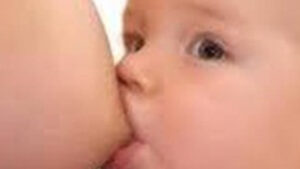
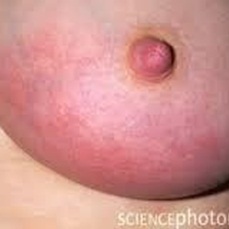
Nipple pain and cracked nipples, which are common yet temporary conditions, are significant factors in the early cessation of breastfeeding. Complaints are more pronounced at the onset of breastfeeding and on the second or third postpartum (post-delivery) day. Once milk secretion begins, the pain subsides to some extent.
Practical Measures :
- During breastfeeding, not only the nipple but also a portion of the areola should be in the baby’s mouth.
- The baby should be fed frequently for short durations.
- At the end of breastfeeding, the nipples should be moistened with a few drops of breast milk and allowed to air dry.
- Breastfeeding should begin on the less painful side.
- Proper technique should be used when offering the breast to the infant and when removing it at the end of feeding.
- The baby’s position should be changed frequently to ensure pressure is applied to different points on the breast rather than a single area.
- Vegetable oil may be applied to cracked nipples; it is not necessary to wash off the vegetable oil prior to breastfeeding.
- Squeezing a few drops of lemon or orange juice onto the cracks accelerates healing, although it may cause some stinging.
The cause of late-onset or chronic nipple cracking and pain is monilial (Candida) infection. It is frequently accompanied by oral and diaper moniliasis in the infant. In its treatment, infection foci in the child must be eliminated, and due care should be taken to clean the nipples with sodium bicarbonate solution and keep them dry and exposed to air. Nystatin-containing preparations may also be used.
Breast engorgement: The breasts should be nursed frequently with varying positions and, if necessary, emptied manually or using a pump. To increase milk flow, warm compresses should be applied before nursing and cold compresses between feedings to reduce congestion.
MASTITIS
It is a cellulitis of the interlobular connective tissue. The causative microorganisms are primarily Staphylococcus aureus and other microorganisms found in the normal skin flora and the infant’s oral flora. It can occur in approximately 5% of breastfeeding mothers. In addition to general symptoms such as fever, fatigue, and chills, there is erythema and tenderness in the breast. If there is no purulent discharge from the breast, breastfeeding should continue. An antibiotic effective against Staphylococcus aureus should be used. Analgesic use may rarely be required. Warm compresses can facilitate milk flow and provide some relief.
Two formulas for postpartum nipple cracks:
Formula 1
Rp
1 ) Benzalkonium chloride 0.30 g
Resorcinol 2 g
Huile de foie de morue 20 g
Baume de Pérou 3 g
Vaseline 10 g
Lanolin 20 g
Substances included in the formula;
Benzalkonium chloride-Germitol-Chlorure de benzalkonium-Zephiran; It is a yellowish-white powder. Its solution foams when shaken. It is soluble in water, alcohol, and acetone. Benzalkonium chloride is a topical antiseptic. It is used for the antisepsis of skin, mucous membranes, and wounds. It is a fast-acting cationic surfactant with a moderate duration of antibacterial activity.
Dibromsalicylii-Resorcine-Dioxybenzene-Resorcinol; It is a white crystalline substance with a characteristic odor. Its color turns reddish under the effect of air and light. It has a burning taste. It is soluble in 1 part water and 1 part alcohol, as well as in ether, glycerin, and benzene, but insoluble in chloroform. It is incompatible with acetanilide, camphor, chloral hydrate, menthol, and phenol. Resorcinol is used as an antiseptic and disinfectant. Externally (ointment 10-20%, solution 0.1%), it is used in psoriasis, acne, seborrhea, eczema, and other skin diseases. Application to very large surface areas should be avoided. Maximum Dose (M.D.) is 0.50-1.5 g.
Huile de foie de morue–Oleum jecoris aselli-Cod liver oil (COD LIVER OIL); It is a rich nutritional source of vitamins A and D. It is predominantly obtained from the fresh liver of codfish. Ointments containing cod liver oil are used on various ulcerated superficial wounds.
Peru Balsam is a drug from the legume family known for its Antiseptic and Cicatrizing effects. Balsamum Peruvianum-Peruvian balsam-Baume du Pérou T.K. It is obtained from Myroxylon pereirae, a tree species growing in Central and South America. It contains cinnamic and benzoic acid. It is a semi-transparent, yellowish, viscous liquid with a pleasant vanilla-like scent. While soluble in 1 part alcohol, it is partially soluble in ether, acetic acid, and petroleum ether. It is antiseptic. It accelerates epithelial regeneration. A 12% solution is used for eczema and pruritus, while a mixture of 3 parts Peru balsam in 1 part glycerin is used against scabies. It is a substance that generally separates from and is difficult to incorporate into ointment bases. The best results are achieved with petrolatum bases. However, the addition of certain adjuvants such as soap or castor oil to the petrolatum is required. Hydrophilic ointment bases are also suitable vehicles for Peru balsam. Peru balsam can dissolve up to 50% in castor oil.
Preparation of the formula: In a glass mortar, weighed benzalkonium chloride and resorcinol are pulverized and levigated with cod liver oil. Vaseline is added and mixed until homogeneous. In another mortar, Peru balsam and lanolin are mixed. Finally, the formulations in both mortars are combined and mixed thoroughly. I would like to remind you that Peru balsam should not be mixed directly with vaseline.
Formula II
Rp
2 ) Dermatol 15 g
Resorcinol 1.5 g
Huile de foie de morue 3 g
Lanolin
Vaseline / aa 20 g
Components in the formula:
Dermatol-Bismuthi Subgallas-Sous Gallate de Bismuth T.K.; It is a yellow, odorless powder. Insoluble in water, alcohol, and ether. It has non-irritating astringent properties. Due to its mild topical antiseptic and drying properties, it is used in wound dressing, ulcerated lesions, burns, chancres, and eczema.
Preparation; In a glass mortar, resorcinol is pulverized, dermatol is added, and the mixture is levigated with cod liver oil. Weighed equal parts of vaseline and subsequently lanolin are added to complete the preparation.
Nipples should be cleaned before breastfeeding the baby.
Note: Care should be taken to ensure that the lanolin used in the formulas is of reliable and high quality.
Specialist Pharmacist Ahmet Nezihi Pekcan
Pekcan Pharmacy – Konya
[email protected]
Tel: (332) 3520657
http://www.majistralformul.com/