Dear Colleagues, this week we will examine a skin disorder caused by Molluscum contagiosum viruses, described as a non-cancerous growth of the upper layer of the skin, resembling a wart but caused by a different virus. There are 3 types of this virus: MCV I, MCV II, and MCV III. MCV I is the most common type.
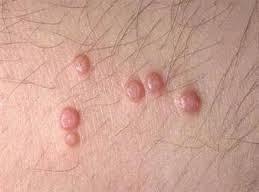
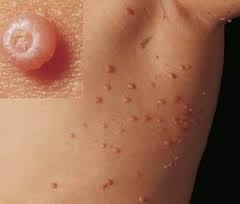
The name Molluscum Contagiosum is a description indicating that the virus can spread easily through skin contact. It is most commonly seen in children, but it is a disease that can occur at any age. It can be transmitted through skin contact, minor injuries, or indirectly. In young people, it is generally sexually transmitted. This virus enters the skin through a small scratch or hair follicles and forms the mollusca. The disease does not affect any internal organs. Molluscum usually forms dome-shaped growths that are skin-colored and pink. Its surface is slightly shiny with a slight dimple in the center. The appearance of these small wart-like bumps is very typical. It becomes infected easily and can spread to surrounding areas if attempted to be squeezed/popped inadvertently. Because mollusca are transmitted through skin contact, they are commonly seen in armpits and groins where skin rubs against each other. It spreads from person to person through close contact. More rarely, transmission can occur through shared clothing such as towels, bathrobes, or shared spaces such as pools, bathtubs, solariums, and toilets. It is transmitted more easily to children. The reason for this is that their immune mechanism against the virus is less developed. Likewise, it spreads more easily in people with weak immune systems (organ transplant, chemotherapy, HIV positive, anemia, etc.). Autoinoculation (self-infection) is also possible. For this reason, it is very important for individuals with lesions to wash their hands thoroughly after using the bathroom and toilet.
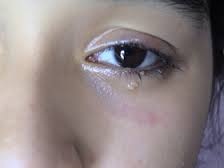
Lesions are not painful unless they are infected (bacterial, secondary infection). Sometimes there may be mild itching. If it bursts inward into the skin, it may become cystic. Molluscum is seen in clusters on the chest, abdomen, arms, hips, and groin area. Sometimes it can also be seen on the face and eyelids. It settles only in the superficial layers of the skin. Bumps appear approximately 1-3 months after transmission of the infection.
Mollusca can often turn red. This occurs when the mollusca tend to disappear spontaneously. In patients with immune system disorders, mollusca can be large in size and may involve the face. Lesions often resolve spontaneously within 6 months to 2 years. However, in individuals with weak immune systems, it may last longer or become widespread. In addition, carrying the lesion for a long time will prolong the period of contagiousness, so active treatment is recommended.
For this reason:
The patient’s immune system should be evaluated, and if there is a problem, it should be corrected. Nutrition and resting status should be regulated, and anemia and other diseases affecting the immune system should be screened.
If bacterial infection is present, antibiotics may be given.
If cyst formation is present, the lesion is totally excised or cauterized.
Existing lesions are destroyed. For this purpose, curettage, cryotherapy (freezing with liquid nitrogen), electrical current (cauterization), or acid solutions are used.
Imiquimod 5% cream may be applied.
In treatment-resistant cases, antiviral drugs (ritonavir, cidofovir) or interferon may be useful.
It should not be forgotten that the disease is contagious.
Rp.
Potassium hydroxide 10 g
Distilled water ad 100 g
Substances included in the formula;
Kalii hydroxidum – Potassium hydroxide – Kalium hydroxydatum – KOH;
Potassium hydroxide or potassium hydrate is a white solid substance that is volatile at red heat, melts at 360 °C, and dissolves in water by releasing heat. Potassium hydroxide, which is an alkaline base, has a wide range of uses. It is used in the industry for the production of soft soap, as an electrolyte in batteries, and in fertilizer manufacturing. It is also used in veterinary medicine in the preparation of certain animal drugs. Potassium hydroxide is a CO2 absorber, which is why it is utilized in botanical experiments. Ingestion of KOH is harmful. In case of accidental ingestion, patients should be given plenty of water to drink. It causes severe burns. In case of contact with eyes, the eyelid must be washed with plenty of water for at least ten minutes, and an ophthalmologist must be consulted immediately afterwards. If it comes into contact with the skin, it must be washed with plenty of water. The skin should be wiped with polyethylene glycol. Its physical appearance is solid, colorless, and odorless. Density: ~2.04 g/cm3 (at 20 °C), solubility: ~1130 g/L (at 20 °C). Melting Point: 360 °C, pH: ~14 (56 g/L H2O) (at 20 °C). Incompatible materials: Severe reactions may occur with metals and light metals. There is an explosion risk with hydrogen.
Application of the formula and considerations;
Application of the formula is repeated daily until redness, irritation, or inflammation is observed. Application should not be made to the same lesion for more than 10 days. Molluscum papules will disappear within an average of 2-5 weeks after terminating treatment. Application must only be performed by adults. Application of 10% KOH in the local treatment of Molluscum contagiosum is intended for adults and children over 2 years of age. It is applied once daily with an applicator. The most common side effect was mild irritation around the lesions observed in 24% of patients (n=108).
Unless directed otherwise by a doctor, it is not used on children under two years of age.
Furthermore, to summarize the situations where it should not be used;
• Do not apply to areas where the skin is thin or sensitive, such as mucous membranes or around the eyes. Under no circumstances should this substance come into contact with the eyes.
• Do not swallow. It is not recommended for use on the face.
• Do not use in cases of Molluscum contagiosum that are infected with another pathogen.
• Do not use on skin that is irritated or infected, or shows signs of redness or burning.
• Do not use the product if there is an abnormality in skin integrity.
• It is not suitable for use in diabetic patients, as the affected area will not heal quickly enough or completely.
• Do not use on parts of the body that come into contact with the baby during breastfeeding.
• Do not use if there is a known allergy to KOH.
This treatment may cause temporary itching, irritation, or a burning sensation. Hyperpigmentation or hypopigmentation may occur after the treated Molluscum contagiosum resolves, but this condition will fade over time. As soon as redness appears at the base of the lesion, treatment is discontinued, and the lesions will gradually begin to disappear on their own.
The formula should be left to dry for 1-2 minutes and then wiped off the treated lesion with a moistened cotton pad. If not wiped off, the remaining potassium hydroxide may cause further irritation on the papule. A shower may be taken after this procedure. Facial use is not recommended due to the risk of accidental exposure to the eyes or mucosal areas.
Using the formula on damaged skin is not recommended. If eczema is present on the skin and is moderate, the formula may be applied; however, maximum care must be taken during application. If eczema is severe, it is recommended to treat the eczema first.
Wishing you a good week…
Spec. Pharm. Ahmet Nezihi Pekcan
Pekcan Pharmacy – Konya
[email protected]
Tel: (332) 3520657
Fax: (332) 3512816