Anti-acne gel
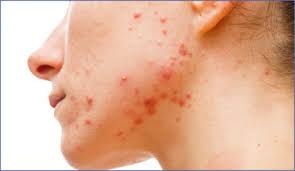
Dear Colleagues; this week, we will examine together this formula prescribed in France for the treatment of acne, a skin condition characterized by inflammatory, papular, and purulent lesions occurring mostly on the face, neck, shoulders, and upper back, inside or near the sebaceous glands of the skin. Although the exact cause is not fully known, it is believed to be related to bacteria affecting the skin.
Rp.
Acide salicylique 4.00 g
Erythromycine base 1.60 g
Acide rétinoique solution 1 % 1.00 g
Peroxyde de benzoyle 8.00 g
Topigel® aqueux qsp 40.00 g
Active substances in the formula:
Acidum salicylicum – Salicylsäure – Acide salicylique – Salicylic acid:
It consists of white crystals. It is soluble in 500 parts water, 15 parts boiling water, 27 parts alcohol (99%), 2 parts ether, 80 parts olive oil, 100 parts glycerin, and 55 parts chloroform. Salicylic acid accelerates desquamation. It exhibits a mild fungicidal effect. Salicylic acid is a beta hydroxy acid (BHA) with the chemical formula C6H4(OH)CO2H. This colorless, crystalline organic acid is generally used as a plant hormone. It is a product of salicin metabolism. It shares similar chemical properties with acetylsalicylic acid, commonly known as aspirin. It is used in the treatment of fungal infections such as tinea barbae, tinea capitis, and tinea cruris. It is included in formulations due to its sufficiently potent analgesic, antipyretic, and rarely antiseptic effects, and is used topically as an analgesic in anti-rheumatic applications. It is preferred against mycotic eczema due to its caustic effect. In dermatology, salicylic acid is often combined with lactic acid in the treatment of warts and corns. The mechanism of action of salicylic acid and lactic acid in the treatment of warts is not completely understood. It is thought to be related to the mechanical removal of wart virus-infected epidermal cells as a result of their keratolytic effects. They are also effective against corns through their keratolytic activity. It is used as a gargle in the treatment of tonsillitis. It is used at a concentration of 0.50% against fermentation in foods such as beer, wine, meat, etc.
Erythromycine – Erythromycin – Eritromicina:
It is a broad-spectrum macrolide antibiotic. Because it readily penetrates Gram-positive microorganisms, it exerts a stronger effect against these types of microorganisms. Since its antimicrobial spectrum is similar to penicillin, it is mostly used in individuals with penicillin allergies. Erythromycin, which is particularly used for diseases such as syphilis, gonorrhea, and chlamydia, is produced by Saccharopolyspora erythraea. It acts by interfering with protein synthesis in bacteria. They generally possess a bacteriostatic effect (it only has a bactericidal effect against beta-hemolytic streptococci and Streptococcus pneumoniae). It is ineffective against anaerobic bacteria. Absorbed erythromycin is metabolized in the liver. Therefore, its use is contraindicated in patients with hepatic impairment. Topical and oral forms are used in the treatment of acne. It is preferred in infections of the skin, soft tissues, and burn wounds.
Retinoic acid – Tretinoin – Acide retinoique – Vitamin A acid:
According to the European Pharmacopoeia (Ph. Eur. 8), tretinoin is a yellow or light orange crystalline powder. It is practically insoluble in water; slightly soluble in alcohol; sparingly soluble in dichloromethane. It is sensitive to light, heat, and air, especially in solution. It should be stored under an inert gas in airtight containers. It must be protected from light. It is a natural derivative of vitamin A used orally or topically. Topically, it is effective in reducing wrinkles, mottled hyperpigmentation, roughness, and laxity in mildly photo-damaged skin. While brown spots on the skin disappear within 6 to 8 weeks, the effects of tretinoin may diminish upon discontinuation of treatment. Systemic absorption may increase when applied over extended periods and large skin areas. Like hydroquinone, it should not be used in pregnant or lactating women and children. Retinoic acid should be included in formulations at a maximum concentration of 0.10%.
Tretinoin is also known as all-trans-retinoic acid. It is structurally similar to isotretinoin, but more toxic. Topical tretinoin is used in the treatment of mild to moderate acne cases (e.g., Grade I-III) and photo-damaged skin. Topical tretinoin is beneficial in the treatment of verruca plana (flat warts) and in the symptomatic treatment of keratinization disorders such as ichthyosis and keratosis follicularis. When applied topically, it prevents horny cell cohesion and, by causing irritation in the follicular epithelium, increases epidermal cell turnover and mitotic activity. Due to this effect, in patients suffering from acne, existing comedones are expelled and the formation of new ones is prevented by shedding and extruding horny cells from the follicle. Tretinoin reduces the number of cell layers in the stratum corneum from 14 to 5. It has no direct effect on acne-related Propionibacterium acnes or sebum production. Another effect of tretinoin is the inhibition of keratinization, which explains its efficacy in treating keratinization disorders.
Caution: In this formula, retinoic acid is used at concentrations of 1% to 0.05% in a 95% v/v alcoholic solution.
Anhydrous benzoyl peroxide – Benzoylis peroxidum – Peroxyde de benzoyle – Benzoylis peroxydum cum aqua – Dibenzoylperoxid:
Hydrous benzoyl peroxide USP contains approximately 70% benzoyl peroxide; the remaining 30% is water added to reduce flammability and shock sensitivity. The British Pharmacopoeia (BP) and European Pharmacopoeia (Ph.Eur.) state that hydrous benzoyl peroxide (benzoylis peroxidum cum aqua) must contain between 70-77% anhydrous benzoyl peroxide and not less than 20% water. Hydrous benzoyl peroxide may explode at temperatures above 60°C and ignite in the presence of reducing agents. It must be stored in its original packaging treated to minimize static electrical charge. It is used as a topical antibacterial agent at concentrations between 5-10%. It is a white granular powder with a characteristic odor, highly soluble in water and ethanol. It is used in the treatment of mild to moderate acne cases. It also has a mild keratolytic effect. Benzoyl peroxide exhibits an antibacterial effect. Its antibacterial effect is particularly pronounced against Propionibacterium acnes, which is found as the dominant microorganism in sebaceous follicles and comedones. It is also effective against Staph Staphylococcus epidermidis. It also exhibits drying, mildly desquamative, and keratolytic effects that aid in the removal of excess sebum. Benzoyl peroxide is applied topically. In vitro experiments and in vivo animal studies demonstrate that following topical application, a portion of benzoyl peroxide is absorbed, and the absorbed drug is metabolized in the skin to benzoic acid before being rapidly eliminated via the urine. Benzoyl peroxide rapidly loses water upon exposure to air and may explode if its water content becomes insufficient. Its hydrous form is a white, amorphous or granular powder with a characteristic odor. It is practically insoluble or very slightly soluble in water; very slightly or sparingly soluble in alcohol; soluble in acetone, chloroform, and ether; and soluble in methylene chloride upon separation of water. ATTENTION! Benzoyl peroxide is a substance capable of exploding upon grinding, severe shock, or exposure to heat. Hydrous benzoyl peroxide, which carries a lower explosion risk, can also explode at temperatures above 60°C or ignite in the presence of reducing agents. Benzoyl peroxide must be stored at 2-8°C in containers designed to eliminate the risk of static electricity and equipped with pressure-relief capabilities. Benzoyl peroxide removed from its container but not used must not be returned to its original container; it should be disposed of by adding a 10% sodium hydroxide solution. It must be protected from light.
Topigel® aqueux:
This vehicle, commercially named Topigel® aqueux, is hydrophilic. The vehicle contains: Carboxyvinylique (carbomer), methyl parahydroxybenzoate 0.05 g, propyl parahydroxybenzoate 0.025 g, purified water, q.s. 100%.
It is a good vehicle for fluorescein, erythromycin, metronidazole, benzoyl peroxide, and urea. It is included in the formula as a vehicle. Other vehicle options that are suitable for the patient’s skin characteristics and compatible with the active ingredients in the formula may also be used.
Preparation of the formula:
In a mortar, salicylic acid, erythromycin, and retinoic acid are gradually triturated and mixed by geometric dilution with a portion of Topigel® aqueux until a smooth paste is formed. Benzoyl peroxide is added to the formula, and mixing is continued. The preparation is then completed by incorporating the remaining Topigel® aqueux.
Wishing you a great week…
References:
1- Cahiers du préparateur en pharmacie
Travaux pratiques de préparation et de conditionnement des médicaments
Jean-Marie FONTENEAU Philippe KLUSIEWICZ
2- RxMediaPharma®2016 Interactive Drug Information Source
Specialist Pharmacist Ahmet Nezihi Pekcan
Pekcan Pharmacy – Konya
[email protected]
Tel: (332) 3520657