Dear colleagues,
This week, as the name suggests, I will discuss a paste formulation with drying properties. If you wish, let us take a trip back to our school days and recall the pastes (PATs) we prepared in pharmaceutical technology laboratories.
PASTE – PASTAE – PÂTES
These are thick ointments containing 50-70 percent solid medication. The powdered substances they contain impart mild drying properties to these medications. The active ingredient in such a mass is absorbed more slowly through the skin. For this reason, astringent and antiseptic medications are often used in this form. As with ointments, fatty pastes cannot be applied to hairy parts of the skin. While forming a gel in water, they can be applied more easily to moist skin and are easily washed off.
The preparation of pastes is identical to the preparation of ointments; however, since a large amount of powder is present, the powders must first be thoroughly levigated with a small amount of the melted base or with excipients such as small quantities of glycerin or liquid paraffin/oil.
Returning to our formula:
PASTA EXSICCANS (DRYING PASTE)
Rp. Bismuti subgallici ………………………. 5.0 g
Zinci oxydati cum talco ………………..25.0 g
Olei lini ………………………………….. 10.0 g
Adipis Lanae anhydrici …………… ad 50.0 g
Substances used in the formula:
Bismuth subgallate; Known as wound powder under the name Dermatol. Externally, it exhibits weak antiseptic and astringent properties. It is used in ulcerated wounds, burns, and eczema.
Zinci oxydati cum talco; This Latin term indicating a mixture of zinc oxide and talc can consist of equal parts of zinc oxide and talc, or mixtures in varying proportions are also possible. For example, 1 part talc to 5 parts zinc oxide.
Zinc oxide; Possesses weak antiseptic and mild astringent properties.
Talc; It is natural hydrated magnesium silicate. When it comes into contact with the skin, it immediately adheres to the surface it touches. Talc is used to soothe skin irritation and enhance moisture absorption.
Olei lini, linseed oil: Known by its Latin botanical name LINUM USITATISSIMUM, it is one of the oldest cultivated plants. It is included in the composition of topical preparations used for skin diseases in humans. The oil obtained from flaxseed via cold pressing contains 50% omega-3 fatty acids. It contains alpha-linolenic acid (ALA), the most important essential fatty acid of the omega-3 series, linoleic acid (LA; omega-6), oleic acid (OA; omega-9), lignan (SDG), mucilage, and vitamin A (beta-carotene). Linseed oil is known as the plant containing the richest source of plant-based omega-3 fatty acids. Linseed oil must be naturally obtained, strictly not subjected to heat treatment—in short, of officinal oil quality preferred in pharmaceutical technology. Cold-pressed linseed oil is used in dermatology for the treatment of psoriasis, herpes zoster (shingles), and exanthema (widespread red rash).
When linseed oil is produced industrially, flaxseeds are roasted and processed with heat. Oil obtained in this manner is called boiled linseed oil. It should never be used for health purposes. It belongs to the industrial oil group used in areas such as artist paints, oil paints, or the varnish industry. Using boiled linseed oil for health purposes is hazardous as it may lead to cancer, because during the heat treatment process, the oil rapidly oxidizes, structurally altering the valuable compounds within it and causing it to carry harmful oxidation residues.
Adeps lanae; It is a pure, anhydrous, waxy substance obtained from sheep’s wool. It is a moisturizer and skin emollient.
Preparation: In a mortar, bismuth subgallate is triturated together with the pre-mixed zinc oxide and talc mixture, softened with linseed oil, and the paste is completed with the final addition of lanolin.
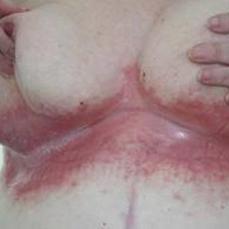
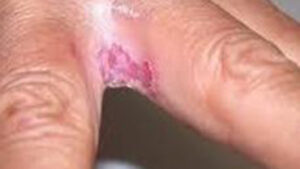
Usage: This paste, which has a very wide range of applications, is used for drying purposes in eczema and in dermatitis such as intertrigo.
Intertrigo: It is frequently observed where skin folds or touches itself, especially in the areas under the sagging part of women’s breasts. Fungal infections caused by folds in the groin, inframammary regions, and fatty parts of the abdomen are known as intertriginous infections. Dermatitis resulting from skin-on-skin friction arises as a result of accumulated moisture, heat, and the proliferation of microorganisms in the resident flora.
Dermatitis: It is a superficial inflammation characterized by redness, edema, oozing, crusting, scaling, and sometimes vesicle formation, frequently accompanied by pruritus (severe itching). The term eczema is also frequently used in place of the term dermatitis.
Wishing you a great week…
Spec. Pharm. Ahmet Nezihi Pekcan
Pekcan Pharmacy – Konya
[email protected]
Tel: (332) 3520657