Oral Supportive Treatment for Vitiligo (ALA) in the Spanish National FormulariesDear Colleagues, this week, regarding what is also popularly known as ALA disease,VITILIGOwe will examine together two capsule formulations from the Spanish National Formulary containing oral supportive therapy for the disease. First, let us briefly recall vitiligo.
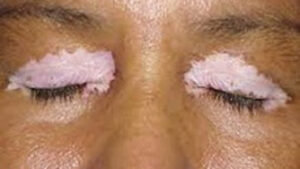
The underlying cause of vitiligo is the inability to produce pigment as a result of the depletion of melanocyte cells, which give the skin its color. Due to various reasons, pigment cannot be produced as a result of damage to these melanocytes. It is thought that melanocytes decrease due to causes such as certain genetic disorders, the body destroying melanocytes as a result of immune system dysfunction, and the self-destruction of these cells. As a result of pigment deficiency, scattered, patchy, and well-demarcated white areas (macules/patches) form on the skin. It presents as a distinct milk-white discoloration. The sizes of these spots vary; they can be the size of a pinpoint or as large as 2–3 coins. The disease that manifests on the skin in this way is called vitiligo. Additionally, there are certain factors that play a role in the onset or exacerbation of the disease. Sunburn, stress, certain illnesses, and physical trauma play an active role in this condition. Of course, hereditary factors must not be overlooked. A family history of this disease is also a risk factor. Vitiligo occurs in an average of 1.5 out of every hundred individuals in the population. Studies have shown that vitiligo is seen in 25 percent of individuals with a family history of the disease. Since it is a condition that presents as whiteness on the skin, it is more prominent in darker-skinned individuals. The age of onset varies. Half of the patients develop the disease before the age of 20. In some cases, the entire body turns white. The hair within these depigmented areas may also whiten. While this condition is easily noticed by dark-skinned individuals, it also becomes noticeably apparent in fair-skinned individuals after tanning in the sun. The severity and course of the disease are not the same for everyone. There may be some darker areas within the spots, which occurs because some pigment still remains in that region.
In people with vitiligo, pigment loss halts for a period after the disease emerges. That is, the amount of pigment remains stable. Then pigment loss may recur, and this cycle continues. The disease progresses, and the patient cannot regain their original skin color. A complete change in skin color—that is, the body becoming a single uniform color—does not mean the disease has resolved. Vitiligo persists.
In the treatment of vitiligo, there is the treatment administered by the physician as well as certain points the patient must adhere to. The goal is to restore the function of melanocyte cells back to normal. For this purpose, certain medications and topical creams are used. However, the most effective method used in recent times is localized ultraviolet B (UVB) phototherapy. It is a novel and advanced method. This phototherapy is applied exclusively to the affected areas with spots. Thus, it aims to protect other regions of the body from potential adverse effects. A few sessions are not sufficient for this treatment. A clinical response is achieved in at least 10 sessions. After these sessions, the patient can continue their normal daily life. It is administered 2–3 sessions per week.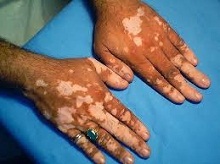 In addition to this, topical cream therapy is applied. However, caution should be exercised when applied to the face, as it may have various side effects. Furthermore, in cases where the disease has progressed, attempts are made to normalize the appearance of the patient’s skin with certain medications by lightening the pigment of unaffected areas as well.
Vitiligo patients need to be cautious about sun exposure. A sunscreen with a high protection factor (at least SPF 15) should be used when going out in the sun, because the defense mechanism against the sun is diminished in individuals with vitiligo. Resulting sunburns may cause the disease to exacerbate.
All these treatments are carried out considering the patient’s age, financial status, and the severity of the disease. The same form of treatment is not applied to every patient. The success achieved as a result of treatment is usually for facial lesions. Hands and feet respond late to treatment, and their improvement is delayed. Since the facial area is what bothers the patient the most anyway, pleasing results are achieved with treatment.Vitiligo is classified according to its clinical features:
Localized vitiligo:Focal:one or more patches, not segmentalSegmental: one or more patches, present in a dermatomal patternGeneralized vitiligo:Acrofacial:multiple lesions involving the face and handsGeneral:irregular but widely distributed patchesUniversal vitiligo:Almost the entire body is depigmented. Normal skin is frequently observed in patches.Mixed vitiligo:It is a combination of two or more patterns.Formula I ;Rp.P.A.B.A 100 mgMesoinositol 25 mgCalcium pantothenate 1 mg90 capsules. Dosage should be three capsules daily. As a support to this treatment, taking 1 g of vitamin C daily is recommended.Substances included in the formula;
PABA- Aminobenzoic Acid- P-Aminobenzoic acid- Para-aminobenzoate- Acidum para-aminobenzoicumPara-aminobenzoic acid occurs as white or light yellow, odorless or very faintly odorous crystals or crystalline powder. Its color slowly darkens under the effect of air and light. It is slightly soluble in water, ether, and chloroform; freely soluble in alcohol; soluble in solutions of alkali hydroxides and carbonates. It is considered to be part of the vitamin B complex. It is related to growth, lactation, and hair pigmentation in mice. Para-aminobenzoic acid (PABA) is a chemical substance that exhibits a protective effect against sunlight (photoprotection). Sunscreen agents, in addition to preventing sunburns, play an important role in protection against actinic or solar keratoses, skin cancers, premature skin aging, and photosensitivity reactions to ultraviolet (UV) rays. PABA is only used in combination with other sunscreen agents such as padimate O or oxybenzone. Para-aminobenzoic acid (PABA) is administered orally and topically. When applied topically, its absorption through the skin varies depending on the solvent used in the formulation. Alcoholic solvents ensure maximum and deepest penetration of sunscreen chemical agents through the epidermis. Following application to the skin, PABA penetrates into the stratum corneum layer. It takes approximately 2 hours to reach peak concentration in this layer. It does not penetrate deeper layers of the skin to a significant extent. It is not absorbed systemically.
When taken orally, PABA is absorbed from the gastrointestinal tract. It is metabolized in the liver and excreted in urine both unchanged and as its metabolites. It is used in atopic eczema, vitiligo, and scleroderma. Since it dissolves in alkaline solutions, it is recommended to be taken together with oral sodium bicarbonate. It may cause side effects such as nausea, vomiting, rashes, etc. It is highly toxic at high doses. It is recommended not to be used concomitantly with sulfonamides, as there is antagonism between them. It causes urinary retention.Mesoinositol- Inositol- Meso-inositol- Inositol- Myo-inositolum- Inositolum- InositolumInositol is a glucose isomer found in almost all living organisms. It is present in animal foods and plants, especially in cereals and seeds. Although traditionally considered a B vitamin, its exact status as a vitamin is not definitively established. A deficiency syndrome has not been identified in humans. In plants, it exists in the form of phytic acid, which is a hexaphosphate. It is also found in other forms in vegetables and meats. The average daily dietary intake of inositol is approximately 1 g. It has been shown to be essential for growth in mice and yeasts. Its absence from the diet leads to alopecia and dermatitis in mice, and eye disorders in rats. It plays a physiological role in lipid metabolism. Its efficacy in disorders related to fat transport and metabolism has been investigated, but sufficient data supporting its effectiveness has not been obtained. Its efficacy in depression, anxiety, respiratory distress syndrome, and retinopathy of prematurity has been studied. It is incorporated into the composition of most vitamin preparations and is an agent whose use is promoted in numerous conditions. Its precise role in humans is unknown. It has been used in combination with vitamin E in progressive muscular dystrophies.Calcium pantothenate- Calcium pantothenate- Calcii pantothenas- Calcium pantothenicumPantothenic acid is formed by the combination of beta-alanine and pantoic acid via an amide bond. Calcium pantothenate is a white, odorless, slightly hygroscopic powder. Solubilities according to the British Pharmacopoeia (BP): Freely soluble in water; slightly soluble in alcohol; practically insoluble in ether. According to the United States Pharmacopeia (USP), it is soluble 1:3 in water; soluble in glycerol; practically insoluble in alcohol, chloroform, and ether. The pH of its 5% solution is between 6.8 and 8.0. USP states that the physiological activity of racemic calcium pantothenate is approximately half that of calcium pantothenate.
It is traditionally considered a B vitamin. It is a component of coenzyme A, which is of fundamental importance in carbohydrate, fat, and protein metabolism. Due to its abundance in foods, pantothenic acid deficiency does not occur in humans. Foods containing the highest amounts are cereal types and legumes. It is also found abundantly in eggs, milk, fruits, and vegetables. For this reason, despite its important metabolic functions, no pathological disorder due to its deficiency has been demonstrated in humans. For the same reason, its daily requirement has not been established either. However, although its necessity has not been proven, it is included in some multivitamin preparations along with other B-group vitamins. For this purpose, calcium or sodium salts of D-pantothenic acid or its racemic form are mostly used. Sometimes, dexpanthenol, the alcohol form of dextro-pantothenic acid, is also used. This latter substance is converted into D-pantothenic acid in the liver. Lozenges and solutions developed for use in ulcerative and inflammatory conditions of mucous membranes are available. Pantothenic acid enters into the composition of coenzyme A (CoA), one of the essential coenzymes. When taken orally, pantothenic acid is rapidly absorbed from the gastrointestinal tract. It is widely distributed to tissues in the body and passes into breast milk.Formula II
Rp.
Phenylalanine 50 mg
P.A.B.A 50 mg
Calcium pantothenate 50 mg
Mesoinositol 25 mg
Biotin 1 mg100 capsules. Dosage: three capsules should be taken daily. It is recommended to take 1 g of vitamin C daily as a support to this treatment.Ingredients in the formula;
Phenylalanine- Beta-Phenyl-alpha-alanine- Phenylalaninum- Phenylalanine- L-PhenylalaninePhenylalanine is an essential amino acid with an aromatic structure. It is widely found in proteins. Parenteral amino acid solutions are used to prevent nitrogen loss or to treat negative nitrogen balance when adequate nutrition is impossible orally, via gastric or duodenal tube, or via ostomy. Phenylalanine also constitutes one of the amino acid components of parenteral amino acid solutions. It is also used as a nutritional supplement. Phenylalanine occurs as white, odorless crystals or flakes, or as a crystalline powder. It is sparingly soluble in water; very slightly soluble in alcohol, methyl alcohol, and dilute alkali hydroxide or dilute mineral acid solutions; practically insoluble in ether. The pH of its 1% aqueous solution is between 5.4 and 6.0.Biotin- Biotine- Vitamin H- Coenzyme R- Vitamin B7- Vitamin H- Vitamin BwBiotin is a white crystalline powder. It is very slightly soluble in water and alcohol; it is practically insoluble in other organic solvents. It is found in the liver. It has been obtained synthetically. Biotin is traditionally considered a substance belonging to the B vitamin group. It is one of the essential coenzymes required for fat metabolism and other carboxylation reactions. In biotin deficiency, organic acid excretion in the urine is observed; certain adverse changes appear in the skin and hair. The required amount for humans is not known. Since it is a vitamin found abundantly in foods, biotin deficiency is not considered likely in humans. Egg yolk and offal are the richest sources of biotin. Nevertheless, long-term parenteral nutrition and multiple carboxylase deficiency can cause biotin deficiency. In its deficiency, seborrheic dermatosis is observed. Biotin binds with the glycoprotein called avidin, found in raw egg white, to form an inactive compound. A daily intake of 10 to 200 mg of biotin is considered adequate and safe to meet the organism’s requirements. Orally administered biotin is rapidly absorbed from the gastrointestinal tract and is predominantly found unchanged in the urine. A small portion is excreted in the urine as bis-norbiotin and biotin sulfoxide metabolites. Mammals cannot degrade the ring system of biotin. It is not highly toxic. If its level in the blood exceeds 60-80 mg per 100 ml, leukopenia, abdominal pain, and delirium may be observed.
Wishing you a good week…References
La Formulacion Magistral en la Oficina de Farmacia 2.aparte valencia, 1985Specialist Pharmacist Ahmet Nezihi Pekcan
Pekcan Pharmacy – Konya
[email protected]
Tel: (332) 3520657http://www.majistralformul.com/