Topical Anesthetic and Analgesic Formula in Superficial Surgical Procedures and Laser Treatment
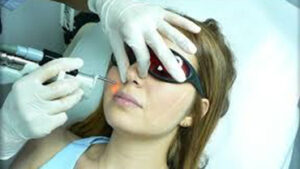
Local anesthesia,is a type of anesthesia generally used in surgical interventions performed on small areas. With local anesthesia, numbness is achieved by eliminating the sensation of pain only in the area where the operation will take place. Local anesthetic substances are available in spray or cream forms. In aesthetic surgery, when using laser methods particularly for blemish treatment, scar treatment, hair removal, varicose vein treatment, mole removal, skin tightening, etc., local anesthesia is needed to prevent the patient from feeling pain.
For this purpose, let us examine together a formula that can easily be prepared in pharmacy laboratories.FKö GEL FORMULA
Rp.
Lidocaine 10 g
Benzocaine 20 g
Tetracaine 4 g
Butylhydroxytoluene 0.1 g
Polysorbate 80 q.s
Organic Phase 13 ml
Aqueous Phase 52 ml
Ingredients in the formula;
Lidocaine- Lignocaine- Lignocaine- Lidocainum;Lidocaine is a commonly used antiarrhythmic and local anesthetic. Lidocaine is a white to yellowish crystalline powder with a characteristic odor. Its melting point ranges between 66-70° C. It is practically insoluble in water; very soluble in alcohol, chloroform, or methylene chloride; freely soluble in ether; and soluble in oils. Lidocaine forms a mixture with prilocaine that has a melting point lower than that of either individual component. This eutectic mixture is used in topical dosage forms. Adding 1:200,000 to 1:100,000 epinephrine (adrenaline) to lidocaine solution slows the drug’s vascular absorption and prolongs its duration of action. When applied topically to mucous membranes, its effect begins within 1-2 minutes and lasts for approximately 30-60 minutes.Anestamin- Anaesthesin- Benzocaine- Ethyl aminobenzoate;Like other local anesthetics, benzocaine inhibits the generation and conduction of nerve impulses in the cell membrane. Benzocaine is applied topically to the skin. It is minimally absorbed from the application site; therefore, undesirable systemic side effects are relatively low. Its onset of action is rapid, becoming noticeable within 1 minute. The duration of action is approximately 15-20 minutes. Benzocaine is metabolized in the liver. Its metabolites are excreted by the kidneys.Amethocaine- Pantocaine- Tetracaine- Tetracaine- Tetracainum;Tetracaine is an ester-type, long-acting local anesthetic. It is considered the most toxic local anesthetic drug compared to other local anesthetics. These preparations are typically used for local analgesia and the suppression of laryngeal and esophageal reflexes prior to examinations of the larynx, trachea, or esophagus. In addition,Herpes labialisit can also be used for the palliative prevention of pain caused by.Butylated hydroxytoluene- BHT- Butylhydroxytoluene- Butylated hydroxytoluene- Butylhydroxitoluenum;Butylated hydroxytoluene possesses antioxidant properties. It is used as a food additive in Europe and the USA.Polysorbate- Polysorbatum 80- Polysorbate 80;Polysorbate 80 is a non-ionic surfactant and emulsifier commonly used in food and cosmetics. This synthetic compound is a viscous, water-soluble liquid. Polysorbate 80 is used to stabilize aqueous formulations.POLYSORBATE 80,Known by the food code E 433, it is a light yellow, viscous, and oily liquid emulsifier. It is used as an emulsifier primarily in the food industry, as well as in cosmetics, detergents, and many other industrial fields. As with all emulsifiers, it is an additive that forms oil-in-water or water-in-oil phases and provides emulsion within these products. In food, it is used in varying proportions in the production of products such as mayonnaise, sauces, cream fats, beer, and malt.POLYSORBATE 80, its use as an emulsifier in food production has been banned in some European countries.
In the formula, from the expressionOrganic Phase,Ethanol, and from the termAqueous Phase,Distilled watershould be understood.Preparation of the Formula;Lidocaine, benzocaine, and tetracaine are thoroughly ground in a glass mortar. Butylhydroxytoluene, which is included in the formula as an antioxidant, is added to the active ingredients. Alcohol and polysorbate are added to increase solubility over the powders ground in the mortar until a homogeneous appearance is achieved. Finally, distilled water is added gradually to complete the preparation.
I would like to thank Ege University Faculty of Pharmacy, Department of Pharmaceutical Technology faculty memberAssoc. Prof. Sinem YAPRAK KARAVANA for her valuable contributions to the writing of this article.
Wishing you a good week…
Source;
PLO GEL Application in Pharmacy Compounding Compilation 2011
RxMediaPharma®
Spec. Pharm. Ahmet Nezihi Pekcan
Pekcan Pharmacy – Konya
[email protected]
Tel: (332) 3520657http://www.majistralformul.com/