Making Shampoo in Pharmacy LaboratoriesDear Colleagues, as is known, extemporaneous compounding in pharmacies is by law not possible without a physician’s prescription. However, regarding the production of non-therapeutic cosmetic preparations, even if our pharmacies possess appropriate laboratory conditions, we still cannot make cosmetic preparations without obtaining a Cosmetic Product License. Could this perhaps be an important issue that our professional organization will work on in the upcoming period through the necessary legal regulations? We will wait and see together…
I believe that pharmacists should not have to wait for a physician’s prescription to display their knowledge and skills in light of the Science of Cosmetology acquired at the university level and to advance the Science of Cosmetology in our country.
Before proceeding to this week’s article titled MAKING SHAMPOO IN THE PHARMACY LABORATORY, let us recall the meaning and scope of the word Cosmetology together.
COSMETOLOGY:
A cosmetic preparation is a preparation, generally for external use, prepared to be poured, rubbed, sprinkled, or otherwise applied to clean, care for, beautify, or alter the appearance of any part of the body. It includes all preparations or substances intended to be placed in contact with the various external parts of the human body such as the epidermis, nails, body hair, scalp hair, lips, and external genital organs, or with the teeth and the mucous membranes of the oral cavity, with a view exclusively or mainly to cleaning them, perfuming them, changing their appearance, and/or correcting body odors, and/or protecting them or keeping them in good condition.
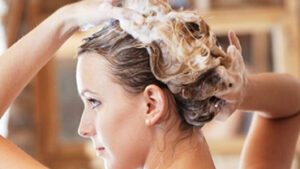
Shampoos: Products that cleanse and care for the hair without harming the hair and scalp. Clear liquid, opaque liquid, cream, aerosol, powder, or dry shampoo formulas can be prepared.Substances frequently used in shampoo formulations:1.Surfactants
a. Hair cleansing agents
b. Foaming agents
2.Opacifying agents
3.Clarifying agents
4.Sequestering agents
5.Hair conditioning and shine-enhancing agents
6.Anti-hair loss agents
7.Viscosity-increasing agents
8.Preservatives
The most commonly used form of shampoo is liquid shampoo.
These are;
1.Cosmetic-cleansing shampoo
2.Medicated shampoo (medical shampoo)
3.Styling/conditioning shampoos.
Formula:
Rp.
Sodium polyoxyethylene lauryl ether sulfate 30%
Sodium lauryl sulfate 10%
Cocamidopropyl betaine 10%
Ethylene glycol distearate 2%
Glycerin 5%
CMC 0.5%
Methylparaben 0.1%
Distilled water q.s.
Fragrance q.s.
Preparation of the Formula:CMC is left to swell with the calculated amount of distilled water in a porcelain dish over a water bath. Sodium polyoxyethylene lauryl ether sulfate, sodium lauryl sulfate, cocamidopropyl betaine, ethylene glycol distearate, and glycerin are weighed and transferred into a mortar. The mixture in the porcelain dish is added to the mortar. Finally, methylparaben and 1-2 drops of fragrance are added. It is transferred into a shampoo bottle and packaged.
Wishing you a great week…
Source:
Ege University Publications Faculty of Pharmacy Publication No: 5
Pharmaceutical Technology Practical Handbook I-II-III-IV 2nd Edition
Editor Prof. Dr. Özgen ÖZER, 2016
Specialist Pharmacist Ahmet Nezihi Pekcan
Pekcan Pharmacy – Konya
[email protected]
Tel: (332) 3520657http://www.majistralformul.com/