Dear Colleagues,
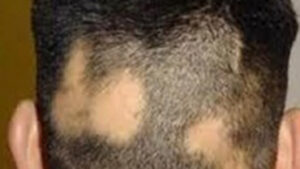
Alopecia areata, known colloquially as ‘saçkıran’, is a disorder that affects hair follicles and typically causes patchy, round, coin-sized hair loss. There are different types of alopecia, and in rare cases, it can cause the loss of all scalp hair or even all body hair. When looking at its general causes, it is an immune system disorder. The immune system is designed to protect the body against external threats. However, in some individuals, the immune system attacks the body itself in addition to external threats and diseases. Diseases resulting from this friendly-fire attack by the immune system are called autoimmune diseases, and alopecia areata is one of them. It does not discriminate between men and women. Looking at the age range, we frequently witness its onset in childhood. We can say that most patients who consult a doctor with complaints of alopecia are adolescents in their teens. Although we colloquially refer to this condition as ‘saçkıran’, apart from scalp hair loss, loss of beard, eyebrows, and eyelashes may also occur. It can happen to almost anyone, but individuals with family members who have had alopecia have a slightly higher likelihood of developing it. It can be hereditary, but it is not a contagious disease.
Dear Colleagues, as I mentioned in the paragraph above, there are different forms of hair loss disorders. I will share with you two formulas that can be beneficial in ringworm (tinea capitis) caused by fungal infections.
A fungal infection of the scalp typically seen in children aged 3–5 years (tinea capitis) resolves spontaneously at puberty. Broken and lifeless hair, fine scaling, and localized alopecia are its primary findings. If inflammatory changes accompany these findings, tumor-like pustular, nodular lesions (kerion celsi) develop and result in permanent alopecia. Tinea capitis is contagious and can cause epidemics. Characteristic black dots due to broken hair are observed in the affected areas. Most topical antifungal agents can be used in treatment. Commonly, creams, solutions, and gels of miconazole, clotrimazole, ketoconazole, econazole, sulconazole, oxiconazole, ciclopirox, butenafine, and terbinafine can be used. Treatment should be continued for about two weeks after all symptoms have resolved.
Let us examine together two formulas that can be effective in the treatment of ringworm associated with fungal infections.
Rx
1% Clotrimazole Lotion
Clotrimazole …… 1 g
Propylene glycol ……. 50 ml
Polyethylene glycol 300….. qs..100 ml
Ingredients in the formula
Clotrimazole –Clotrimazole-Chlortritylimidazol- Clotrimazolum: Clotrimazole is a white to pale yellow powder. Solubilities according to the British Pharmacopoeia (BP): Practically insoluble in water; soluble in alcohol and methylene chloride; slightly soluble in ether. Solubilities according to the United States Pharmacopeia (USP): Practically insoluble in water; freely soluble in acetone, alcohol, chloroform, and methyl alcohol. Clotrimazole is an imidazole antifungal drug. It is used in the treatment of infections caused by various pathogenic dermatophyte species, yeasts, and Malassezia furfur. Dermatophytoses, vaginal and oral candidiasis, and tinea infections are among the most prominent. Since formulations have limited ability to reach subcutaneous tissues, clotrimazole is not indicated for the treatment of subcutaneous mycoses.
Preparation of the Formula
Clotrimazole is dissolved in propylene glycol, made up to a volume of 100 ml with polyethylene glycol, and mixed thoroughly. Clotrimazole should be stored below 30°C at room temperature and in airtight containers. It should not be frozen. It must be protected from light.
Our other formula:
1% Miconazole and 1% Tolnaftate Scalp Lotion
Miconazole ……………..1 g
Tolnaftate …………….… 1 g
Propylene glycol ……………. 50 ml
Polyethylene glycol 300 .aq ..100 ml
Ingredients in the formula
Miconazole- Miconazole-Mmiconazolum: Miconazole nitrate is a white or almost white, practically odorless, crystalline powder. Solubilities according to the British Pharmacopoeia (BP): Very slightly soluble in water and ether; slightly soluble in alcohol; freely soluble in methyl alcohol. Miconazole is an imidazole-structured antifungal drug used topically and intravaginally. Like other azole antifungals, miconazole exerts its effect on the fungal cell membrane.
Tolnaftate- Tolnaftatum- Tolnaftato: Tolnaftate is an odorless or practically odorless, white or creamy-white fine powder. Practically insoluble in water; slightly or very slightly soluble in alcohol; freely soluble in acetone and chloroform; sparingly soluble in ether. Tolnaftate is an antifungal drug used topically. It is primarily used against tinea pedis, tinea cruris, tinea corporis, and tinea versicolor. It is also used for onychomycosis, chronic fungal infections of the scalp, and prophylaxis of tinea pedis. Preparations are available as 1% solution, powder, or cream. Although not suitable for the treatment of deep infections affecting nails and hair follicles, it may be used in combination with a systemic drug in such cases. Tolnaftate acts by disrupting hyphae and mycelial growth in susceptible fungi.
Propylenglycol- Propylenglycolum- Glicole propilenico: Propylene glycol is an excipient used for various purposes in pharmaceutical preparations. It is included in the formulation of oral, parenteral, ophthalmic, vaginal, and topical products. It is used in some ophthalmic preparations used for dry eyes.
Macrogol 300- Polyethylenglycol 300- Polyoxyethylen 300: Polyethylene glycol 300 is a polyethylene glycol used for various purposes in the pharmaceutical industry. Polyethylene glycols are generally polymers composed of repeating subunits (monomers) of similar structure. Poly(ethylene glycol) is non-toxic and is used in various pharmaceutical products. It forms the base of many laxatives, skin creams (as cetomacrogol), and lubricants used during sexual intercourse (often combined with glycerin).
Preparation of the formula
Miconazole and tolnaftate are dissolved in propylene glycol, and a sufficient quantity of polyethylene glycol 300 is added and mixed thoroughly. It is placed in a suitable container and labeled. It should be stored below 30°C at room temperature and in airtight containers.
Wishing you a happy and peaceful holiday…
Spec. Pharm. Ahmet Nezihi Pekcan
Pekcan Pharmacy – Konya
[email protected]
Tel: (332) 3520657
Fax: (332) 3512816