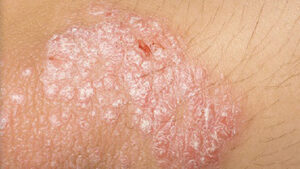
A conventional topical agent in the treatment of psoriasis: signollinDioxanthranol, Cignolin, Dithranol [INN; BAN; DCF; Ph. Eur. 4], Dithranolum [Ph. Eur. 4]
It is a microcrystalline powder varying in color from yellow to orange or yellowish brown, odorless or almost odorless, and tasteless. Solubilities according to the British Pharmacopoeia (BP): Practically insoluble in water; soluble in acetone and chloroform; soluble in methylene chloride; soluble in dilute alkali hydroxides. The filtrate obtained from its aqueous suspension gives a neutral reaction to litmus. Anthralin is a potent irritant. In high doses, it exhibits keratoplastic and keratolytic effects. Contact with the eyes and sensitive areas of the skin (face, genitals, open wounds, and mucous membranes) must be avoided. Anthralin (dithranol) is a synthetic topical antipsoriatic drug derived from anthracene. It is used in mild (latent) or chronic psoriasis. Although not FDA-approved, it can also be used for alopecia. It may stain fabric, skin, or hair yellow-brown. These stains can be permanent. Stains on fabrics and clothing resulting from use can be cleaned with benzene or trichloroethylene, while stains on the skin can be cleaned with chlorinated solutions. In practice, at a therapeutic concentration of 0.1%, it does not leave stains and is also very well tolerated.
Anthralin was introduced to the market prior to 1962, the year the US Congress passed the Federal Food, Drug, and Cosmetic Act requiring FDA approval for both the safety and efficacy of all drugs. Products containing anthralin are unapproved drugs marketed without formal evaluation by the FDA. The mechanism of action of anthralin is not fully understood. However, the antiproliferative and anti-inflammatory effects of anthralin have been demonstrated on psoriatic and normal skin. The antiproliferative effects of anthralin are thought to result from both the inhibition of DNA synthesis and its strong reducing properties. The efficacy of anthralin as an antipsoriatic drug is partly attributed to its effects in inducing lipid peroxidation and lowering the markedly elevated levels of endothelial adhesion molecules in psoriatic patients.
Therapeutically, depending on the site of psoriasis, the following formulations are prescribed:
FORMULATION:Washable cream formula for the scalp:Anthralin 0.4%
Salicylic acid 0.4%
Liquid Paraffin 76%
Cetyl alcohol 21%
Sodium lauryl sulfate 2%
Preparation of the formula:
Cetyl alcohol is melted in liquid paraffin with sodium lauryl sulfate in a glass beaker on a water bath at 70 °C. Pulverize the salicylic acid in a mortar and mix thoroughly with dithranol. Once the mixture in the glass beaker has melted, it is brought to room temperature. The prepared excipient in the beaker is added to the mixture in the mortar to form a soft, yellow cream. Triturate thoroughly with the pestle when incorporating the melted mixture to prevent clumping.
The cream is applied generously with massage before bedtime. Petrolatum should be applied to protect healthy, unaffected skin. The next morning, rub with a cloth soaked in liquid paraffin to remove scales, then wash the scalp with regular shampoo. Protect eyes and mucous membranes carefully while bathing.
FORMULA:If the lesions are on the skin, Lassar’s paste is used as a base.Lassar’s Paste 100 g
Anthralin 0.1%
Salicylic acid 0.2%
Hard Paraffin q.s.
It is also known as ”Hard Dithranol Paste” .
”Hard paraffin q.s.” (addition of varying amounts of paraffin is possible to soften the consistency.)
LASSAR’S PASTE
According to the Spanish Pharmacopoeia, it contains the following formulation:
Salicylic Acid 2 g
Zinc Oxide 25 g
Rice starch 25 g
White soft paraffin ad. 100 g
Preparation of the formula:
First, petrolatum at 50-550is left to melt in a water bath at °C. Meanwhile, the active ingredients are added sequentially to a heated mortar, and melted petrolatum is added gradually while mixing until a homogeneous paste is formed.
Here, the presence of salicylic acid in the main formula draws our attention. Should the 0.2% salicylic acid in the main formula be added to Lassar’s paste, which already contains 2% salicylic acid? The answer is yes, it should be added.
Perhaps for this reason, the USP and BP name this preparation Zinc Oxide and Salicylic Acid Lassar’s Paste, and it also appears in this form in the 9th edition of the Spanish Pharmacopoeia.
Returning to the preparation of the formulation, we must emphasize that anthralin should be added to the Lassar’s paste last, and the melted hard paraffin should be added gradually onto this paste. Experience shows that melting part of the petrolatum in the composition of Lassar’s paste together with the hard paraffin and adding it to the final preparation in this manner is extremely important for homogenization. Otherwise, it may cause undesirable grittiness when applied to the skin. Another point we must underline once again is that keeping the mortar and pestle warmed throughout the preparation process will be beneficial.
It is recommended to apply the preparation most effectively at bedtime using a spatula to completely cover the psoriatic plaques.
Upon waking in the morning, the residue of the preparation on the skin should first be wiped off with a cloth soaked in liquid petrolatum. Afterwards, it should be washed with natural soap, followed by a 20-minute bath in a warm tub containing soap with coal tar at a ratio of 120 g per 80 L of water. Finally, Lanette base cream containing 0.1% triamcinolone should be applied continuously throughout the day, preferably once every 3 hours.
For the treatment of guttate (drop-like) rather than plaque psoriasis lesions, the following similar but less stiff formula should be preferred, used only at bedtime, and additional treatment should be avoided.
FORMULA:
Anthralin %0.2
Salicylic acid %1
Hard Lassar’s Paste %50
Petrolatum ad. 100 g
This formula is called ”Soft Paste with Dithranol”, and as can be seen, the addition of petrolatum softens the paste, unlike the previous formula.
FORMULA:
Isopropyl myristate 67 g
Lanolin alcohols (wool fat)
Acetylated lanolin (wool fat) / aa 5 g
Cedar essential oil 20 g
Resorcinol monoacetate 3 g
Salicylic acid 2 g
Anthralin 0.02-0.1 g
Preparation of the formula:
Resorcinol monoacetate, salicylic acid, and anthralin are pulverized in a mortar and mixed with cedar oil. The remaining ingredients are then added to obtain a homogeneous preparation.
Note: I would like to express my gratitude to Specialist Pharmacist Erol Eli Simsolo for his support in writing my article with his excellent Spanish.
Specialist Pharmacist Ahmet Nezihi Pekcan
Pekcan Pharmacy – Konya
[email protected]
Tel: (332) 3520657http://www.majistralformul.com/Source
- La formulación magistral en la oficina de farmacia 1981
- RxMediaPharma® Interactive Drug Information Resource 2020