“I believe that a news item dated July 17, 2013, went unnoticed by most of us. The headline was: Israeli soldiers will relieve their pain with lollipop medication… ActiQ, a painkiller more effective than morphine that attracts attention with its shape and method of administration, is strawberry-flavored and shaped like a lollipop. Having been previously tested by the US on patients in Afghanistan and Iraq with successful results, Israel will now begin testing the drug. ActiQ is administered by being dissolved in the mouth. Used four times a day, the medication enters the bloodstream via saliva and takes effect within 10 minutes. It provides the patient with the opportunity to live pain-free and manage their pain. Relieving severe pain, the medication also prevents post-traumatic stress disorders”…
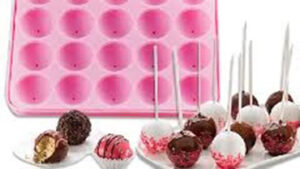
Dear Colleagues, this week we will examine a preparation in lollipop form, which is an extemporaneous (magistral) formulation technique. With this technique, which is a treatment option particularly for preschool children who refuse to take medication, we can easily prepare these formulas in our pharmacies. In our laboratories, it is easily possible to prepare vitamin C lollipops as immune support during winter days, and formulas containing zinc and vitamins for children with poor appetite, attention deficit, or issues caused by hyperactivity.
Now, we will examine a formula prescribed by pediatricians in Europe for febrile and painful conditions in children.
Rp.
Acetaminophen 150 mg
NutraSweet 200 mg
Silica Gel 240 mg
Acacia 400 mg
PEG 1450 28 g
Flavoring 30 gutt
Sig: Dissolve in the mouth every 4 hours.
Ingredients in the formula;
Acetaminophen – Paracetamol – Paracetamolum;
Acetaminophen is a white, odorless crystalline powder. It is sparingly soluble in water; 1 part acetaminophen dissolves in 20 parts boiling water and 10 parts alcohol. It is very slightly soluble in ether and methylene chloride. The United States Pharmacopeia (USP) reports the appropriate pH range as 3.8-6.1 for oral solutions and 4.5-6.9 for oral suspensions. The exact mechanism of action of acetaminophen is unknown. Unlike other NSAIDs, acetaminophen acts primarily in the central nervous system (CNS) and inhibits cyclooxygenase, an enzyme involved in prostaglandin (PG) synthesis. Acetaminophen inhibits both the COX-1 and COX-2 isoforms of the cyclooxygenase enzyme. It can also inhibit the synthesis or activities of chemical mediators that increase the sensitivity of pain receptors to mechanical and chemical stimuli. Because acetaminophen cannot inhibit the cyclooxygenase enzyme in peripheral tissues, it has no anti-inflammatory activity. It exerts its antipyretic effect by blocking the effects of endogenous pyrogens in the hypothalamic temperature-regulating center; this effect probably develops through the inhibition of PG synthesis. The patient’s elevated body temperature decreases due to drug-induced vasodilation, increased peripheral blood flow, and sweating. When taken acutely in high doses, dose-dependent hepatotoxicity and possibly renal failure are observed. Acetaminophen should be stored below 30°C at room temperature and in airtight containers. It should be protected from light.
Maximum Dose limits:
Adults: Single dose 1000 mg PO or 4 g/day PO.
Adolescents: Single dose 1000 mg PO or 4 g/day PO.
Children 6-12 years: 75 mg/kg/day PO or 4 g/day PO (the lower dose should be taken as the basis).
Children < 6 years: 75 mg/kg/day PO or 4 g/day PO (the lower dose should be taken as the basis).
Infants: 75 mg/kg/day PO.
NutraSweet – Aspartamum – Aspartame;
NutraSweet is a commercial brand name containing aspartame. Although it has lost market share in recent years, the NutraSweet company… Aspartame is an artificial sweetener of dipeptide structure composed of aspartic acid and phenylalanine, used and consumed in more than 5,000 products by approximately 250 million people worldwide. As a sweetener, it is approximately 200 times sweeter than sugar. Practically, 5 mg is equivalent to the sweetening power of 1 g of sugar. One gram of aspartame provides 4 calories. It carries no carcinogenic potential. The estimated acceptable daily intake is reported as 40 mg/kg of body weight. Aspartame undergoes loss of flavor during prolonged cooking. Aspartame is a white, odorless, intensely sweet crystalline powder. It is slightly soluble in water; sparingly soluble in alcohol. The pH of its 0.8% solution ranges between 4.0 and 6.5. In the presence of moisture, it hydrolyzes to form aspartylphenylalanine and diketopiperazine derivatives, resulting in a loss of sweetness. Aspartame should be stored at room temperature below 30°C and in tightly closed, airtight containers.
Silica Gel – Silica gel – Kieselsäuregel – Silicon dioxide, gel;
Silicas and silicic acids have also been used as a source of silicon in dietary supplements. Silica is the general name for different forms of silicon dioxide. The pharmaceutical uses of these different forms vary. While silicon dioxide is used as a suspending and thickening agent, silica gel is used as a desiccant (moisture absorber). Colloidal silicon dioxide is used as a suspending agent and thickener, a stabilizer in emulsions, an anti-caking agent, and a desiccant. Silicon dioxide is also used in the food industry as an anti-caking agent. Silicas and silicic acids have also been used as a source of silicon in dietary supplements. It is thought to play a role in bone calcification and the synthesis of collagen, cartilage, and connective tissue.
Acacia – Gum Arabic – Acacia senegal gum – Gomme arabique;
It is a small tree of the legume family (Mimosaceae) that grows mainly in tropical and subtropical regions. A gum is secreted from cracks occurring in its trunk or incisions made on the bark. Known as gum arabic or Arabian gum (Gummi arabicum), this gum is used in pharmaceutical technology for the manufacture of granules, tablets, lozenges, and dragees, as well as in the cosmetic industry. Gum arabic is an emulsifier and is widely used for this property. Gum arabic is also utilized as an emollient in lotion form. It is also used in the food industry and as an adhesive.
Macrogol – Polyethylene glycol – Polyoxyethylene glycol;
Macrogols or polyethylene glycols are polymers obtained by the condensation of ethylene oxide and water. Each macrogol is designated by a number added after the word macrogol to indicate its average molecular weight. As the molecular weight of macrogols increases, their density increases and their hygroscopicity decreases; macrogols with an average molecular weight above 4,000 have low hygroscopicity. Macrogols are soluble in water, alcohols, acetone, and chloroform, and are miscible with other glycols; they are practically insoluble in ether. High molecular weight macrogols, such as Macrogol 20,000, form gels in aqueous solutions. The pH of a 5% aqueous solution of a macrogol is between 4.0 and 7.5. Its aqueous solutions can be sterilized by autoclaving or filtration. Certain types of plastics are softened by macrogols. Inflammatory bowel disease, phenylketonuria, and gastrointestinal obstruction are conditions in which the drug MUST NOT BE USED under any circumstances. Polyethylene glycol (Macrogol) should be stored at room temperature below 30°C and in tightly closed, airtight containers. It should be protected from light.
Flavoring – Essence composee;
Aromatic compound 14849 is a mixture composed of various essences used as a flavoring agent in pharmaceutical preparations. For example, cherry flavor (Essence of cherry) is used as a flavoring agent in pharmaceutical preparations.
Preparation of the Formula;
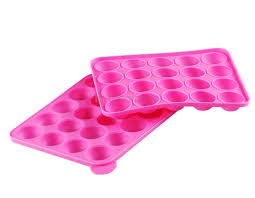
Melt the PEG on a steam bath (50 °C). Mix the powders (Acetaminophen, NutraSweet, Silica Gel, Acacia) that have been pulverized using geometric dilution. Stir the powders passed through a No. 40 sieve into the melted PEG until homogeneous, then remove from heat. Add the selected flavoring agent to the formula while stirring continuously until it reaches room temperature. When the mixture reaches a temperature that does not burn the back of the hand, pour it into the mold. Spread the mixture with a spatula to prevent it from overflowing outside the mold cavities. After cooling the mold with a hair dryer, remove the lollipops from the mold and wrap them in parchment/wax paper.
Wishing you a good week…
Source: http://pharmlabs.unc.edu/labs/lozenge/hard.htm
I would like to thank Assoc. Prof. Dr. Sinem Yaprak Karavana, faculty member of Ege University Faculty of Pharmacy, Department of Pharmaceutical Technology, for her contributions.
Spec. Pharm. Ahmet Nezihi Pekcan
Pekcan Pharmacy – Konya
[email protected]
Tel: (332) 3520657