
Dear Colleagues, although itching (pruritus) in its simplest sense is defined as an uncomfortable sensation in the skin or mucous membranes that provokes the desire to scratch or rub the affected area, we must not forget that itching can be a symptom of many diseases beyond skin conditions, ranging from anemia to parasites.
“Therefore, prolonged itching must be taken seriously. In many conditions ranging from eczema to pediculosis, drug eruptions to scabies, and fungal infections, the most significant complaint leading an individual to consult a physician is itching. This finding, which sometimes troubles the patient at least as much as pain—causing insomnia and depression, and even bringing patients to the verge of suicide—can also be accompanied by numerous internal diseases. It is possible to describe itching as a type of warning from the body or a reaction of the skin. Although it may seem simple, itching can sometimes be associated with quite complex problems. Many diseases, from intestinal parasites to cancer, can cause itching. When investigating the causes of itching, factors such as the patient’s age, existing illnesses, medications used, bathing habits, and psychological status should be taken into account. It should not be forgotten that in some drug allergies, itching can develop without any visible skin lesion. Widespread and idiopathic itching may occur during the course of systemic diseases (involving multiple organs) such as intestinal parasites, diabetes, internal organ cancers (gallbladder, liver, bowel cancer); biliary tract obstructions caused by gallstones or viral hepatitis (jaundice); malignant blood disorders such as leukemia and lymphoma; renal failure; and AIDS, or sometimes as the initial symptom of these diseases.”
In this article, I have chosen to focus on a study discussing formulas used for itching found in the NRF (Neues Rezeptur-Formularium / New German Pharmacopoeia for compounded medications). We will also examine detailed explanations of the formulations discussed in the article together in the following sections.
Compounded Formulations and the Treatment of Pruritus
Pruritus is a common symptom encountered in various fields. It is clinically important to distinguish between itching on normal skin and itching associated with skin disease or inflammation. Investigating potential underlying diseases is imperative, as pruritus possesses diverse pathogenic mechanisms and can become chronic.
Treatment (especially topical treatment) is difficult and frequently results in failure. Therefore, considering both active ingredients and suitable vehicles, there is a need to combine systemic therapy with topical applications. Therapeutic gaps still exist in the pharmaceutical product market.
Due to modern pharmaceutical regulations and practices, because individualized formulations do not undergo standardized reliability testing by pharmacists, standardized compounded formulations should be preferred. Since only pharmaceutical-grade ingredients are used in compounding, cosmetic bases such as cold cream are no longer permitted.
It has been reported from the NRF (Neues Rezeptur-Formularium / New German Pharmacopoeia for compounded medications) that—based on practical cases—they present different therapeutic options for treatment using standardized compounded formulations.
Indications for Compounded Formulations in Pruritus
Every physician encounters pruritus during routine examinations. The prevalence of chronic pruritus lasting longer than 6 months is around 20% in the population. Potential diagnoses may include renal, hematological, and hepatic diseases, diabetes, and infections. Treatment may be topical and/or systemic.
The focus of dermatology has shifted in recent years; systemic therapy is increasingly coming to the fore. In contrast, significant limitations exist, especially in the treatment of pruritus.
Apart from various antihistamines used for pruritus in urticaria, there are no licensed systemic therapeutic agents specifically for the treatment of pruritus.
In chronic pruritus, antihistamines are not effective at standard doses. Current pruritus guidelines recommend the use of higher doses.
Due to the chronic course, new therapeutic options are continually sought after.
Systemic and topical agents complement each other’s effects. Causal and symptomatic treatments consist of many different therapeutic options, as pruritus stems from numerous etiologies. In many cases, novel therapeutic approaches or customized vehicles are required for compounded formulations.
Treatment Principles
The efficacy of topical therapeutic agents depends on various factors. It is influenced by many conditions, such as active ingredients, excipients, potential interactions between ingredients, botanical properties, preparation methods, the application site, and the condition of the skin or mucosa.
Guideline: Dermatological Formulations
“Dermatological Formulations” is a guideline containing prescribed dermatological formulas. Both Physicians and Pharmacists share responsibility for the quality of dermatological formulations. Physicians can prescribe compounded formulations for an indication when they cannot find an appropriate therapeutic option in the commercial pharmaceutical market, when patient characteristics require an alternative approach, and/or when the medication needs to be prescribed in large quantities (Table 1).
Prescription details must be documented thoroughly (Table 2, Figure 1).
Table 1: Compounded Formulations with Practical Applications
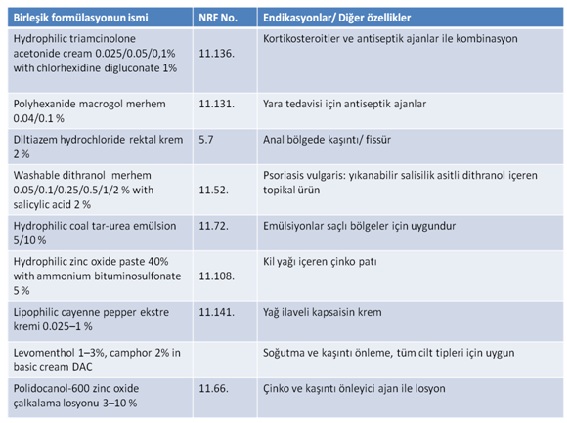
Table 2. Compounded Formulation Requirements 2013
| To ensure product safety, both Pharmacists and Physicians share equal responsibility for the quality of the dermatological formulation. |
| The therapeutic route must be comprehensible on the prescription. Otherwise, the Pharmacist must contact the Physician. |
| Active ingredients and drug combinations must be sensible and appropriate. Recommended maximum and minimum concentrations must be observed. |
| Instructions must be clear and detailed, and provided with the form. |
Conclusion
Considering the underlying disease and skin type, selecting the appropriate topical agent is crucial.
Differences in topical application on diseased skin, in neonates, and in the elderly must be taken into account. The use of compounded products is also important from a socioeconomic perspective.
It has been concluded that NRF should be prioritized for dermatological applications when using standard formulations.
Formulations Mentioned in the Article (Table 1)
Hydrophile Triamcinolonacetonid-Creme 0,025%/ 0,05%/ 0,1% mit Chlorhexidindigluconat 1% ( NRF 11.136.)
Triamcinolonacetonid 0.025 g
Mittelkettige Triglyceride 0.5 g
Chlorhexidindigluconat-Lösung 20% (m/v) 5.33 g
Basiscreme DAC ad 100.0 g
Substances in the Formula
Triamcinolone acetonide – Triamcinolonum acetonidum; Triamcinolone acetonide is an anti-inflammatory corticosteroid agent appearing as a white to cream-colored crystalline powder. It is practically insoluble in water, trace-soluble in pure alcohol, and very slightly soluble in ether. According to the British Pharmacopoeia (BP) and the United States Pharmacopeia (USP), the pH of the sterile suspension is between 5.0 and 7.5. 11 mg of triamcinolone acetonide is approximately equivalent to 10 mg of triamcinolone. Corticosteroids are widely included among the drugs used in the topical treatment of psoriasis. Triamcinolone acetonide is widely used; it is a more potent derivative of triamcinolone. Triamcinolone and its derivatives are synthetic glucocorticoids used as anti-inflammatory and immunosuppressive agents. Although the antiallergic mechanism of action of corticosteroids is not fully understood, they are known to be highly effective against allergies. While triamcinolone has been shown to be approximately 2–3 times more potent than prednisone in the treatment of inflammation in animal models, triamcinolone acetonide is 8 times more potent than prednisone. When applied topically, bioavailability depends on the characteristics of the skin tissue at the application site. Absorption from topical preparations is higher in damaged, inflamed, or occluded areas, or where the stratum corneum is thin, such as the eyelids, genitalia, and face. Absorption from topical solutions into the systemic circulation is low and becomes particularly significant when applied to the oral mucosa. It is possible to use this preparation in powder or injectable form. Usually, each milliliter of the injectable preparation contains 40 mg of the drug.
Mittelkettige Triglyceride – Oleum cocois – Coconut oil;
Mittelkettige Triglyceride, known in German as medium-chain triglycerides, is a white fatty mass obtained by cold pressing the dry solid endosperm of the fruit of the well-known plant Cocos nucifera L. (Palmae). I believe we can recall it better if I say this oil, a primary source of medium-chain triglycerides, is known as COCONUT OIL. Known as a pleasant-smelling natural cosmetic product, coconut oil is locally used primarily for hair loss, as well as for numerous skin conditions (eczema, psoriasis, skin wounds and scars, dermatitis, etc.).
Chlorhexidini gluconas – Chlorhexidine gluconate;
Chlorhexidine is a bisbiguanide-structured antiseptic and disinfectant used topically. It disrupts the stability of the bacterial cell membrane and penetrates through it. According to the British Pharmacopoeia (BP), chlorhexidine gluconate solution is an almost colorless or pale yellow liquid. It is miscible with water; soluble in alcohol and acetone; the pH of its 5% aqueous solution is between 5.5 and 7.0. Commercial 5% solutions contain non-ionic surfactants to prevent precipitation upon dilution. Such solutions are not suitable for use in body cavities. For this purpose, dilutions must be prepared from the 20% concentrated solution. Chlorhexidine is applied topically to the skin or used as an oral mouthwash; it should never be swallowed or applied to the eyes. It disrupts the stability of the bacterial cell membrane, penetrates the membrane, and leads to the precipitation of bacterial cellular cytoplasm.
Basiscreme DAC;
The formula for Basiscreme DAC, a hydrophilic base/vehicle:
DAC is the abbreviation for the German Pharmaceutical Codex (Deutscher Arzneimittel-Codex). In other words, it refers to the basic hydrophilic cream included in the German Pharmaceutical Codex. The formulation composition is as follows:
Basiscreme DAC
Glycerolmonostearat 4.0 g
Cetylalkohol 6.0 g
Mittelkettige Triglyceride 7.5 g
Weißes Vaselin 25.5 g
Macrogol-20-glycerolmonostearat 7.0 g
Propylenglycol 10.0 g
Gereinigtes Wasser 40.0 g
Dear Colleagues, I have stated the formula with the synonyms as they appear in the German Pharmaceutical Codex. You can easily obtain the excipient base ingredients listed in this formula from the relevant suppliers. As a reminder, in German, “Weißes Vaselin” is white petrolatum, and “Gereinigtes Wasser” is purified water.
To be continued…
Wishing you a good week…
Tel: (332) 3520657
Fax: (332) 3512816