
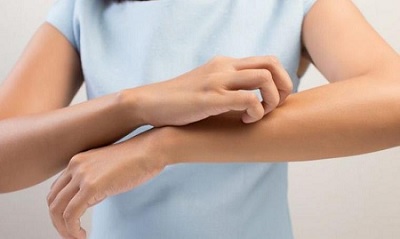
Magistral treatment options for scabies diseaseDear Colleagues, recently we frequently observe news in both print and broadcast media regarding an increase in scabies cases among patients presenting to hospitals. This situation, described by experts as quite remarkable, needs to be investigated. Another more important issue is that if one of the family members is diagnosed with this condition, all family members must be included in the treatment. This disease, which manifests especially in children primarily as itching of the palms and soles of the feet, is caused by ‘Sarcoptes Scabiei Hominis’, a microscopic arthropod invisible to the naked eye. Complaints appear after 2 to 6 weeks and mostly present as nocturnal itching. Individuals may initially overlook the itching, but over time the itching can turn into sores and progress as fluid- or pus-filled blisters. Consequently, secondary infections can develop. Itching is particularly prominent between the fingers, on the wrists, elbows, armpits, and especially around the breasts in women and the genital area in men. Delayed diagnosis can lead to outbreaks in congregate settings such as nursing homes, orphanages, and barracks.
Having a significant place in the history of medicine and defined in 1687 as the first human disease with a known cause, scabies—currently known to affect 300 million people—is reported to have an average incubation period of 2–3 weeks. The most characteristic feature of scabies is severe nocturnal itching, which intensifies as the person gets into bed and warms up, becoming severe enough to awaken the individual from sleep, whereas during the day, a milder, tolerable itching is observed.TREATMENT OPTIONSFor scabies treatment to be successful, individuals living with the infested person must also undergo treatment at the same time. In particular, concurrent treatment of family members regardless of itching is strongly recommended. While some believe that taking a hot bath and scrubbing with a bath mitt before treatment is beneficial to open the burrows, there are also those who consider it unnecessary. If a secondary infection is present, topical or systemic antibiotics are used. Irritation may develop in patients within 2–4 weeks following successful treatment..jpg) Since the hands are the most common site where symptoms are observed, it is recommended to reapply medication to the hands after each wash during treatment. If itching is very severe during scabies treatment, oral antihistamines may be beneficial to the patient, and it is recommended to continue this treatment for several weeks until the itching subsides. If the patient’s skin is heavily eczematized, applying a moderate-potency topical steroid twice daily may be beneficial. It is advantageous to apply steroids after the scabicide treatment is completed and washed off. Rarely, eczematization may be very severe and require a short course of systemic steroid therapy. It is recommended that scabies patients with severe infections be treated with a second course of scabicide following infection treatment and removal of crusts. Lindane (Gamma-benzene-hexachloride) (GBH) has been used as a first-line drug of choice against Scabies for more than 30 years. With its safety becoming questionable in recent years and considering potential adverse effects on pregnant women and the fetus, the use of alternative preparations is recommended during pregnancy; lindane should not be used in infants, children, and patients with extensively excoriated skin. While some consider GBH as the primary agent of choice among topical agents, crotamiton, benzyl benzoate, or 6% sulfur are presented as secondary alternatives, although they are reported to be less effective than GBH. In these hyperkeratotic patients, systemic agents are utilized both as specific antiscabietic agents and as adjuvant agents. For example, a systemic agent, the antimetabolite methotrexate, may be used. It has also been reported that systemic methotrexate can be utilized in refractory cases. Sulfur; cheap, effective, and easy to apply, sulfur is reported to be the oldest scabies medication still in use today. Sulfur cream is used at a concentration of 10% in adults and 2.5% in neonates. It is applied by rubbing over the entire body for 2-3 days, and it is reported that prolonged use at high concentrations can irritate the skin. Sulfur is recommended to be used nightly for 3 days in a washable base or in petrolatum. The unpleasant odor of sulfur is bothersome to patients. There are no controlled studies regarding its efficacy and toxicity. Currently, 6% sulfur cream is frequently recommended for infants, pregnant, and lactating women. It has been reported to be potentially fatal in neonates due to its toxicity. Benzyl benzoate; although synthetically produced, it was formerly used as a scabicide and occurs naturally in Peru balsam. It is prepared as a 20-30% emulsion or lotion. It is applied to the skin for 3 consecutive nights or every other day for a total of 3 applications. It may irritate the skin and eyes. Like other alternative scabicides, there is a lack of research regarding its efficacy, toxicity, or safety in pregnancy. The drug can be applied in 24-hour periods or 2 to 3 times with an interval of 1 week between applications. Permethrin; it is currently the first-line drug of choice in scabies treatment, has low toxicity, and is well tolerated. A single 8-10 hour application of its 5% cream is known to be sufficient. No allergic or significant adverse effects have been observed after treatment with permethrin; however, mild-to-moderate and transient stinging and burning sensations have been reported in a few individuals upon applying the cream to sensitive or slightly excoriated areas, and some patients have reported persistent itching for up to 2 months post-treatment. 5% permethrin cream was tested on 1,500 patients aged 2 months to 101 years, and no complaints or unexpected adverse effects were reported. Monosulfiram (Tetmosol, Tetraethylthiuram monosulfide); application of a 5-10% emulsion for 2 or 3 days is recommended. It is convenient and well tolerated in children, but its use in neonates should be avoided. Since it is absorbed through the skin, it is contraindicated in pregnant women and alcoholics. Monosulfiram is chemically similar to disulfiram; if alcohol is consumed during or immediately after treatment, a disulfiram-like reaction occurs with flushing, sweating, and tachycardia. Soaps containing monosulfiram are also used prophylactically in regions where scabies is endemic. Crotamiton (Eurax, N-ethyl-o-crotonotoluidide); available as a 10% cream or lotion, it is presented as an odorless, non-irritating, and safely usable medication. It can be recommended for infants, young children, pregnant women, and patients with CNS disease. Since its efficacy is lower compared to other scabicides, repeated application is required. The medication is applied to the whole body after a warm bath, left on for 24 hours, and reapplied after 72-96 hours. Malathion; 0.5% malathion in alcohol is used in the treatment of scabies. The drug is left on the skin for 24 hours, and a higher cure rate can be achieved when repeated after an interval of a few days. Thiabendazole; its 10% suspension is reported to be beneficial when administered orally (25 mg/kg daily) twice daily for 5 or 10 days. Topical thiabendazole also exhibits a limited scabicidal effect, but multiple applications may be required. Ivermectin; there are studies regarding its use in the treatment of scabies and Norwegian (crusted) scabies. In 10 out of 11 patients with no disease other than scabies and 10 out of 11 patients with HIV infection (91%), cure was achieved with a single dose of ivermectin, and no signs of scabies were found at the 4-week follow-up.
Since the hands are the most common site where symptoms are observed, it is recommended to reapply medication to the hands after each wash during treatment. If itching is very severe during scabies treatment, oral antihistamines may be beneficial to the patient, and it is recommended to continue this treatment for several weeks until the itching subsides. If the patient’s skin is heavily eczematized, applying a moderate-potency topical steroid twice daily may be beneficial. It is advantageous to apply steroids after the scabicide treatment is completed and washed off. Rarely, eczematization may be very severe and require a short course of systemic steroid therapy. It is recommended that scabies patients with severe infections be treated with a second course of scabicide following infection treatment and removal of crusts. Lindane (Gamma-benzene-hexachloride) (GBH) has been used as a first-line drug of choice against Scabies for more than 30 years. With its safety becoming questionable in recent years and considering potential adverse effects on pregnant women and the fetus, the use of alternative preparations is recommended during pregnancy; lindane should not be used in infants, children, and patients with extensively excoriated skin. While some consider GBH as the primary agent of choice among topical agents, crotamiton, benzyl benzoate, or 6% sulfur are presented as secondary alternatives, although they are reported to be less effective than GBH. In these hyperkeratotic patients, systemic agents are utilized both as specific antiscabietic agents and as adjuvant agents. For example, a systemic agent, the antimetabolite methotrexate, may be used. It has also been reported that systemic methotrexate can be utilized in refractory cases. Sulfur; cheap, effective, and easy to apply, sulfur is reported to be the oldest scabies medication still in use today. Sulfur cream is used at a concentration of 10% in adults and 2.5% in neonates. It is applied by rubbing over the entire body for 2-3 days, and it is reported that prolonged use at high concentrations can irritate the skin. Sulfur is recommended to be used nightly for 3 days in a washable base or in petrolatum. The unpleasant odor of sulfur is bothersome to patients. There are no controlled studies regarding its efficacy and toxicity. Currently, 6% sulfur cream is frequently recommended for infants, pregnant, and lactating women. It has been reported to be potentially fatal in neonates due to its toxicity. Benzyl benzoate; although synthetically produced, it was formerly used as a scabicide and occurs naturally in Peru balsam. It is prepared as a 20-30% emulsion or lotion. It is applied to the skin for 3 consecutive nights or every other day for a total of 3 applications. It may irritate the skin and eyes. Like other alternative scabicides, there is a lack of research regarding its efficacy, toxicity, or safety in pregnancy. The drug can be applied in 24-hour periods or 2 to 3 times with an interval of 1 week between applications. Permethrin; it is currently the first-line drug of choice in scabies treatment, has low toxicity, and is well tolerated. A single 8-10 hour application of its 5% cream is known to be sufficient. No allergic or significant adverse effects have been observed after treatment with permethrin; however, mild-to-moderate and transient stinging and burning sensations have been reported in a few individuals upon applying the cream to sensitive or slightly excoriated areas, and some patients have reported persistent itching for up to 2 months post-treatment. 5% permethrin cream was tested on 1,500 patients aged 2 months to 101 years, and no complaints or unexpected adverse effects were reported. Monosulfiram (Tetmosol, Tetraethylthiuram monosulfide); application of a 5-10% emulsion for 2 or 3 days is recommended. It is convenient and well tolerated in children, but its use in neonates should be avoided. Since it is absorbed through the skin, it is contraindicated in pregnant women and alcoholics. Monosulfiram is chemically similar to disulfiram; if alcohol is consumed during or immediately after treatment, a disulfiram-like reaction occurs with flushing, sweating, and tachycardia. Soaps containing monosulfiram are also used prophylactically in regions where scabies is endemic. Crotamiton (Eurax, N-ethyl-o-crotonotoluidide); available as a 10% cream or lotion, it is presented as an odorless, non-irritating, and safely usable medication. It can be recommended for infants, young children, pregnant women, and patients with CNS disease. Since its efficacy is lower compared to other scabicides, repeated application is required. The medication is applied to the whole body after a warm bath, left on for 24 hours, and reapplied after 72-96 hours. Malathion; 0.5% malathion in alcohol is used in the treatment of scabies. The drug is left on the skin for 24 hours, and a higher cure rate can be achieved when repeated after an interval of a few days. Thiabendazole; its 10% suspension is reported to be beneficial when administered orally (25 mg/kg daily) twice daily for 5 or 10 days. Topical thiabendazole also exhibits a limited scabicidal effect, but multiple applications may be required. Ivermectin; there are studies regarding its use in the treatment of scabies and Norwegian (crusted) scabies. In 10 out of 11 patients with no disease other than scabies and 10 out of 11 patients with HIV infection (91%), cure was achieved with a single dose of ivermectin, and no signs of scabies were found at the 4-week follow-up..jpg)
PREVENTION and CONTROLSince scabies is highly contagious and can infect anyone regardless of age, sex, and socioeconomic status, early diagnosis and the early implementation of control measures are of great importance. In controlling scabies within a population, patient treatments and all efforts carried out without considering community epidemiology are regarded as a waste of time and resources. As in classical scabies, in scabies crustosa, clothes, bed sheets, and towels must be washed, non-washable items must be ironed or dry-cleaned, and mattresses, duvets, and blankets must be aired for 3–5 days. Additionally, floors, furniture, and children’s toys should also be cleaned as they can be sources of contamination. In hospitals housing patients with Norwegian scabies, contaminated laundry delivered to the laundry facilities must be specially packaged and labeled. Packaged soiled laundry should not be opened prior to washing, and must be kept at above 500°C for a duration of 10 minutes. At the end of this period, the mites and their eggs in the laundry are killed. To completely eradicate mites from the room of a patient with Norwegian scabies, all floors and furniture, including curtains, should be vacuumed, wiped with disinfectant solutions, and an acaricide must be applied to the room. In conclusion, prevention and control of scabies require sound planning along with public education.Magistral formulation options;
Formula 1
Rp.
Potassium carbonate 10 g
Sulfur 20 g
Vaseline 120 g
Formula 2
Wilkinson’s ointment
Rp.
Beech tar 10 g
Sulfur 10 g
Calcium carbonate 20 g
Yellow petrolatum 20 g
Potash soap 20 g
Formula 3
Rp.
Naphthol 5-10 g
Soft soap 25 g
Sulfur 25 g
Calcium carbonate 25 g
Lanolin 25 gIn children;
Formulas containing balsam of Peru are less irritating than sulfur-containing formulas and more active against secondary infections, and are easily applied by gently rubbing over the entire body for 6 or 7 consecutive days. A bath is taken every morning or the body is washed with a soapy lotion. This formula is particularly recommended for the treatment of infected scabies in infants.Formula 4
Rp.
Balsam of Peru 10 g
Beeler base q.s. 100 gIn children, it is used by applying to the body for 4 consecutive days.Formula 5
Sodium thiosulfate 40 g
Distilled water q.s. 100 g
Used in the treatment of scabies in Russia and other Eastern European countries. In the Hungarian army, 40% sodium thiosulfate was applied, and 10 minutes later, the following formula was applied to the patients.
Hydrochloric acid 5 g
Distilled water ad 100 g
Formula 6
Lindane (Gamma benzene hexachloride) 0.30 g
Cetostearyl alcohol 9.0 g
White petrolatum 14.0 g
Liquid paraffin 6.7 g
Distilled water 69.9 g
Methylparaben 0.1 g
Formula 7
Benzyl benzoate 250 g
Triethanolamine 5 g
Oleic acid 20 g
Distilled water qs. 1000 gWishing you a good week…Spec. Pharm. Ahmet Nezihi PEKCANPekcan Pharmacy – Konya[email protected]
Source:
- Turkish Journal of Parasitology, 30 (1): 78-83, 2006 Acta Parasitologica Turcica © Turkish Society for Parasitology © Turkish Society for Parasitology Approach to the Scabies Patient Ayşegül YOLASİĞMAZ ÜNVER, Nevin TURGAY Ege University Faculty of Medicine Department of Parasitology, Bornova, Izmir
- Formulas in Dermatology (Prof. Dr. Nuran Atmanoğlu)
- La Formulación magistral en la oficina de farmacia 1 Valencia, 1981
- Pharmaceutical Society of Serbia
Spec. Pharm. Ahmet Nezihi Pekcan
Pekcan Pharmacy – Konya
[email protected]
Tel: (332) 3520657http://www.majistralformul.com/