Dear Colleagues, “Hemorrhoidal Disease” is a condition affecting 50% of the population, seen in both men and women. Since hemorrhoidal disease is considered a taboo, its prevalence is higher than thought. In this article, we will examine together a formula I translated from the Dutch National Formulary (FNA). Before moving on to the formula, let us refresh our knowledge about the disease.
Hemorrhoidal disease is the swelling and inflammation of the veins in the lower rectum or anus. This condition can develop as a result of excessive straining and forcing during defecation.
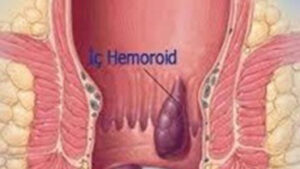
Hemorrhoidal VASCULAR cushions are present in everyone and help the anal veins close the anus completely. However, if these cushions enlarge or prolapse, they cause complaints and problems. This condition is called Hemorrhoidal disease. This becomes especially prominent when there is pressure on the vessels within weak hemorrhoidal tissue. When hemorrhoidal veins become inflamed and swollen, hemorrhoids begin to cause issues.
Itching, burning, pain, tenderness, and bleeding are the primary complaints. This condition becomes more pronounced with straining during bowel movements. Factors increasing hemorrhoid formation: overweight – obesity, poor diet, chronic constipation, pregnancy, anal intercourse. Anal fissure: It is a tear, crack, or superficial ulcer in the anal wall at the posterior or anterior part of the anus, i.e., the terminal part of the anus. In this case, it causes intermittent bleeding and, most importantly, severe pain during defecation, along with itching and discomfort. Constipation and defecation with straining exacerbate these complaints. Anal fissures refer to a tear like a scratch or a fine crack-like wound in the anal canal. Since the symptoms are similar, fissure disease is frequently and mistakenly confused with hemorrhoidal disease. In individuals with anal fissure, severe pain, itching, and burning occur during bowel movements. Because a fissure is a crack or tear in the anus, no swollen prolapsing lump or hemorrhoidal pile is observed.
There are two common types of Hemorrhoids.
Internal Hemorrhoids: Normally located inside the anus.
External Hemorrhoids: Located on the outer part of the anus. Because internal hemorrhoids are located inside the anus, they cause less pain and are not noticed externally unless the disease progresses. External hemorrhoids cause more pronounced complaints and are noticed more quickly.
Although hemorrhoidal disease is quite an uncomfortable condition, it is not life-threatening. Hemorrhoid symptoms may disappear within a few days, but it is a recurring disease that often returns in a worse manner.
To prevent hemorrhoidal disease or its recurrence/relapse, we recommend leading a healthy lifestyle, opting for a variety of foods rich in fiber, exercising, and paying attention to toilet hygiene and bowel habits.
Rp
Benzocainum 2 g
Butylis aminobenzoas 2 g
Tanninum 10 g
Adaps lanae 20 g
Vaselinum flavum 66 g
Substances in the formula
Benzocaine – Anesthesine – Benzocaina – Anaesthesinum:
Benzocaine is a short-acting ester-type local anesthetic. Benzocaine occurs as colorless or white crystals or a white, odorless crystalline powder. Its melting point is between 88-92°C. Solubility according to the British Pharmacopoeia (BP): Very slightly soluble in water; freely soluble in alcohol, chloroform, and ether. Solubility according to the United States Pharmacopeia (USP): Soluble 1:2500 in water, 1:5 in alcohol, 1:2 in chloroform, and 1:4 in ether; soluble in dilute acids; soluble 1:30 to 1:50 in almond oil and olive oil. Benzocaine and tetracaine have a higher potential to cause contact allergy compared to other local anesthetics. Benzocaine is applied topically to the skin. It is minimally absorbed from the application site; therefore, unwanted systemic side effects are relatively rare. Its effect starts rapidly and is observed within 1 minute. The duration of action is about 15-20 minutes. Benzocaine is metabolized in the liver. Its metabolites undergo renal elimination.
Butylis aminobenzoas:
It is antibacterial. It has the appearance of a yellow powder. Insoluble in water, sensitive to light and air; butyl 4-aminobenzoate is an aminophenyl ester derivative.
Tannic acid – Gallotannic acid – Tanninsäure – Tannin:
It is a yellowish-light brown powder. It has a slight characteristic odor. Soluble in water at a ratio of 1 g/0.35 ml. Its melting point is approximately 2100C. Tannin/tannic acid is stable under normal conditions of use and storage. It darkens when exposed to air and light. It shows incompatibility with heavy metal salts, strong oxidants, lime water, albumin, gelatin, and alkaloids. Contact with air and light should be avoided, dispersion as dust should be prevented, and it should not be kept together with incompatible substances. In medicine, due to its vasoconstrictive and astringent effects on blood vessels and mucous membranes, it is used in tonsillitis, pharyngitis, hemorrhoids, and certain skin conditions. Tannin solutions are acidic and have an astringent taste.
Its most important source of origin is the gall oak (Aleppo oak). Tannins, which are also abundantly found in oak acorns, are also antiseptic compounds. Tannic acid is extracted into water by extracting the plant with hot water (like brewing tea). The solution is then subjected to evaporation to obtain tannin (or tannic acid) in solid form.
Synthetic tannic acids are found in various preparations used in the treatment of eczema.
Lanoline – Graisse de laine – Adeps lanae – Refined wool fat – Lanae cera – Lanoleine T.K.:
Obtained from sheep’s wool. It is light yellow in color and has an ointment consistency. Soluble in ether, petroleum ether, chloroform, and boiling absolute alcohol. It absorbs twice its weight in water. It is an emulsifier. It forms water/oil emulsions. In anhydrous form, its consistency is quite firm. With the addition of water, a pasty texture is formed. It absorbs water by weight. It is easily absorbed by the skin and is odorless. It is used as a vehicle (base).
The vehicle defined as lanolinum in the Turkish Pharmacopoeia (T.K.) contains 13 parts lanolin, 3 parts liquid paraffin, and 4 parts water.
Vaseline – Vaseline blanche:
Known as white vaseline (petrolatum), it is an emollient ointment vehicle. It is not easily absorbed through the skin. It is obtained by bleaching yellow vaseline. It is odorless and tasteless.
Preparation of the formula
The powder forms of Benzocainum, Butylis aminobenzoas, and Tanninum are triturated in a mortar, then mixed with a portion of vaseline melted in a hot water bath, and the preparation is completed by mixing with the remaining lanolin and vaseline until homogeneous.
If desired, to relieve itching and pain in the anal region, the following may be added to this formula:
5% zinc sulfate (for astringent/constrictive purposes);
3% lidocaine (for analgesic and antipruritic purposes);
1% hydrocortisone (for antipruritic and anti-inflammatory purposes).
Wishing you a pleasant week…
Exp. Pharm. Ahmet Nezihi Pekcan
Pekcan Pharmacy – Konya
[email protected]
Tel: (332) 3520657
http://www.majistralformul.com/