
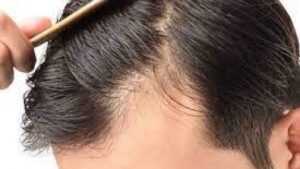
Common hair loss in men (ANDROGENETIC ALOPECIA) and magistral treatment options
The most common form of hair loss is male pattern baldness, also known as androgenetic alopecia. It is a chronic skin condition observed across the entire scalp or in localized areas. It occurs in various patterns and affects both men and women. It is characterized by a defined pattern of hair loss from the crown of the scalp and a receding hairline. It affects a large proportion of the population. It may begin in puberty and increase with age. Hair loss is a common problem in men over 50 years of age, and the predominant cause of hair loss in men is Androgenetic Alopecia (AGA).
Although the exact cause and mechanism of hair loss are not fully understood, genetic and endocrine factors play a significant role. The condition can lead to social and work-related issues due to intense emotional distress in individuals. Hair has become a defining aspect of personal image and identity, especially for women. 40% of women suffering from alopecia experience marital problems, while 63% encounter career-related issues. Patients experience significant social discomfort and low self-esteem. In more than 30% of cases, specific problems are attributed to hair loss.
Treatment challenges;
Androgenetic alopecia is a poorly understood, progressive condition. Androgen hormones are involved in the pathophysiology of the disease. This makes treatment difficult and complex. Androgen receptor antagonists used to treat women are not suitable for men due to potential risks of gynecomastia, feminization, and impotence. There are three options available to the patient for androgenetic alopecia:
1. Medical therapy
2. Using a wig
3. Surgical treatment
Each of these has its own advantages and disadvantages. Regarding medical treatment, there are two options approved by the FDA in the USA for the treatment of androgenetic alopecia in men.
1. Topical minoxidil
2. Oral finasteride
Minoxidil is an oral antihypertensive drug that causes hair growth as a side effect. It is used topically in the treatment of baldness. Although it promotes hair growth in most patients, the hair that forms in the applied areas is generally weak and fine. When treatment is discontinued, hair loss is observed to recur; however, its primary effect is to halt the progression of hair loss.
Female AGA is less common, affecting approximately 40% of women. Hair loss is particularly observed after menopause. DHT is thought to play a role in the pathogenesis of AGA.
Dihydrotestosterone; is the name given to the potent metabolite that is the active form of the testosterone hormone present in the male body. The DHT hormone is largely formed by the conversion of testosterone in peripheral tissues via the 5-alpha reductase enzyme. In order for the testosterone hormone to become active and exert androgenic effects on tissues, it must be converted into the DHT hormone by the enzyme called 5-Alpha Reductase. Testosterone is converted into DHT by two enzymes known as type-1 5-Alpha Reductase and type-2 5-Alpha Reductase. Without this conversion, testosterone cannot be effective in many tissues and organs. The DHT hormone ensures that the fetus in the mother’s womb acquires male sexual characteristics and develops sexual organs. The DHT hormone also exerts numerous effects on the fetal brain in the womb. It facilitates the establishment of gender identity in the developing fetus. In addition, during puberty, the DHT hormone induces the development of secondary sexual characteristics and male-pattern differentiation. Thus, a boy who could hardly be distinguished from a girl before puberty gradually undergoes differentiation and steps from childhood into manhood. Beards and mustaches begin to grow, the voice deepens, height increases, muscle mass rises, the penis grows, and the testes begin producing sperm. Testosterone accomplishes all this differentiation by converting into the DHT hormone. Another function of the DHT hormone is to maintain the functions of glandular prostate tissue. Furthermore, DHT makes many crucial contributions to male metabolism, ranging from sperm production to increasing aerobic capacity.
DHT’s roles in male metabolism continue throughout a lifetime. In addition, testosterone and DHT can lead to health problems such as androgenetic alopecia, acne, and prostate diseases in genetically susceptible individuals. Individuals genetically sensitive to these androgenic hormones are affected much more by DHT than by testosterone.
Following puberty, as a result of genetic predisposition and androgen activation, it is characterized by the transformation of terminal hairs into vellus hairs (colorless, fine hairs shorter than two centimeters covering the body; peach fuzz) and their shedding. Androgens are synthesized in the testes in men, and in the ovaries and adrenal glands in women. Although the primary androgen is testosterone, testosterone cannot be effective without converting into Dihydrotestosterone via the 5-Alpha Reductase enzyme. Therefore, testosterone is converted into dihydrotestosterone by 5-alpha reductase within keratinocytes in the hair matrix and is transferred to the nucleus via cytoplasmic receptors and binding proteins. The receptor binds to DNA, and mRNA is generated. Subsequently, primary proteins—mainly keratins—are encoded. While some follicles metabolize androgens to stimulate hair growth, others inhibit growth, causing hairs to regress from terminal to vellus, as observed in androgenetic alopecia. This explains why androgens increase beard and body hair while causing scalp hair loss. The hair is subsequently shed. The anagen phase normally lasts 3 years, whereas the telogen phase lasts only 100 days. In this case, the anagen/telogen ratio is 9/1. Daily hair loss can reach up to 100 hairs. In androgenetic alopecia, the anagen phase is shortened. Consequently, the anagen/telogen ratio also declines. Eventually, hair follicles become miniaturized, reaching the terminal hair state.
In men; it usually begins after puberty, from around age 20. Occasionally, it may be delayed until the ages of 30-40. In 96% of cases, it begins as bitemporal recession. Thinning and opening occur at the vertex. Occasionally, complete baldness develops. However, the occipital region is always spared. There is a transformation of terminal hairs into vellus hairs. Hormonal balance is normal in men. In male pattern alopecia, the risk of coronary artery disease is higher compared to normal individuals. In women; it usually begins in the late 20s and early 40s. Diffuse thinning between the frontal region and vertex and the transformation of terminal hairs into vellus hairs are present. Hair thinning is observed to expand progressively. It may be associated with various conditions such as polycystic ovary syndrome, androgen-secreting ovarian tumors, and adrenal tumors. Relevant hormone levels should be checked, and ovarian-adrenal ultrasonography should be performed. In women, there may be an increase in free testosterone and DHEA sulfate levels and a decrease in SHBG levels. It may occasionally be accompanied by acne, hirsutism, menstrual irregularity, or virilization.
A prerequisite for the development of androgenetic alopecia in men is healthy testicular and androgen functions. Testosterone can only become effective after being converted into Dihydrotestosterone by the 5-alpha reductase enzyme. It has been demonstrated that androgen receptors are found in higher density in the hair follicles of men with androgenetic alopecia.
Contrary to popular belief, androgenetic alopecia is not caused solely by Dihydrotestosterone (DHT). Androgen hormones such as Dehydroandrosterone, Testosterone, and Androstenedione also play a role in androgenetic alopecia. However, because Dihydrotestosterone (DHT) has a very potent androgenic effect, it is primarily responsible for the androgenetic alopecia syndrome that occurs in most men, especially at younger ages.
With aging, as the cytoplasmic cell membranes of androgen receptors in hair follicles become thinner, hair follicles become more sensitive to androgen hormones. While only Dihydrotestosterone damages hair follicles in youth, with aging, other androgen hormones such as Dehydroandrosterone, Testosterone, and Androstenedione also begin to damage hair follicles and cause hair loss. This is the primary reason why the incidence of androgenetic alopecia reaches up to 80 percent in elderly men.
On the other hand, androgen receptors are not present in the same number and distribution on every person’s scalp. For this reason, while some people go bald at a young age, others can maintain thick hair until the final stages of life.
Pre-pubertal castration has been reported to prevent male pattern baldness. In children undergoing delayed puberty, androgenetic alopecia also does not develop until treatment begins and testosterone levels rise. Anti-androgens can prevent male pattern baldness. Of course, such treatments are unacceptable due to their hypogonadism effects.
Specific inhibition of 5-alpha reductase type 2 can prevent further progression of alopecia and achieve denser hair. In this regard, finasteride, which is used in the treatment of BPH, can be mentioned. However, this achieved state is temporary. As the cytoplasmic membranes of androgen receptors in hair follicles thin and become more permeable with age, sensitivity to androgen hormones will increase, and hair follicles will become sensitive to other androgen hormones such as Dehydroandrosterone, Testosterone, and Androstenedione along with the existing Dihydrotestosterone (DHT). The issue here is not the presence of androgen hormones, but the number, distribution, and genetic sensitivity of androgen receptors located in the scalp toward androgen hormones.
Minoxidil, on the other hand, is an antihypertensive drug that has been shown to increase hair growth within 4-6 months. Following discontinuation of the drug, the previous condition returns.
Finasteride is a potent 5-alpha reductase inhibitor. Its effect is to lower circulating dihydrotestosterone by inhibiting its production by the prostate rather than affecting androgen metabolism in the hair follicle. Loss of libido is one of the significant side effects of this oral therapy.
At the 7th World Congress for Hair Research, a Dutch research group reported that topical and oral administration of finasteride had the same rate of effect on DHT levels in the scalp and serum. Both uses reduce serum DHT levels to almost the same degree (~70%). In this study, side effects expected from oral finasteride were not observed with local finasteride administration.
Synergistic effect of local administration of minoxidil and finasteride;
1. Given their distinct mechanisms of action, it was hypothesized that concurrent administration of both molecules should exhibit a synergistic effect.
2. It was also anticipated that side effects associated with oral administration would be reduced.
3. If the dosage of the individual drug can be reduced, it will further improve the safety profile of the treatment.
In a clinical study conducted;
The effect of the new combination was observed in a study. The subjects were divided into three groups.
• Group I (Placebo Group) was treated with plain lotion
• Group II (Minoxidil Group) was treated with 5% Minoxidil lotion
• Group III (Combination Group) was treated with 5% Minoxidil lotion, 0.025% Tretinoin, and 0.1% Finasteride.
Subjects were evaluated every six months with the aid of a subjective questionnaire, objective examination, and close-up photographs.
Results;
In the Placebo Group, there was neither improvement nor deterioration. In the Minoxidil Group, 25% of the subjects showed hair growth. In the Combination Group, improvement was observed in 75% of cases. Furthermore, the quality of the newly formed hair was superior.
Discussion;
This study demonstrates that topical application of Minoxidil and Finasteride leads to better hair growth. Combination therapy has proven effective. These results were documented in a triple-blind clinical study using a subjective questionnaire, objective examination, and close-up photographs. The findings are statistically significant.
Conclusion;
Combination therapy containing Minoxidil and Finasteride holds great promise in the treatment of Alopecia androgenetica, which has been difficult to treat until now.
.jpg)
In the product named DualGen, used in the USA for patients with Androgenetic Alopecia, the active ingredients are present in the following ratios;
Minoxidil 15%
Finasteride 0.1% (1 mg finasteride in 1 mL)
Azelaic acid 5%
Retinol 0.025%
Caffeine 0.001%
ABN ComplexTM (0.8%)
The product presentation includes the following information:
✔ DualGen-15 NO PG Plus is the most potent solution in combating hair loss. Compared to DualGen-15 NO PG, this product contains added topical finasteride.
✔ Two FDA-Approved Ingredients in One Solution: DualGen-15 NO PG Plus contains maximum-strength FDA-approved hair growth stimulator (15% minoxidil) and Finasteride DHT blocker (0.1%), along with other supporting ingredients such as Azelaic acid (5%), Retinol (0.025%), and Caffeine.
✔ There is no need to take the active ingredient finasteride as a tablet. If you are currently taking a 1 mg finasteride pill daily, you do not need to continue taking pills if you use this topical solution. The amount of finasteride in each mL is 1 mg.
✔ Who should use DualGen-15 NO PG Plus?: This product is for men with advanced hair loss. Dualgen-15 NO PG should be used for at least four (4) months until satisfactory results are achieved.
✔ Propylene Glycol-Free (PG or PPG): PG is used in other minoxidil hair regrowth products (e.g., Kirkland minoxidil, DS laboratories). It is not used in this product in order to prevent any scalp irritation such as itching and/or inflammation. Glycerin is used as a vehicle instead of propylene glycol.
WARNINGS
This product is manufactured for men only. Women should never use this product. It is not recommended for individuals with severe heart conditions or hypertension patients.
Wishing you a good week…
References
1. Hamilton JB. Patterned loss of hair in man: Types and incidence. Ann NY Acad Sci 1951; 53: 708-11.
2. Anjiki T, Suzuki S. Injection corrosion study on the angiography of the rat skin. Jikken Dobutsu. 1991; 40 (4): 439-46.
3. Hunt N, McHale S. Reported experiences of persons with alopecia areata. J Loss Trauma 2005; 10: 33-50.
4. Weitz R. Rapunzel’s daughters: what women’s hair tells us about women’s lives. New York: Farrar, Straus and Giroux, 2004.
5. Hunt N, McHale S. Understanding alopecia. London: Sheldon, 2004.
6. Passchier J, Donk JV, Dutree-Meulenenberg PO, Verhage F. Psychological characteristics of men with alopecia androgenetica and their effects on a clinical trial with topical minoxidil. International Journal of Dermatology. 1988; 27 (6): 441-446.
7. Girman CJ, Rhodes T, Lilly FR, Guo SS, Siervogel RM, Patrick DL, Chumlea WC. Effects of self-perceived hair loss in a community sample of men. Dermatology 1998; 197: 223-229.
8. Sinclair R. Fortnightly review: Male pattern androgenetic alopecia. BMJ. 1998; 317: 865-869.
9. Olsen EA, Weiner MS. Topical minoxidil in male pattern baldness: effects of discontinuation of treatment. J Am Acad Dermatol 1987; 17: 97-101.
10. Olsen EA. Finasteride (1 mg) in the treatment of androgenetic alopecia in men. Aust J Dermatol 1997; 38: A316.
Specialist Pharmacist Ahmet Nezihi Pekcan
Pekcan Pharmacy – Konya
[email protected]
Tel: (332) 3520657
http://www.majistralformul.com/