Dear colleagues, this week I will write about a preparation that is used orally and preferred as a vehicle and viscosity enhancer in the form of syrup in liquid preparations.
Although it is referred to as simple syrup, I would like to talk about a preparation whose preparation is not very easy.
First, let us recall general information about syrups.
Syrups are liquid preparations containing active substances and excipients in concentrated sugar solutions. A syrup prepared solely by dissolving sugar in water is called simple syrup (sirupus simplex-sirop simple).
Syrups are also named according to the substances they contain. For example; codeine syrup, tolu syrup, etc…
Syrups are almost always prepared on a weight-by-weight (w/w) basis.
Syrups should contain an amount of sugar as close to saturation as possible, but not saturated. This condition is very important for the storage of syrups. As the sugar concentration in syrups decreases, it becomes easier for microorganisms to proliferate. Microorganisms proliferate with difficulty in a syrup containing a sugar concentration close to saturation. The reason for this is that the high density of the syrup is compatible with the osmotic pressure of the microorganisms themselves.
Syrups are spoiled by fungi, yeasts, and bacteria. This spoilage is seen in the form of cloudiness of the syrup, precipitate formation, fermentation, and a moldy odor.
To prevent spoilage as much as possible, syrup prepared with heat should be poured into dry bottles while still hot as soon as it is prepared; after cooling with the caps closed, the water droplets that evaporate and collect in the neck of the bottle should be mixed with the syrup by shaking the bottle. Otherwise, water droplets falling onto the surface of the syrup will lower the sugar concentration and reduce its density there, causing rapid proliferation of microorganisms.
If the prepared syrup has a density close to the concentration of simple syrup, the above method gives good results and no preservative substance is required. Syrups and syrup-containing preparations whose active ingredients do not possess preservative properties must be protected against microorganisms.
Syrups are generally preserved with the help of chemical substances. If syrups are to be used in a short time, their preservation does not pose a significant problem. There is no need to add preservatives to syrups and potions prepared by prescription and to pharmacopeia formulas to be used immediately.
Syrups should be stored protected from light in cool but not cold places.
Syrups and potions are usually taken by spoon. Therefore, it is recommended that both pharmacopeias and physicians write the active ingredients in grams and the vehicle in volume (in ml). In this way, the physician easily calculates the amount of medication to be administered and also easily understands how much active substance the patient will take.
When administering syrups and potions to the patient, they should always be given in ml, that is, measuring containers should be used. Since measuring containers cannot always be found in homes, they are given by spoon measurement as is customary today.
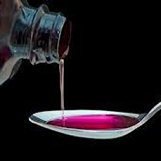
In general, spoon volumes are accepted as follows:
(Coch.parv.)……… teaspoon …… 5 ml ……6 g
(Coch.med.)………Dessert spoon …….10 ml ….13 g
(Coch.amp.)……….Tablespoon…..15 ml ….20 g
When a teaspoon is mentioned, it should not be understood as the tea and coffee spoons we use in our homes. The ones we use hold between 1 and 2.5 ml of liquid. For medicinal purposes, when a teaspoon is mentioned in our practice, it is appropriate to use a baby spoon or a medicine spoon.
After briefly mentioning syrups, returning to our formula:
SIMPLE SYRUP
SIROP SIMPLE
SIRUPUS SIMPLEX T.K.(1954) TF (1974)
Sugar ………… 64 g
Water……………….36 g
Preparation: In a tared container, sugar is dissolved in water on a water bath at a moderate heat. Then, it is brought to a brief boil while stirring continuously. Boiling water is added to replace the water lost through evaporation. While hot, it is strained through cloth or filtered.
Sample calculation; Prepare 500 g of Simple syrup.
When prepared according to the formula given above, 100 g of syrup is obtained. The amount required for the 500 g requested from us:
Sugar = 64*500/100 = 320 g
Water = 36*500 / 100 = 180 g.
WISHING YOU A PEACEFUL, HAPPY AND HEALTHY YEAR 2013…
Specialist Pharmacist Ahmet Nezihi Pekcan
Pekcan Pharmacy – Konya
[email protected]
Tel: (332) 3520657
http://www.majistralformul.com/