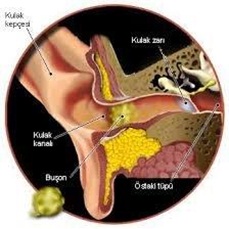
Dear colleagues, this week we will examine an antiseptic formula prescribed in France that is used for ear lavage.
Eau oxygénée boriquée
Acide borique …… 2.5 g
Borax ………………. 0.50 g
Eau oxygénée …..100.00 ml
Substances in the formula
Boric acid-Acido borico-Borsaure-ACIDUM BORICUM TP. 1974 (Pages 16-17) Boric acid is found as odorless white crystals or shiny flakes, or as a white crystalline powder that feels unctuous to the touch. It is soluble in water at 1:20, in boiling water at 1:3.6, in alcohol at 1:16, in boiling alcohol at 1:6, and in glycerin at 1:4 (85%). Boric acid forms a more acidic complex with glycerin than by itself. Boric acid is a drug with weak bacteriostatic and fungistatic effects. The exact mechanism of the antibacterial and antifungal effects of boric acid is unknown. Boric acid shows a slow bacteriostatic effect against staphylococci and streptococci. It dissolves in 25 parts water, 3 parts boiling water, 16 parts ethanol (95%) R, and 5 parts glycerol (85%) R. While its 5% aqueous solutions exhibit a phagocytic effect, its 2-4% solutions prevent the proliferation and development of bacteria.
Borax-Sodii boras-Tinkal-Borax-Borate de sodium T.P.: Prismatic crystals. It dissolves in 22 parts water at 20 °C, 0.5 parts boiling water, and glycerin; it does not dissolve in alcohol. It is incompatible with strong acids. It is also used externally in creams as a mild astringent and emulsifier (this term, also called emulsifying agent, is used in the sense of lowering surface tension and facilitating mixing). As a weak antiseptic, it is used as a gargle and mouthwash in stomatitis, aphthae, and thrush, and its solution or ointment is used in certain skin diseases (eczema, erythema).
Hydrogen peroxide-Hydrogenii peroxidum-Hydrogen peroxide: Aqueous solutions of hydrogen peroxide slowly decompose upon standing or under the influence of alkalis. Light, shaking, and heat accelerate this decomposition. Incompatibility also causes decomposition. Hydrogen peroxide solutions are incompatible with organic substances, reducing agents (substances prone to oxidation), certain metals, metal salts, alkalis, iodides, permanganates, and other oxidizing agents. Hydrogen peroxide solutions containing a suitable stabilizer should be stored between 15-30°C and in airtight, tightly closed containers. Solutions should not be stored for a long time. Hydrogen peroxide is an oxidizing substance used as an antiseptic, disinfectant, and deodorant. It shows weak antibacterial activity; it is also effective against viruses, including HIV. It has a mild hemostatic effect. Its antiseptic effect depends on the sudden release of oxygen when applied to tissues. However, this activity is limited to the very short period during which oxygen release continues. In addition, the antimicrobial effect of the released oxygen is reduced by organic substances present in the environment. In wound debridement, the foaming effect caused by the oxygen solution is probably more important than the antimicrobial effect. Hydrogen peroxide solutions up to 6% are used for cleaning wounds and ulcers. Creams containing 1.5% stabilized hydrogen peroxide are also used for the same purpose. Ear drops containing hydrogen peroxide are used to remove earwax. Such ear drops should preferably be prepared fresh by diluting a 6% hydrogen peroxide solution with 3 parts water.
Preparation of the Formula
Boric acid is crushed in a mortar and dissolved in 30 ml of hydrogen peroxide. Then, sodium borate is added to complete the dissolution process. The solution is filtered and brought up to 100 ml with hydrogen peroxide. It should be stored for a short term between 15-30°C in airtight, tightly closed containers.
It is used for ear lavage for antiseptic purposes.
Wishing you a good week…
Specialist Pharmacist Ahmet Nezihi Pekcan
Pekcan Pharmacy – Konya
[email protected]
Tel: (332) 3520657
http://www.majistralformul.com/