
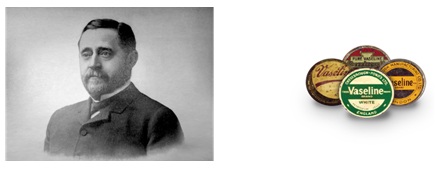
In 1859, when he visited newly discovered oil wells in Pennsylvania, he first began examining the drilling rigs. While conducting his investigations, he discovered a sticky substance known as “Rod Wax”, which facilitated entry into the deposits on the drilling platform and created a wider opening. He noticed that this substance stuck to the workers’ feet. This paraffin-like substance clogged the pumps and slowed down the oil workers’ operations, but at the same time, when applied to wounds, burns, and cuts on their bodies, it not only accelerated healing but also treated them by preventing contact with air. Thereupon, Chesebrough filled jars with this peculiar substance and returned to New York. As a result of tests he conducted for months, he discovered a 100% natural product that protected the skin’s natural beauty.
He needed a live test subject for the trials. Since cutting up his wife and children in the name of science was out of the question, he decided to inflict various cuts and burns on his own body. After applying the substance in question, all wounds healed rapidly without any infection occurring. So much so that; Sir Robert Chesebrough, the inventor of Vaseline, is said to have overcome pleurisy—a disease for which no cure could be found—as a last resort by covering his entire body with the vaseline he had invented.
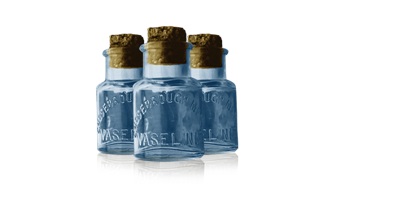
Robert Chesebrough chose a magnificent name for this product of his discovery: Vaseline!
Why Vaseline, though? Frankly, no one knows…
According to one rumor, Robert kept his laboratory materials in his wife’s vases, and since all medicinal products at that time ended with the suffix ‘-ine’ (Listerine, Murine, etc.), Vaseline came to his mind. Some claim that this name was derived from the words wasser (water) and elain (oil).
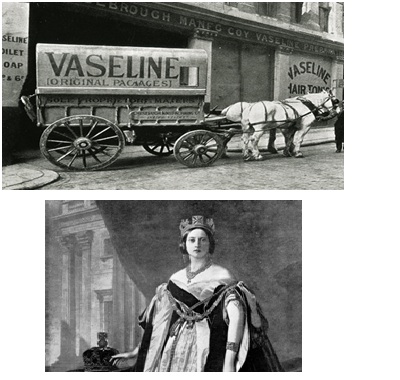
Considering the conditions of that period, Chesebrough began contemplating how to distribute this product to people, and he distributed free Vaseline samples loaded onto a horse-drawn carriage throughout the entire state of New York. Within the following 6 months, he had already established twelve separate sales teams. In 1870, he launched it on the market under the name “Vaseline Petroleum Jelly”.
Thus began the birth of the Vaseline brand.
1883 – Queen Victoria, who brought Britain the title of the empire on which the sun never sets, is known to have treated her dry skin condition with vaseline.
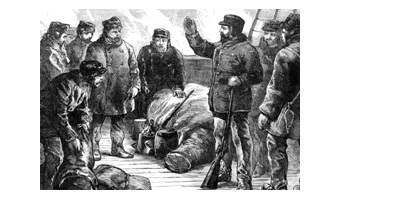
Robert Edwin Peary (b. May 6, 1856 – d. February 20, 1920), the American explorer considered the first person to reach the North Pole, applied vaseline to his body to maintain body temperature against the danger of frostbite when embarking on this great expedition.
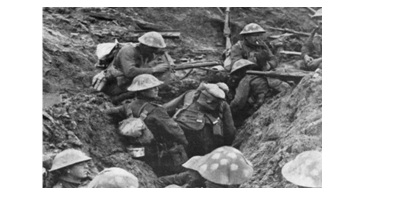
In 1917 during World War I, it was used to protect soldiers in the trenches from sunburn, and it also began to be used therapeutically for the battle wounds of US soldiers.
In 1943 during World War II, sterile petrolatum gauze dressings were prepared by military general surgeons in the US military and used on soldiers’ battle wounds.
Chesebrough believed that people should eat ‘a spoonful every day to live a healthy life’. He never neglected to eat a full spoonful every morning until he passed away at the age of ninety-six.
Considering that the average life expectancy in the US was 61.7 in 1933 when he passed away, Chesebrough living 25 years longer to die at the age of 96 is attributed by some to his consumption of vaseline, while others argue that if he had not eaten vaseline, he might have lived up to 106 years of age.
People have used—and continue to use—this product for wounds and bruises, removing stains from furniture, polishing wooden surfaces, conditioning leather garments, preventing rust, preventing hairballs in cats, and as a sexual lubricant—in short, for practically everything.
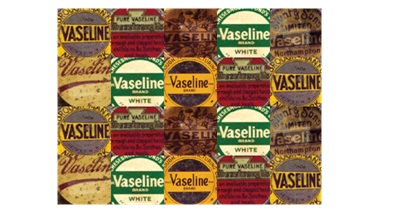
Paraffin- White soft- Paraffinum Molle Album- Vaseline- White Petroleum Jelly;
In pharmacy, vaseline is used for the treatment of skin irritations and for skin care. Specially processed preparations containing vaseline are also used for wound care and wound dressing. Vaseline is a greasy substance that provides a soothing effect by softening the skin, smooths its surface, and is effective against disorders causing dryness or flaking. It exerts a moisturizing effect on the skin. Thus, it helps revitalize the skin. It is still preferred as an effective vehicle (base) in the compounding of pharmaceuticals and ointments.
Light liquid paraffin is administered orally and topically. While light liquid paraffin and liquid paraffin are used topically against skin irritations, they are used orally for laxative purposes. Vaseline is beneficial in hemorrhoids, anal fissures, and painful conditions of the anus and rectum. An excessive oral dose of liquid paraffin may cause anal irritation. Liquid paraffin is preferably used between meals as an emulsion in doses of 10 to 30 ml for laxative purposes.
In veterinary medicine, liquid petrolatum is likewise used for laxative purposes.
Paraffin ointment;
Hard paraffin 30 g
White soft paraffin 900 g
White beeswax 20 g
Cetostearyl alcohol 50 g
Simple Ointment (Syn. Ung. Simp.)
Cetostearyl alcohol 50 g
Hard paraffin 50 g
Wool fat 50 g
White soft paraffin or yellow soft paraffin 850 g
References;
1- The Pharmaceutical Codex (Incorporating the British Pharmaceutical Codex) Eleventh Edition
2- RxMediaPharma®2016 Interactive Drug Information Resource
Specialist Pharmacist Ahmet Nezihi Pekcan
Pekcan Pharmacy – Konya
[email protected]
Tel: (332) 3520657
http://www.majistralformul.com/