Dear colleagues, during this holiday week, I wanted to share a true story with you.
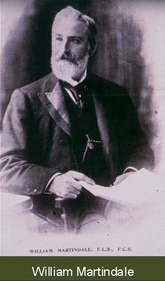
The protagonist of our story is William Martindale (1840–1902), a community pharmacist who lived in England. Before we begin our story, let us take a brief look back at those years.
The Ottoman Empire was preparing for the Crimean War against Russia. On the throne of Great Britain sat Queen Victoria, who coined the phrase “the empire on which the sun never sets” for Britain. The Victorian era represents the peak years of Britain’s global supremacy. Ruling the waves with its invincible navy and standing as the birthplace of the Industrial Revolution, Britain expanded across all four corners of the globe during these years. There was virtually no major political decision in the world made without consulting Britain. During this period, Britain colonized about half of Africa and nearly all of Oceania; Queen Victoria brought India entirely under direct imperial rule and fought the Opium Wars for greater profit, going down in history as arguably history’s biggest royal drug trafficker—a sort of ‘drug queen‘. In 1861, Victoria experienced a second major turning point in her life: her dearly beloved husband contracted typhoid fever during a visit to a country estate and died. Victoria’s grief was so profound that she did not appear in public for three whole years and refrained from attending the state openings of Parliament until 1866. She had completely isolated herself from the world. She wore nothing but black mourning attire until her death; she developed such an obsessive attachment to the memory of her husband that she kept a cast of the prince’s hand by her bedside and had his clothes regularly cleaned and laid out in his room as if Albert were still alive. Her self-imposed seclusion, combined with rumors of these unusual behaviors, severely damaged her public standing. It is said that the dark layers and black accessories of Victorian mourning attire—echoed in gothic fashion today—stemmed from her decades-long mourning for her husband. When Victoria died in 1901, nearly one-third of the world map was painted in British colors. Now that we have recalled that era, let us return to the beginning of our story.
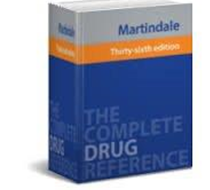
As you may recall, we introduced William MARTINDALE as the protagonist of our story. In fact, his life is a true success story. While spending his days working modestly in his pharmacy, an idea suddenly struck him. Drawing on his years of professional experience and accumulated knowledge, he decided to write a pharmacopoeia. Imagine this: a decision made by a bold community pharmacist who considered one of the most prominent reference sources in pharmaceutical science—the British Pharmacopoeia—insufficient, and resolved to write a better one. To author an “Extra” to the British Pharmacopoeia… And he realized this vision with his first edition spanning 313 pages, which grew to 4,160 pages by its 4th edition in 1885. When Martindale set out to write the work he titled the EXTRA PHARMACOPOEIA or the MARTINDALE PHARMACOPOEIA, he was mocked, belittled, and harshly criticized for his ambition. Yet, that passionate and exceptionally knowledgeable pharmacist never gave up; he combined his research with the knowledge and experience gained over the years, ultimately producing the EXTRA PHARMACOPOEIA, which went on to see 29 editions. Even the British Royal Family, having once looked down on this audacious pharmacist, would occasionally invite him to the palace to consult with Queen Victoria and seek his expertise in treating illnesses.
Regrettably, Martindale could not mirror his professional success in his personal life. Struggling with severe depression—attributed by some historians to extreme mental exhaustion and by others to a secret romance—he tragically ended his own life by ingesting cyanide. Martindale was one of seven children in his family. He himself had four children. Two of his children became pharmacists, and after his death, his work was carried forward by his pharmacist son, William Harrison Martindale. As we bow with respect before the memory of Martindale, I would like to remind everyone that the EXTRA PHARMACOPOEIA he authored has been translated into various languages around the world and continues to maintain its authority as an indispensable reference work today.
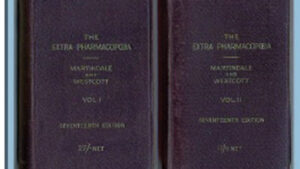
Dear colleagues, while sharing this true story with you—which is actually the success story of a Community Pharmacist—I couldn’t help but reflect on how far we are from the environment that fostered Martindale’s success. Reaching 4,160 pages and even today recognized as a serious reference by scientific circles, when Martindale wrote the latest edition of theEXTRA PHARMACOPOEIA,the calendars showed the year 1885. Today, however, the calendars point to 2014… More than a century has passed, and we, as the pharmacists of this country, far from turning the pages of existing Pharmacopoeias—let alone writing a Pharmacopoeia—MEDULA PHARMACY’slabyrinths, we are lost. I want to whisper into the ears of those who deem this fit for us pharmacists….Do you know Martindale?!!Wishing you a happy holiday…
Spec. Pharm. Ahmet Nezihi Pekcan
Pekcan Pharmacy – Konya
[email protected]
Tel: (332) 3520657http://www.majistralformul.com/