Apparently, in the speech I delivered at the latest TEB general assembly and in the articles I have written so far, I have somehow failed to convey the importance of extemporaneous compounding in pharmacies by pharmacists, because at the point we have reached today, the process has unfortunately developed against our pharmacies that prepare magistral formulations. Look, on March 13, 2013, as the Editorial Board of Eczacının Sesi (Pharmacist’s Voice), we submitted a petition to the TEB. If you wish, let us first take a look at this petition once again.
“TO THE CENTRAL COMMITTEE OF THE TURKISH PHARMACISTS’ ASSOCIATION
We would like to once again remind you, our esteemed colleagues on the most authorized supreme board of our profession, of the difficulties we experience in preparing prescriptions containing MAGISTRAL FORMULAS in the laboratory environment in our pharmacies.
To summarize these problems under headings:
1- The current magistral tariff is inadequate in terms of content to include the substances that make up modern formulas. In this sense, an enriched tariff containing up-to-date active pharmaceutical ingredients and excipients must be rearranged.
2- Again, the current magistral tariff should be restructured in a way that protects the “Pharmacist’s Professional Fee” by taking into account current economic conditions and considering the up-to-date prices of pharmaceutical raw materials (produits).
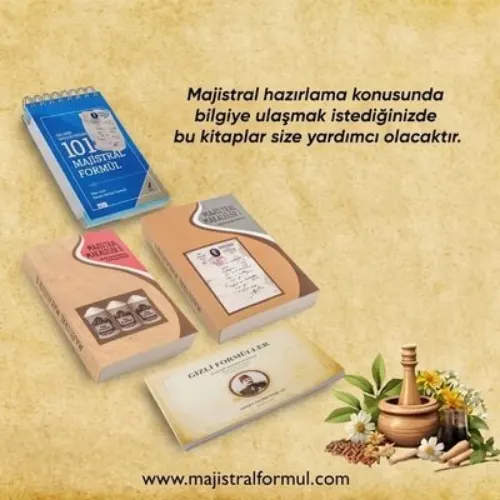
3- TEB must implement the TURKISH DRUG FORMULAS as soon as possible, creating a reference book to be placed on the pharmacist’s laboratory counter and on the prescribing physician’s desk.
4- EGAŞ must be restructured in a way that can meet the needs of our pharmacies for raw materials (produits) in terms of quality and variety. The equipment and devices needed for modernizing our laboratories should be easily obtainable from EGAŞ.
5- KOSGEB support should be provided to our colleagues who will make the necessary renovation and equipment investments in their pharmacies, and if possible, these supports should be in the form of grants.
6- Deductions made during the audits of magistral prescriptions by the SSI (SGK) should not be left to the discretion of our colleagues working in this institution; it is of vital importance to take the necessary steps to establish a scientific committee without delay to evaluate disputes and objections.
We hope that our call will be taken into consideration, in the hope of reaching days where extemporaneous compounding is no longer seen as a pharmacist’s professional satisfaction or hobby, where our existing laboratories in pharmacies become small drug-manufacturing units, where every scarce drug can be prepared in our laboratories, where the pharmacist receives their professional fee for preparing these formulas, where our profession increases its prestige through the power of production, and thus all scenarios in which the pharmacist is disregarded will find no acceptance. “
Pharm. Ahmet Nezihi Pekcan Pharm. Özlem Demir Pharm. Ertan Çiftçi
Pharm. Hakan Gençosmanoğlu Pharm. Nurdan Şahin
You must be able to guess the response given to this petition. Unfortunately, TEB brushed off our petition with a letter containing statements along the lines of ‘we know these problems, the necessary work is being done and will be done’.
At the point we have reached now, in our country where the average of “pharmacies preparing magistral formulations” has dropped to around 10%, a final blow is sought to be dealt to the magistral compounding initiative through quota limitations, which we regard as a measure that will put the few pharmacies preparing magistral prescriptions purely for professional satisfaction or almost as a hobby into severe distress.
As I write these lines, I can almost hear the remarks from here: ‘Don’t be unfair, we achieved a 7.80% increase in the Magistral tariff’… My dear colleagues, I am certain that many of us make our calculations based on the raw material prices listed in the magistral tariff without calculating the actual cost of the raw materials purchased from suppliers, and we incur losses on many ingredients. Therefore, the 7.80% increase in the tariff is far from sufficient. We pharmacists, having been conditioned to penny-pinching, have once again remained silent in the face of this inadequate increase. Nor did our silence end there; we also settled for watching passively as quotas were imposed on prescriptions containing magistral formulas. The word MAGISTRAL comes from the Latin MAGISTER (master). That is, it means medicine prepared by a master. While we were being taught in pharmaceutical technology courses at university how to compound prescriptions that come to our pharmacies, would it ever have crossed our minds that one day we would experience this absurdity of a quota restricting the master—meaning us—from compounding medicine?
Once again, I can almost hear the whispers that it is a measure taken to prevent potential abuses. If that was the thinking, shame on them… I want to condemn here the mentality that looks upon pharmacists in this light. Does this mean pharmacists are granted a right to abuse only up to the quota limit? Look, if action is being taken with such a mindset, it shouldn’t be very difficult to adapt the Medula system to eliminate potential abuse. For instance, the maximum doses of the active ingredient cignolin to be used in formulations are known. If you define these upper dose limits in the system, it will not approve exaggerated formulations. If that’s not enough, here is another suggestion: you could require verbal pre-authorization for formulations above a certain amount, just like private health insurance companies do in their provisioning systems. But if your goal is to weaken pharmacists by stripping them of magistral compounding—their last remaining weapon—that is another matter.
My dear colleagues, in the magistral tariff on Medula, the quantities of raw materials are listed in grams (g). However, in formulations where some substances are prescribed in milliliters (mL), we naturally prepare these formulas in practice by weighing grams as grams and measuring milliliters volumetrically as milliliters. What ought to be done is to open a column in the magistral tariff that allows calculations in mL, especially for liquid raw materials. If such a calculation option does not exist, the burden of this should not be placed on the pharmacist. As an example, why should we have to convert glycerin prescribed in mL into grams when calculating it, just because there is no other option in the magistral tariff, while in practice we prepare it in mL? Or, to take an example of complex formulations, will we also be able to convert CASTELLANI’s solution prescribed in mL into grams? I believe that our pharmacist colleagues working at the SSI (SGK) should not make the shortcomings arising from the deficiencies of the magistral tariff a cause for reimbursement deductions.
Another issue that is frequently asked of me is a sentence included in the recent omnibus bill: “Those who manufacture ready-made pharmaceuticals kept in pharmacies prepared in advance without a license, or who knowingly sell, offer for sale, or cause to be sold these drugs manufactured in this manner, shall be sentenced to imprisonment from 1 year to 5 years.” Of course, manufacturing therapeutic drugs in our laboratories without a doctor’s prescription is not what we advocate. However, it is indisputable that this is an extremely ambiguous sentence and one that deeply unsettles pharmacists. Who will decide whether an anti-chapping hand cream, an antiperspirant lotion, or a soothing and hygienic cream for hemorrhoids prepared in our pharmacies for cosmetic purposes is a drug or a cosmetic preparation? Or in such a situation, will the pharmacist be imprisoned until proven innocent simply for preparing a cosmetic magistral formulation? We want to hear the answers to these questions clearly from those who included this article in the omnibus bill, and we hope that when answering, they will not brush it off with the incomprehensible statements they recently gave regarding over-the-counter drug sales.
Finally, it is TEB’s duty to promote the prescription and compounding of magistral formulas in pharmacies. The first phase of this project is the preparation of the NATIONAL FORMULARY BOOK as soon as possible. Projects aimed at promoting magistral formulas through physician visits conducted by final-year pharmacy students before the NATIONAL FORMULARY BOOK is printed, and thereby encouraging the prescription of these formulas, are unrealistic and unsustainable.
The magistral tariff must be overhauled in terms of content by taking contemporary modern formulations into consideration and repriced in a way that protects the “Pharmacist’s Professional Fee”.
Today, while the rates of MAGISTRAL FORMULATIONS being prescribed by physicians and prepared in pharmacies are decreasing day by day, imposing quotas with an incomprehensible mindset instead of taking measures and encouraging this practice is unacceptable.
FINAL WORD….
You cannot limit or prevent the master from practicing the profession they learned with great effort at universities by imposing quotas…
Wishing you a good week…
Pharm. Spec. Ahmet Nezihi Pekcan
Pekcan Pharmacy – Konya
[email protected]
Tel: (332) 3520657
http://www.majistralformul.com/