
Caffeine ointment in the treatment of atopic dermatitis (eczema)
Atopic dermatitis (Eczema)(AD) is a chronic skin disease dependent on many factors (genetic, environmental). It usually begins in early childhood. It represents the first step in the process known as the atopic march. With this characteristic, it serves as a precursor to the development of other allergic diseases such as asthma and allergic rhinitis in later years.Atopic dermatitis (Eczema)negatively affects the quality of life of patients and their families. Our skin is our most important organ that protects our body from external factors.Atopic dermatitis (Eczema)patients have impaired skin barrier properties. We do not know exactly what causes this impairment. In addition to the disruption of barrier functions, an intense immunological reaction is also observed in atopic dermatitis (eczema) patients. With the disruption of the skin’s barrier functions, its water retention capacity decreases. And skin dryness begins. Dryness is the most important feature of atopic dermatitis. Dryness is accompanied by intense itching. Another negative aspect of impaired barrier functions is that allergens easily penetrate the skin, stimulating our immune system and triggering allergic reactions. This increases the severity of atopic dermatitis, causing the skin condition to worsen further. The skin’s defense capabilities against microbes are also diminished in patients with atopic dermatitis. Microbes normally present on our skin can cause infections in these patients. Infections both increase the severity of atopic dermatitis and can negatively affect the response to treatment.
Food allergies may be seen in nearly half of children with atopic dermatitis. It should not be forgotten that these patients must be evaluated by an allergy and immunology specialist for food allergies. The foods that frequently cause food allergies are;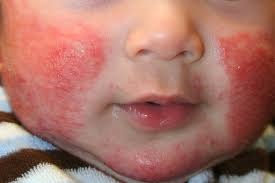 Cow’s milk,
Eggs,
Wheat,
Tree nuts (hazelnuts, pistachios, etc.),
Peanuts,
Fish,
Shellfish.
House dust mites, pet allergens, and pollen can also cause allergies in patients with atopic dermatitis.
In infants during the first months, it may present with redness and itching on the cheeks. It should be kept in mind that there may be an accompanying food allergy.
Our formula, which features the hydrophilic ointment I published last week as a vehicle, contains hydrocortisone and caffeine. In atopic eczema, caffeine can also be formulated without hydrocortisone, as it activates cells as a phosphodiesterase inhibitor.
Caffeine exhibits psychostimulant activity when taken orally at a dose of 200-400 mg; it increases vigilance (mental alertness) and attention, and reduces fatigue. It increases coronary blood flow. It can cause arrhythmia. It generally dilates blood vessels, but constricts cerebral vessels. A teacup of “instant” coffee contains about 90 mg, percolated coffee 120 mg, and tea 50 mg of caffeine; no publication was found regarding the amount in a cup of Turkish coffee. Since caffeine is added to cola drinks, they also contain caffeine, and the amount they contain is usually printed on their cans.Formula:
Rp.
Anhydrous caffeine 30%
Hydrocortisone 0.5%
Hydrophilic ointment 50 g
Substances included in the formula:
Anhydrous caffeine- Caffeine; -anhydrous [JP XIII]- Coffein [ABDATA-SK; ASK; Ph.Eur.]- Theine:Caffeine is mostly found as coherent white crystals or a white crystalline powder. Solubility according to the British Pharmacopoeia (BP): Sparingly soluble in water; freely soluble in boiling water and chloroform; slightly soluble in anhydrous ethanol and ether. Soluble in concentrated solutions of alkali benzoates or salicylates. Solubility according to the United States Pharmacopeia (USP): Sparingly soluble in water and alcohol; freely soluble in chloroform; slightly soluble in ether. Its aqueous solutions are neutral to litmus. Caffeine should be used with caution in patients with anxiety disorder and/or panic disorder, as it may exacerbate these conditions. Since caffeine causes insomnia, it should not be used by individuals currently experiencing insomnia or preparing to sleep. Caffeine is relatively contraindicated in individuals with heart disease. Caffeine stimulates the heart to contract more forcefully and increases the heart rate. Patients with angina or a history of cardiac arrhythmia should avoid caffeine or restrict their caffeine intake. Caffeine should not be taken within the first few days or weeks following a myocardial infarction. Patients with hypertension should avoid caffeine or minimize their caffeine intake. Diabetic patients should not consume caffeine or should limit their caffeine intake. Although its effects are mild, caffeine can elevate blood glucose levels. Thyroid patients, especially those with hyperthyroidism, should not consume caffeine or should limit their caffeine intake. The stimulant effects of caffeine may lead to the exacerbation of hyperthyroidism. Caffeine stimulates gastric secretions and may trigger flare-ups in patients with peptic ulcer disease. Therefore, individuals with peptic ulcers should avoid caffeine or restrict their caffeine intake.
Caffeine use should be approached with caution during pregnancy and lactation, even if not completely discontinued. Caffeine passes into breast milk in small amounts, which may lead to accumulation in the neonate. High caffeine intake by a nursing mother causes the baby to experience sleeping difficulties and become hyperactive. Therefore, breastfeeding mothers should consume caffeine-containing beverages in limited quantities. When caffeine is taken during pregnancy, fetal arrhythmia has been reported. Caffeine is classified as a Category C drug under the FDA pregnancy categories.Hydrocortisone- Hydrocortison [ASK; INN; Ph.Eur.]- Hydrocortisonum [INN; IP3]:Hydrocortisone is a white or almost white, odorless, crystalline powder. It is practically insoluble or very slightly soluble in water; soluble 1:40 in alcohol and 1:80 in acetone; slightly soluble in chloroform; very slightly soluble in ether. According to the United States Pharmacopeia (USP), the pH of its enemas is between 5.5–7.0, and the pH of its sterile suspensions is between 5.0–7.0; the pH of the otic solution containing acetic acid reported in the USP ranges between 2.0–4.0 when diluted with an equal volume of water.
Like all topical corticosteroids, hydrocortisone exhibits anti-inflammatory, antipruritic, and vasoconstrictive effects when applied topically. In the treatment of allergic conditions, they reduce the allergic responses of certain cell types associated with the allergic response, such as mast cells and eosinophils. Topical application of corticosteroids to the skin provides a reduction in inflammation and pruritus associated with acute or chronic dermatoses.
Hydrocortisone is administered orally, parenterally, and topically. Its systemic absorption from the topical application site varies depending on the characteristics of the skin in the treated area. The absorption of topical preparations is higher in damaged, inflamed, and occluded skin areas or in areas where the stratum corneum is thin, such as the eyelids, genital area, and face. Topical solutions, especially those applied to the oral mucosa, may undergo a small amount of systemic absorption. When suppositories containing hydrocortisone acetate are administered rectally in healthy subjects, approximately 26% of the dose is absorbed into the systemic circulation; absorption may vary on abraded or inflamed surfaces.
Circulating hydrocortisone is largely bound to plasma proteins, and only the unbound free fraction is active. Systemic hydrocortisone is rapidly distributed to the kidneys, intestines, skin, liver, and muscle. Topical preparations are widely distributed at the application site, but their absorption into the systemic circulation is minimal. Corticosteroids pass into breast milk and cross the placenta.
Topical preparations of hydrocortisone are metabolized in the skin. Systemic hydrocortisone is converted to inactive metabolites in the liver. Inactive metabolites and a small portion of the unchanged drug are excreted from the body in urine. The biological half-life of hydrocortisone ranges between 8–12 hours.Preparation of the formula:In a water bath at 750°C, caffeine is dissolved in the aqueous phase of the hydrophilic ointment. After caffeine is completely dissolved, the aqueous phase is poured onto the oil phase using a glass stirring rod and mixed.
On the other hand, a few drops of propylene glycol are added onto the calculated amount of hydrocortisone, and hydrocortisone is added to the prepared emulsion by mixing using the geometric dilution method. The finished formula is a white emulsion.
Wishing you a good week…Source:1-La Formulación Magistral en la Oficina de Farmacia, 2.apart
2-RxMediaPharma®2018 Interactive Drug Information Source
Spec. Pharm. Ahmet Nezihi Pekcan
Pekcan Pharmacy – Konya
[email protected]
Tel: (332) 3520657http://www.majistralformul.com/