Ditranolsalicylzuurcollodium
Dithranolum ……………… 3 g
Acidum salicylicum (90)…25 g
Acetonum ……………………22.2 g
Ricini oleum ……………… 1 g
Tocopherolum (dl-alpha)..100 mg
Collodium USP ………… 48.7 g
100 g (= 115 ml)
Substances in the formula
ANTHRASOL-ANTHRALIN-CIGNOLIN-DITHRANOL
ANTHRALIN was first introduced in 1916 by Galavvski under the name “chrysarobin” as an agent that could be used in the treatment of skin diseases.
DITHRANOL (1,8-dihydroxy-9-anthrone) can be obtained naturally from the bark of the Araroba tree found in South America. It can also be synthesized from Anthrone. Anthralin is a hydrocarbon that is a synthetic derivative of chrysarobin. Anthralin is an odorless, crystalline powder with a yellowish-orange or yellowish-brown color. Since it is prone to degradation by light, it must be kept away from light. Having a strong irritant effect, Dithranol can cause severe reactions in the eyes, mucous membranes, and other skin areas. In particular, Dithranol produces a burning effect upon contact with perilesional skin. Therefore, the patient should always be reminded to wash their hands after use. It should not be used on inflamed skin.
Anthrasol is insoluble in water. It is soluble in absolute alcohol (96%), acetone, oily media, and petrolatum.
Anthrasol can cause strong allergic reactions at high doses. When combined with pix juniperi (juniper tar) and other types of tar in order to reduce this effect, its allergic potential is observed to diminish or disappear. In pastes containing zinc oxide along with Anthralin, the addition of salicylic acid or benzoic acid is also required to preserve the efficacy of Anthralin. In their absence, its efficacy is greatly reduced as a result of interaction with zinc oxide, manifesting as a color change in the preparation. In contrast, it has been observed that 0.25% and 0.5% anthralin can maintain its efficacy in yellow soft paraffin without the addition of salicylic acid.
In pruritic skin diseases, it is preferred due to its antieczematous, anti-inflammatory, mildly antibacterial, and antimycotic effects.
While preferably used at a concentration of 2-5% on the scalp, it is used at 5-10% in seborrheic dermatitis, eczema, psoriasis, and scalp ringworm, also known as Herpes tonsurans (Tinea capitis).
Anthralin is a topically acting antipsoriatic drug. It is also used in the treatment of alopecia. It exerts its effect by reducing the mitotic rate of the epidermis.
Although the exact mechanism of action of Anthralin is not definitively known, it is suggested to possess antiproliferative and immunosuppressive effects. It is contraindicated in renal patients and during pregnancy.
Side effects include irritant contact dermatitis, folliculitis, erythema, pruritus, scaling, and regional lymphadenopathy. In addition to clothing, it also causes skin pigmentation. Skin pigmentation regresses after discontinuation of treatment.
Side effects such as pruritus, erythema, burning, and discoloration observed at the beginning of treatment in patients using topical anthralin generally disappear as treatment continues.
Acidum salicylicum-Salicylsäure-Acide salicylique-Salicylic acid
It consists of white crystals. It is soluble in 500 parts water, 15 parts boiling water, 27 parts alcohol (99%), 2 parts ether, 80 parts olive oil, 100 parts glycerin, and 55 parts chloroform. Salicylic acid accelerates desquamation. It exhibits a mild fungicidal effect. Salicylic acid is a beta-hydroxy acid (BHA) with the chemical formula C6H4(OH)CO2H. This colorless, crystalline organic acid is generally used as a plant hormone. It is a product of salicin metabolism. It possesses chemical properties similar to acetylsalicylic acid, commonly known as aspirin. It is used in the treatment of fungal species such as tinea barbae, tinea capitis, and tinea cruris. Salicylic acid is a keratolytic drug. It is used in the treatment of diseases characterized by hyperkeratosis and skin scaling, such as dandruff, seborrheic dermatitis, ichthyosis, psoriasis, and acne. Solutions and ointments formulated for this purpose are available. To minimize the risk of systemic absorption associated with topical application, salicylic acid should not be used for extended periods and in high concentrations, and application to large body surfaces or inflamed or broken skin should be avoided.
Acetonum-Acetone-Dimethyl ketone; It is a colorless, highly flammable liquid with a characteristic odor. It is miscible with water, alcohol, and chloroform. It is absorbed through the skin.
Huile de ricin -Oleum ricini
Ricinoleic acid predominantly forms the composition of this oil, which belongs to the group of officinal oils known as castor oil. It is included in this formula as an excipient.
dl-Alpha Tocopherol – alpha-tocopherol – Vitamin E ; Vitamin E is a fat-soluble vitamin found in vegetable oils, wheat germ (embryo), cereals, fruits, green vegetables, meat, eggs, and certain fish. The term “vitamin E” actually represents a group of compounds consisting of eight different tocopherols. These compounds are fat-soluble vitamins synthesized by plants and are essential for humans and most animals. Among these, naturally occurring d-alpha-tocopherol is the derivative exhibiting the strongest vitamin E activity. Its synthetic form is dl-alpha-tocopherol. Commercial vitamin E preparations are mainly synthesized from synthetic dl-alpha-tocopherol acetate. This acetate ester provides stability to the compound. Alpha-tocopherol (vitamin E) is a practically odorless, clear, colorless or yellow-brown viscous oil. It is practically insoluble in water; freely soluble in dehydrated alcohol, acetone, dichloromethane, ether, and fixed oils.
Elastic collodion – Collodion elastique – Flexible collodion – Collodion élastique T.K.
Flexible collodion is used for dressing minor cuts and scrapes and as a carrier for drugs intended to provide a prolonged local effect. Flexible collodion is prepared by adding castor oil to collodion. In the Turkish Pharmacopoeia (T.K.), it is formulated as 97 g Collodion and 3 g castor oil.
It is highly flammable and must be stored in tightly closed containers away from fire.
Preparation of the formula – Modus Operandi
Dithranol and salicylic acid are thoroughly pulverized in a glass mortar. After mixing the castor oil and dl-alpha-tocopherol, acetone is added. This liquid phase is added to the dithranol and salicylic acid mixture and shaken thoroughly. Finally, collodion is added. The required weight or volume is brought to completion with the addition of acetone.
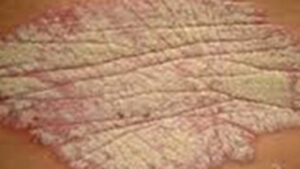
It should be applied to psoriasis plaques using a brush or spatula. This formulation, which can be stored for three weeks, must be protected from heat and light.
Wishing you a good week…
Specialist Pharmacist Ahmet Nezihi Pekcan
Pekcan Pharmacy – Konya
[email protected]
Tel: (332) 3520657
http://www.majistralformul.com/