 Rp
Rp
Podophyllum Resin …… 10.00-25.00 g
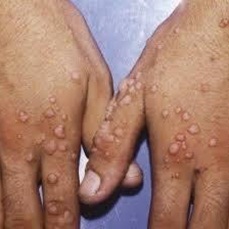
Benzoin Tincture q.s. ….100.00 mlPodophyllum – Podophyllin – Podophyllinum – podophyllum rhizome – wild mandrake;Podophyllin is a topical cytotoxic agent. It is used in the treatment of genital warts and other papillomas. It is recommended as an alternative to cryotherapy in the treatment of external genital/perianal warts, vaginal warts, and urethral meatal warts. Podophyllum resin exerts an antimitotic effect and is primarily used in the treatment of anogenital warts (condyloma acuminata). For this purpose, 15% (Indian podophyllin) or 25% (American podophyllin) solutions prepared in alcohol or benzoin tincture are left on the warts for 1–6 hours and then washed off. This treatment is applied once weekly for approximately 6 weeks. If successful results are not achieved within this period, an alternative treatment should be considered. Alcoholic solutions or alcoholic gels containing 0.5% podophyllotoxin or 0.15% podophyllotoxin cream are used in a similar manner. Podophyllin was approved by the FDA in the US in 1945. In Turkey, its topical preparation Podofilm was approved on April 3, 2008, for use in the treatment of benign epithelial lesions such as venereal warts (condyloma acuminata) and common warts (verruca vulgaris), as well as benign papillomas including granuloma inguinale and plantar warts.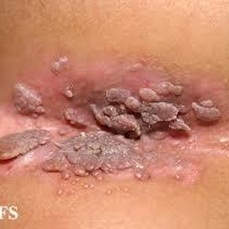
Benzoin – Benzoin gum – Benzoin tincture – Benzoes tinctura – Tinctura Benzoes – Simple Benzoin Tincture;While prepared by the maceration of 1 part Sumatra benzoin in 10 parts of 90% alcohol, Benzoin Tincture (Benzoin Tincture, Compound, BP or otherwise known as Friars’ Balsam) contains approximately 4.5% balsamic acids. It is used by inhaling the vapors released after pouring one teaspoonful into approximately 500 ml of hot (non-boiling) water. Compound Benzoin Tincture is prepared by the maceration of 10% benzoin, 7.5% storax, 2.5% tolu balsam, and 2% aloe in 90% alcohol. Its dose is 2-4 ml according to BP 1932. According to the USP, it contains 10% benzoin (Sumatra or Siam), 8% storax, 4% tolu balsam, and 2% aloe. Growing in East Asia in Siam and Sumatra,Styrax is a type of resin obtained from (benzoin tree) species. This resin (balsam), used in medicine and perfumery, is obtained by drying and hardening of the balsam flowing from deep incisions made in the trunk of the benzoin tree. Its exterior is yellowish-white or brownish-red; the inside borders on white. It has a distinctive pungent odor. There are two types of benzoin available. One of these isStyracaceaefamilyStyrax benzoinandStyrax paralleloneurus plants,Sumatra benzoin (Sumatra benzoin). The second is again from theStyracaceae family,Styrax tonkinensisobtained by a similar method fromSiam benzoin (Siam benzoioin). Sumatra benzoin (Sumatra gum benzoin) is found in the form of translucent fractured fragments or blocks varying in color from brownish-gray to reddish-brown. It has an agreeable odor and a slightly astringent taste. Sumatra benzoin is an oleoresin containing 70–80% resin. Calculated on the basis of cinnamic acid and dried material, it should contain not less than 25% total balsamic acids and not more than 20% matter insoluble in 90% alcohol. Sumatra benzoin is included in the formulation of inhalation preparations used in the treatment of catarrh and upper respiratory tract infections. Due to its antiseptic and protective properties, it is also incorporated into topical preparations. It is used externally as a topical, cicatrizing, and hemostatic agent. Siam benzoin contains 68% crystalline coniferyl benzoate along with free benzoic acid, (+)-siaresinolic acid, vanillin, and a small amount of cinnamyl benzoate. Calculated as benzoic acid, it contains not less than 25% free or combined acids. It occurs as fractured fragments or blocks; its surface is a glossy reddish-brown; the interior of the fragments is milky-white, and freshly fractured surfaces turn reddish-brown over time. It has a vanilla odor, and its taste is slightly sweet rather than sour. It should be stored in a cool place and protected from light. Due to the coniferyl benzoate it contains, it has been used to prevent the deterioration and rancidity of oils/fats. In this regard, it is more effective than Sumatra benzoin.MECHANISM OF ACTION; Podophyllin exerts its cytotoxic effect primarily by arresting mitotic division at metaphase. Thus, the main effect of podophyllin depends on its primary acantholytic property. Consequently, the tumor undergoes exfoliation. Pronounced morphological changes occur in epithelial cells. There are similarities between the cytotoxic effect of podophyllin and the effects of colchicine. Podophyllin arrests mitosis in epithelial cells at the metaphase stage. Podophyllin is much more effective on warts with less keratin accumulation, such as plantar warts, than on warts with dense keratin accumulation. Its lytic effect does not extend beyond epidermal cells; the basal layer remains intact and it may exert a minimal effect on the corium. Topical application does not lead to scar formation. Podophyllin is applied topically. Topically applied podophyllin undergoes systemic absorption. The absorbed amount increases when applied to warts that are easily friable, bleeding, or recently biopsied. The use of podophyllin is contraindicated in diabetes, steroid use, impaired blood circulation, bleeding warts, moles, birthmarks, unusual moles with hair growing inside, and inflamed or irritated tissues.
Due to the risk of systemic absorption, some experts advise against the application of podophyllin resin to the vagina. Podophyllin is classified under Category X according to the FDA pregnancy risk classification and its use is contraindicated during pregnancy. For warts in vaginal, perianal, or anal regions requiring treatment during pregnancy, alternative methods such as electrodesiccation, diathermy, curettage, surgical excision, or cryosurgery with liquid nitrogen or dry ice should be used.
Topically applied Podophyllin has no systemic effect. It is indicated in the treatment of benign epithelial formations such as venereal warts (condyloma acuminata), common warts (common warts = verruca vulgaris), and benign papillomas such as granuloma inguinale and plantar warts.
PODOFILM®the topical solution contains 25% Podophyllin resin as an active substance. Benzoin tincture and Sumatra Benzoin tincture are present as excipients.
For external use only. Particular care should be taken to ensure that surrounding tissues are not affected during medication application. The surrounding skin tissue should be protected using petrolatum (vaseline). No more than 1-2 ml of Podofilm should be used in each treatment session. Anogenital Warts (Condyloma Acuminata): PODOFILM®treatment is a therapy that must be administered by a physician. The medication is carefully applied onto the lesion using a cotton applicator or a toothpick. It should be allowed to dry before a new application. PODOFILM applied during the first application® must remain on the lesion for 1 hour and then be removed by washing. If this first application has not caused an inflammatory reaction and is not painful, in subsequent applications, PODOFILM® may be left on the lesion for 4-6 hours before washing. Afterward, the medication is removed from the area using soap and water. When necessary, repeated applications can be performed at 1-week intervals. It has been reported that PAP smear tests performed within 6 months after the application of podophyllin to cervical warts may yield false-positive results. Systemic absorption is possible with application over a large area. It should be stored at room temperature below 25°C.
Wishing you a great week…
Specialist Pharmacist Ahmet Nezihi Pekcan
Pekcan Pharmacy – Konya
[email protected]
Tel: (332) 3520657http://www.majistralformul.com/