A compounded treatment option for excessive foot sweatingDear Colleagues; Before sharing with you a formula from the Spanish National Formulary used in the treatment of hyperhidrosis of the foot region this week, let us review some general information about this condition.
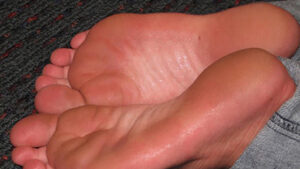
Excessive foot sweating is a type of perspiration that usually occurs on the soles of the feet and the toes. It may occur solely on the feet, or it may often be accompanied by sweating of the hands, and sometimes the underarms and the facial (cranial) area.
If excessive foot (sole) sweating is severe enough to affect an individual’s daily activities, social life, education, work life, and psychological well-being, this condition is referred to asexcessive foot sweating disorder(plantar hyperhidrosis).
Foot sweating is not life-threatening. However, localized excessive sweating leading to moisture seeping out of the shoes and bad foot odor can cause serious social problems.
It is seen in 2 to 3 out of 100 people in the general population. Foot sweating usually starts in childhood. Sometimes it may decrease when wearing socks. Generally, it occurs at equal rates in men and women. There is a family history (genetic, hereditary transmission) in 40% of cases. It occurs in all seasons, but is more pronounced in hot weather. Although it may subside slightly after the age of 35-40 in some individuals, it persists throughout life. Emotional states such as stress and excitement can act as triggers. It usually does not occur during sleep and begins shortly after waking.
The cause of excessive sweating in the feet is a dysregulation of the sympathetic nervous system, which controls perspiration. In these individuals, the sympathetic system is hypersensitive and overactive. Due to the hyperactivity of the sympathetic system, excessive (unnecessary) sweat production occurs. It can be triggered by psychological stimuli such as excitement and stress (sometimes simply by the thought of sweating).
Let us examine together a formula prescribed in Spain for the treatment of this condition, also known as plantar hyperhidrosis.Formula:
Rp.
Alum 2 g
Lead subacetate 4 g
Boric acid 4 g
Distilled water 1000.0 g
Ingredients in the formula:
Alumbre – alum – Allume – Alaun – Aluminium potassium sulphate – Sulphate of aluminum and potassium;Aluminum potassium sulfate is usually a white powder with 97-98% purity. It has hygroscopic properties. One gram dissolves in 20 mL of cold water or 1 mL of boiling water; while practically insoluble in alcohol, it dissolves in glycerin. The pH of 10% aqueous solutions is 3-3.5. It is incompatible with borax, alkali hydroxides, carbonates, phosphates, calcium salts, lead, tannin, and mercury. It exerts an astringent effect by precipitating proteins. It is used in aqueous solutions at concentrations of 1% to 5% as a gargle, and at the same concentration in irrigation solutions and vaginal douche solutions. It is preferred in the treatment of foot hyperhidrosis. It is known for its hemostatic properties. Aluminum potassium sulfate should be stored in airtight, tightly closed containers.
Alum is an active astringent. It coagulates albumin in tissues and blood and constricts capillaries through its local action. It has a mild escharotic effect; it causes hardening of the skin and tissues. It initially stimulates and then reduces salivary secretion and secretions of the mucosal surfaces of the mouth and stomach; thus, it inhibits gastric secretions and causes pepsin precipitation. Due to inhibiting intestinal secretions, it causes constipation. At high doses, due to the aggravation of its astringent effect, it exerts an irritant effect, causing nausea, vomiting, diarrhea, and pain in the stomach and intestines. The exact mechanism of its astringent action is not fully known.
Alum was historically used to control various hemorrhages. In “The American Materia Medica, Therapeutics and Pharmacognosy,” published in 1919 by medical doctor Finley Ellingwood, various conditions were described where it was applied locally to control passive hemorrhage. Chief among these were snorting in powder form in nosebleeds, application into the tooth cavity in dental hemorrhages, or dusting powder onto wounds. It was reported to be administered intrauterinely in solution form to prevent postpartum hemorrhage; its solutions were widely used for the treatment of passive uterine hemorrhage and leukorrhea.Subacetato de plomo- Basic lead acetate- Lead subacetate- Monobasic lead acetate;Lead subacetate solution (Eau de Goulard) was formerly used as an astringent. However, its medical use is not preferred today due to the risk of lead poisoning, the fact that it causes lead contamination in the environment, and the availability of more effective astringents.Acido borico- Boric acid- Acide borique [DCF; FP]- Borsaure [ASK; Ph.Eur.]- Acidum boricum;Boric acid occurs as odorless white crystals or lustrous scales, or as a white crystalline powder unctuous to the touch. When heated at 100°C, it loses water and slowly transforms into metaboric acid (HBO2). When heated at 140°C, it transforms into tetraboric acid (H2B4O7), and when heated at higher temperatures, into boron trioxide (B2O3). It is soluble 1:20 in water, 1:3.6 in boiling water, 1:16 in alcohol, 1:6 in boiling alcohol, and 1:4 in glycerin (85%). Boric acid forms a complex with glycerin that is more acidic than boric acid alone. The pH of a 3.3% solution in carbon dioxide-free water is between 3.8 and 4.8. Boric acid should be stored at room temperature below 30°C and in tightly closed containers. Boric acid is a drug with weak bacteriostatic and fungistatic effects. It is used topically. Its ophthalmic preparations are used in the treatment of eye irritation and inflammation. Its topical preparations are useful for soothing irritated skin, skin abrasions, burns, and other cases of skin irritation. Vaginal candidiasis caused by Candida glabrata and other non-albicans species often responds favorably to topical boric acid treatment. Topically applied boric acid preparations may cause systemic toxicity, especially when there is broken or damaged skin. Its present-day use has lost its former significance due to the availability of more effective and less toxic drugs. In eye drops, it is often used with borax for its buffering and antimicrobial effects.
Boric acid is a weak topical anti-infective agent with fungistatic and bacteriostatic properties. The exact mechanism of the antibacterial and antifungal effects of boric acid is unknown. Boric acid exerts a slow bacteriostatic effect against staphylococci and streptococci. Its effect in the vagina is thought to be due to increasing vaginal pH. An increase in vaginal pH increases penetration through the fungal cell wall and causes disruption of the cell wall structure.Preparation of the formula:Aluminum potassium sulfate (alum) and boric acid are weighed. They are dissolved in hot distilled water. Then lead subacetate is added and the bottle is shaken. It is labeled with a ‘Shake before use’ label. This formulation should be applied to the feet twice daily for five minutes.
Wishing you a good week…
Source:
1- La Formulacion Magistral en la Oficina de Farmacia valencia, 2. Parte Valencia, 1985
2- RxMediaPharma®2017 Interactive Drug Information SourceSpecialist Pharmacist Ahmet Nezihi Pekcan
Pekcan Pharmacy – Konya
[email protected]
Tel: (332) 3520657
http://www.majistralformul.com/