Clotrimazole is an imidazole derivative with broad-spectrum antimycotic activity. Clotrimazole exerts its effect against fungi by inhibiting ergosterol synthesis. The inhibition of ergosterol synthesis leads to structural and functional impairment of the cytoplasmic membrane.
.jpg)
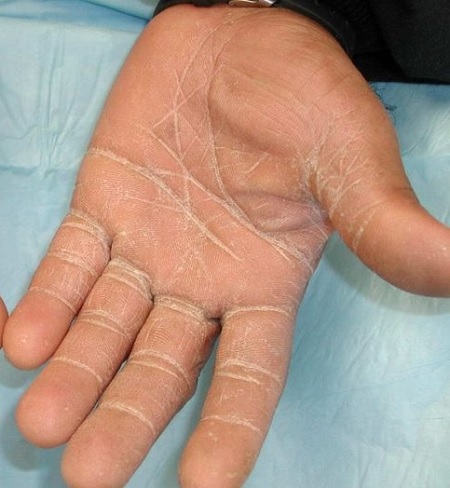
Clotrimazole has a broad-spectrum antimycotic effect in vitro and in vivo against dermatophytes, yeasts, molds, etc. Examples of such infections include mycoses of the feet and hands (Athlete’s foot, Tinea manuum), paronychias, mycoses of the skin and skin folds (Tinea corporis, Tinea cruris), superficial candidiasis of the skin (Candida balanitis, Candida vulvitis), Pityriasis versicolor, erythrasma, and seborrheic dermatitis developing secondary to the above-mentioned pathogens. Clotrimazole is also used in skin diseases infected as a result of superinfection with susceptible bacteria.
In addition to its antimycotic effect, clotrimazole is also effective against Trichomonas vaginalis, gram-positive microorganisms (Streptococci / Staphylococci), and gram-negative microorganisms (Bacteroides / Gardnerella vaginalis).
In this article, we will examine together the formulas containing clotrimazole included in the Spanish National Formulary.
FORMULA I
Rp.
Clotrimazole 2%
Salicylic acid 3%
Triamcinolone acetonide 0.5%
Propylene glycol 18 g
Hydroalcoholic solution q.s.p. 50 g
Preparation of the formula:
Clotrimazole is dissolved in a small amount of acetone. Salicylic acid is added. After achieving complete dissolution, triamcinolone acetonide is added. Finally, propylene glycol is added and brought up to 50 g with 30% alcohol.
FORMULA II
Rp.
Clotrimazole 2%
Gentamicin sulfate 0.5%
Triamcinolone acetonide 0.1%
Washable emulsion for scalp q.s.p. 100 g
Preparation of the formula:
Gentamicin sulfate dissolved in a minimum amount of water is added to a washable emulsion (O/W). Clotrimazole is dissolved in a small amount of propylene glycol. It is added gradually to the emulsion and mixed until completely homogeneous. The preparation must be protected from light.
FORMULA III
Rp.
Clotrimazole 1%
Salicylic acid 3%
Propylene glycol 50 ml
Preparation of the formula:
Clotrimazole and salicylic acid are dissolved in propylene glycol in a hot water bath. It is used in the treatment of nail fungus (onychomycosis). It must be protected from light.
Clotrimazole – Clotrimazolum – Chlortritylimidazol:
Clotrimazole is a powder varying in color from white to pale yellow. Solubilities according to the British Pharmacopoeia (BP): Practically insoluble in water; soluble in alcohol and methylene chloride; slightly soluble in ether. Solubilities according to the United States Pharmacopeia (USP): Practically insoluble in water; freely soluble in acetone, alcohol, chloroform, and methyl alcohol.
Its 1% cream or solution is used in the treatment of Candida, tinea, and pityriasis versicolor. Its 100 mg vaginal tablet is administered in Candida and Trichomonal vaginitis.
Clotrimazole is an imidazole antifungal drug. It is used in the treatment of infections caused by various pathogenic dermatophyte species, yeasts, and Malassezia furfur. Dermatophytoses, vaginal and oral candidiasis, and tinea infections are the primary ones among these. Since its formulations have limited ability to penetrate subcutaneous tissues, clotrimazole is not indicated in the treatment of subcutaneous mycoses. Preparations in various pharmaceutical forms such as vaginal suppositories, creams, topical lotions, and lozenges are available. Clotrimazole is currently being investigated for its efficacy in the treatment of infectious diarrhea cases.
Fungi have been shown to develop very little resistance to clotrimazole. The drug is effective against the majority of fungi, yeasts, dermatophytes, and certain gram-positive bacteria. Generally susceptible microorganisms include: Aspergillus fumigatus, Candida albicans, Cephalosporium, Cryptococcus, Epidermophyton floccosum, Microsporum canis, Malassezia furfur, Sporothrix, Trichophyton rubrum, and T. mentagrophytes. Although clotrimazole is rarely used in the treatment of bacterial infections, it is effective against some bacteria, including Staphylococcus aureus and Streptococcus pyogenes, Proteus vulgaris, and Salmonella. It is not effective against Trichomonas vaginalis at clinically achieved concentrations.
Clotrimazole is not used systemically. Its oral lozenges are used for local treatment and do not pass into the systemic circulation at significant levels. Persistent concentrations in saliva are believed to originate from clotrimazole binding to the oral mucosa. When the drug is applied topically, systemic absorption is at very low levels; however, when used vaginally, roughly 5-10% is absorbed. When administered intravaginally, it is present in the vagina at fungicidal concentrations for 3 days. The small portion that is absorbed is metabolized in the liver and excreted via bile.
In order to achieve a complete cure in treatment with clotrimazole, depending on the indications, treatment should be continued for 2 weeks following the resolution of the patient’s symptoms.
Symptoms generally disappear at the end of the treatment periods specified below:
Dermatomycoses
3-4 weeks
Erythrasma
2-4 weeks
Pityriasis versicolor
1-3 weeks
Candida vulvitis and Candida balanitis
1-2 weeks
Wishing you a good week…
Source:
1-La Formulación Magistral en la Oficina de Farmacia 4.a Parte. Valencia, 1997
2-RxMediaPharma®2019 Interactive Drug Information Resource
Exp. Pharm. Ahmet Nezihi Pekcan
Pekcan Pharmacy – Konya
[email protected]
Tel: (332) 3520657
http://www.majistralformul.com/