Treatment of skin spots and freckles with a magistral formulaDear Colleagues, this week I will share with you a formula used for “Hyperpigmentation”, a skin condition commonly encountered during the summer months, which we define as an excessive increase in pigments in the skin or tissue.
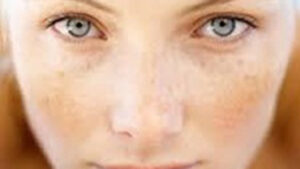
We know that the most common spots are freckles. Freckles are a sign of skin aging caused by the sun. They generally appear on the back of the hands and on the face after the age of 50. Birth control pills or pregnancy can also cause large dark spots to form on the forehead and cheeks, and these spots become more prominent with sun exposure. This condition is known as melasma. People should also be aware that applying perfume in the summer months can cause spots.
An increase in skin pigmentation resulting from both melanin and non-melanin factors is termed hyperpigmentation. MSH, ACTH, and ovarian hormones exert a direct pigmentogenic effect. Generalized and localized hyperpigmentation can be seen in many endocrinological, metabolic, and nutritional diseases. Certain medications can also cause hyperpigmentation.The main causes of hyperpigmentation can be listed as follows:1. Genetic causes
Nevi, ephelides, acanthosis nigricans, café au lait macules, Mongolian spots
2. Metabolic causes
Hemochromatosis, porphyria, amyloidosis
3. Endocrine causes
Melasma, oral contraceptive use, Addison’s disease, pregnancy, tumors, hyperthyroidism
4. Inflammatory causes
Post-inflammatory, lichen planus, pityriasis versicolor, DLE, nutritional causes, pellagra, vitamin B12 deficiency, cachexia
6. Chemical causes
Arsenic, silver, gold, mercury, chlorpromazine, antimalarial drugs, barbiturates, cytostatics, phenolphthalein, sulfonamides, tetracyclines, tars, perfumes, carotenemia, fig latex, meladinine, fixed drug eruption
7. Physical causes
UV, heat, X-rays, neoplasms, m. melanoma, mastocytosis
9. Others
Scleroderma, morphea, chronic liver failure
Let us examine together two formulas formulated in France for use in facial and body pigment disorders, which we can easily prepare in our pharmacies.Formula used for blemishes on the facial area of the body:
Rp.
Retinoic acid (0.3% solution) 5.5 ml
Hydroquinone 2 g
Hydrocortisone 0.4 g
Alcohol 95 (degrees) 5 ml
Potassium metabisulfite 0.1 g
Vitamin C 0.1 g
Biobase 60 g
Formula used for skin spots on the body:
Rp.
Retinoic acid (0.3% solution) 12 ml
Hydroquinone 3.6 g
Hydrocortisone 0.07 g
Potassium metabisulfite 0.1 g
Vitamin C 0.1 g
Biobase 60 g
Ingredients used in the formula
Retinoic acid-Tretinoin-Vitamin A acid;It is a natural derivative of vitamin A. Topically, it is effective in reducing wrinkles, mottled hyperpigmentation, roughness, and laxity in mildly photodamaged skin. While brown spots on the skin disappear within 6 to 8 weeks, the effects of tretinoin may diminish upon discontinuation of treatment. Systemic absorption may increase when applied over extended periods and large skin areas. Like hydroquinone, it should not be used in pregnant women, during lactation, or in children. Retinoic acid should be included in formulations at a maximum rate of 0.10%.Hydroquinone-Quinol-Hydrochinon; Also known by its synonyms, it is an active substance used to achieve skin depigmentation (loss of pigment in the cell). It exerts its effect by reducing the content of melanocytes in the skin. Regular use for weeks is required for it to be effective. Its effect is temporary. Spots may reappear 2 to 6 months after treatment is discontinued. The area where the preparation is applied must be protected from the sun. In addition, the use of sunscreens is necessary. Contact with eyes and mucous membranes should be avoided. Application to large areas should be avoided as it may cause systemic toxicity. It may induce mild erythema and/or a transient burning sensation on the skin. It should not be applied to broken skin. It should not be used in children, during pregnancy, or during lactation. Its use in cosmetic preparations was banned in Europe on March 1, 2000, and as of January 2001, products containing hydroquinone can only be compounded with a medical prescription. Hydroquinone can be used in prescriptions up to a maximum concentration of 5%.Hydrocortisone;It is a corticosteroid in the form of a white to off-white crystalline powder. It is only slightly soluble in water and sparingly soluble in alcohol. It is used for the temporary relief of minor skin irritations, itching, and rashes caused by eczema, dermatitis, insect bites, poison ivy, soaps, detergents, and cosmetics, as well as for the temporary relief of itching associated with many other causes.Ethanol; It should be prepared as 90% or 95% v/v; it is included in the formula as a solvent.Potassium metabisulfite-Potassium pyrosulphite-Dipotassium pyrosulphite; Potassium metabisulfite is used as an antioxidant in pharmaceutical formulations at a concentration of 0.01-1%. Potassium metabisulfite occurs as white or colorless crystals, crystalline powder, or granules with an odor of sulfur dioxide. It is freely soluble in water; practically insoluble in ethanol (95%).Ascorbic acid-Vitamin C-Ascorbic acid; Its depigmenting effect is clinically controversial. The reason for its preference in the formula is its antioxidant property. It should be included in formulas at a maximum rate of 0.20%.Biobase ;Bioderma, one of France’s renowned dermocosmetic brands, has a product line adapted to skin types sensitive to all kinds of sensitivities. In this formula, a base cream selected according to the appropriate skin texture is used as a vehicle.Preparation of the formulaRetinoic acid is mixed with ethanol. Hydrocortisone is dissolved in this solution and hydroquinone is added. Then, potassium metabisulfite and vitamin C are added. The solution is added to biobase, a dermocosmetic base, and mixed until a homogeneous cream is obtained to complete the preparation.
Wishing you a good week…
Spec. Pharm. Ahmet Nezihi Pekcan
Pekcan Pharmacy – Konya
[email protected]
Tel: (332) 3520657http://www.majistralformul.com/