Dear Colleagues, this week we will examine a shampoo frequently compounded in European pharmacies under the name Cetrimide Shampoo, which is used in the treatment of Seborrheic Dermatitis.
Before moving on to our formula, let us refresh our knowledge on seborrheic dermatitis.
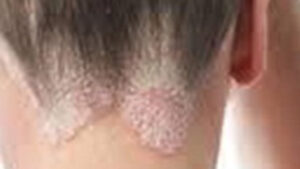
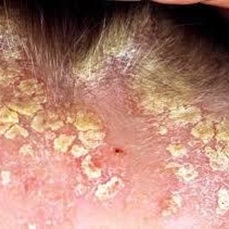
Seborrheic dermatitis is a chronic, recurrent inflammatory skin disorder characterized by poorly demarcated, scaly, erythematous (red) patches. Although it can be seen on other areas of the body, the most commonly affected area is the scalp. It causes complaints such as redness on the scalp, flaking in large scales, itching, and a wet sensation. In about 60–80% of patients, a fungus (Malassezia furfur) is identified as the causative agent, while in 20–40%, no clear cause is found. Factors such as Malassezia yeasts, hormones (androgens), sebum levels, and immune response are known to play a role in the pathogenesis of the disease. Medications, climate variations such as ambient temperature and humidity, dietary habits, atopy, atmospheric pressure changes, neurological conditions, microangiopathic vascular changes, alcohol consumption, metabolic changes, fatigue and stress, as well as riboflavin, pyridoxine, and biotin deficiencies can exacerbate seborrheic dermatitis. In summary, if seborrheic dermatitis is mild to moderate, it can be treated and recurrences prevented with the right shampoo; however, severe cases should be treated with lotions, and a shampoo recommended for seborrheic dermatitis should be used to prevent recurrence.
Rp
Cetrimide ……………………….40 g
Ethanol (90%) ………….30 ml
Purified water …..…….30 ml
Caution; this is a stock solution and must be diluted by mixing 1 part solution with 20 parts distilled water prior to use.
General information regarding the cetrimide in the formula:
Cetrimide-cetrimida-cetrimidum-zetrimid-cetrimide: It is a white or almost white, voluminous, free-flowing, flammable powder with a characteristic odor. It is freely soluble in water, alcohol, and chloroform; practically insoluble in ether. A 2.0% w/v solution in carbon dioxide-free water foams strongly when shaken. It is incompatible with soaps and other anionic surfactants, bentonite, iodine, phenylmercuric nitrate, and alkali hydroxides. Its aqueous solutions react with metals. According to the British Pharmacopoeia (BP), Strong Cetrimide Solution (BP 1993) contains 20–40% cetrimide with up to 10% alcohol or isopropyl alcohol, or both, as a preservative. For use, a 1% aqueous solution is prepared from this concentrated solution. This prepared solution can be sterilized by autoclaving. Sterilized preparations must be used within 7 days after opening and discarded once this period is exceeded. Cetrimide is a quaternary ammonium antiseptic. It exhibits bactericidal activity against Gram-positive and (at higher concentrations) Gram-negative bacteria. However, especially certain Pseudomonas species and Mycobacterium tuberculosis are resistant to quaternary ammonium compounds, including cetrimide. Cetrimide is ineffective against bacterial spores. Its antifungal activity varies, and it may be effective against certain viruses. Like other quaternary ammonium compounds, notably benzalkonium chloride, it is used for washing and cleansing skin, wounds, and burns. For this purpose, 0.1–1% solutions or 0.5% creams are used. Its solutions are generally obtained by diluting more concentrated solutions. Cetrimide is often used in combination with chlorhexidine rather than alone. This combination is useful in the treatment of acne in lotion form. Cetrimide and benzalkonium chloride are also included in the formulations of eye drops and cleaning solutions for hard contact lenses, but should not be used for this purpose with soft contact lenses.
In addition, shampoos containing 1–3% cetrimide are used against dandruff in cases of seborrheic dermatitis. Cetrimide is also included in the composition of some emulsifying preparations. Cetrimide is a quaternary ammonium antiseptic. Quaternary ammonium salts are used as antiseptics and disinfectants. In general, cationic detergents are bacteriostatic, but when applied in sufficiently high concentrations, they also exhibit bactericidal activity. They exert their antibacterial effect through surfactant action, disrupting the permeability of the bacterial cytoplasmic membrane. However, their antimicrobial spectrum is not very broad. They show a stronger effect on Gram-positive bacteria than on Gram-negative bacteria. Their fungistatic activity is low. They are also active against some viruses. They are ineffective against Mycobacterium tuberculosis and bacterial spores. It may cause skin irritation.
Preparation of the formula: After dissolving cetrimide in ethanol inside a glass mortar, boiled and cooled distilled water is added to finalize the preparation. Metal instruments should not be used in preparing the formula. The formula should be stored in tightly closed amber glass bottles below 25 degrees.
Caution; this is a stock solution and must be diluted by mixing 1 part solution with 20 parts distilled water prior to use.
Wishing you a great week…
Exp. Pharm. Ahmet Nezihi Pekcan
Pekcan Pharmacy – Konya
[email protected]
Tel: (332) 3520657
Fax: (332) 3512816
http://www.majistralformul.com/