Treatment of psoriasis on the scalpDear Colleagues, this week we will examine together this formula included in the Spanish National Formulary and used for psoriasis affecting the scalp.
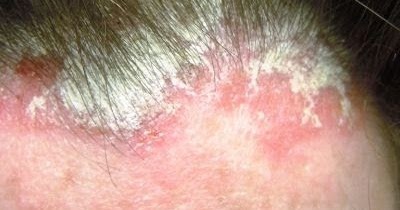
It is a skin condition characterized by red patches covered with sun-colored scales and small, flaky spots (mostly in children). Its acute signs include erythema and the spread of scales across the entire body. Psoriasis is a common skin disease with flare-up periods and remission phases. The most frequently affected areas are the elbows, knees, trunk, and scalp. Scalp psoriasis presents as round, well-demarcated plaques with reddened edges. The affected areas can be discrete or widespread. With these characteristics, psoriasis is differentiated from other skin diseases. Although psoriasis does not directly cause hair loss, it causes congestion in the affected area, leading to itching, easy bleeding, and drying of the scalp.
Rp.
Aceite de enebro 10 g
Aceite de oliva 60 g
Aceite de ricino 60 g
Acido salicilico 10 g
Substances included in the formula:
Aceite de enebro- Katran ardıcı katranı- Pix cadi- Juniperi pix- Cade oil- Alquitran de enebro- Juniper tar oil- Goudron de cade- Pix Juniperi oxycedri- Spanische Cederteer- Brea de enebro;
Juniper tar (pix juniperi oxycedri) is obtained from the trunk and branches of the prickly juniper (Juniperus oxycedrus L.) plant, which grows widely in Anatolia. It is a syrupy, reddish-black liquid with a sharp and distinctive odor, and a pungent, burning, and bitter taste. Juniper tar contains essential oil, resin, cadinene (a triterpene), and phenol derivatives (guaiacol and cresol derivatives). The drug with antiseptic effect is applied directly to the skin or used as an ointment. It is also used externally in the treatment of eczema and psoriasis. It is beneficial in the treatment of seborrhea, eczema, psoriasis, and scalp dandruff, scaling, and itching. It is generally incorporated into the composition of shampoos formulated for this purpose. Juniper tar (Cade oil) is obtained by dry distillation of the wood of the juniper (Juniperus oxycedrus) tree from the Pinaceae family. It is a syrupy, dark brown liquid with a bitter taste and a pungent odor. It contains guaiacol, ethylguaiacol, cresol, and cadinene. It is very slightly soluble in water; soluble in alcohol at a ratio of 1:9; soluble in ether at a ratio of 1:3, leaving behind small particles; partially soluble in petroleum ether; miscible with amyl alcohol, chloroform, and glacial acetic acid. Juniper tar (Cade oil) should be stored in airtight containers. It should not be exposed to excessive heat. It must be protected from light. While it is present in shampoo formulations at concentrations of 1-5%, it is applied to the scalp once daily.
Aceite de oliva- Oleum olivarum- Olivae oleum virginale- Olive (olea europaea) oil:
Olive oil (Oleum olivae) is obtained by pressing ripe fruits. The oil obtained under mild pressure is of the highest quality; it is used in pharmacy and as culinary oil. Oil obtained by applying higher pressure is used in the soap industry. The composition of olive oil includes oleic acid, palmitic acid, stearic acid, and vitamin E. Olive oil has medicinal laxative and cholagogue effects. In pharmacy, it is used as a solvent in the preparation of oily injectable preparations. Traditionally, its leaves are used to lower blood sugar, and its trunk and branch bark are used to lower blood pressure. Topically, it exhibits an emollient and soothing effect on inflamed surfaces. It is used to soften crusts formed on the skin in conditions such as eczema and psoriasis, and to soften the skin in general. It is also used to soften earwax. Internally, it has nourishing and mild laxative effects. It can be administered as a rectal injection (100-500 ml at ≈ 32 °C) to soften feces. Olive oil is also included in the composition of depot-effect parenteral formulations. It is used as a vehicle in such injectable oily suspensions. In addition, it is used in the preparation of liniments, ointments, plasters, and soaps.
Aceite de ricino- Hint yağı- Oleum ricini- Ricinus communis (castor) seed oil [INCI]- Castor oil:
Castor oil is a fixed oil obtained by cold pressing the seeds of the Ricinus communis plant from the Euphorbiaceae family without applying heat. It contains 80% ricinoleic acid. Ricinoleic acid is a triglyceride. It is a viscous and clear liquid, almost colorless or very pale yellow, slightly scented, initially tasteless in the mouth but later leaving a slightly acidic taste. It is soluble in alcohol; miscible with absolute alcohol, chloroform, ether, and glacial acetic acid; slightly soluble in petroleum ether. Castor oil is used as a laxative. However, more modern laxative medications are available today. Castor oil has also found applications in ophthalmology. It exerts a soothing effect on irritation caused by foreign bodies entering the eye and is therefore applied to the conjunctiva as a soothing agent. Externally, it is used as an emollient. On the other hand, it is also incorporated into the composition of some injectable preparations as a carrier vehicle. When taken orally, castor oil is broken down in the small intestine by the action of the lipase enzyme into glycerol and ricinoleic acid. Its purgative effect is due to ricinoleic acid. Ricinoleic acid exerts an irritating effect on the intestinal mucosa. By inhibiting Na+, K+-ATPase in the epithelial cells of the small intestine, it prevents water absorption, resulting in diarrhea. Castor oil is used orally. After oral administration, it is broken down into glycerol and ricinoleic acid by the action of the lipase enzyme in the small intestine.
Acido salicilico- Acidum salicylicum- Salicylsäure- Acide salicylique- Salisilik asit:
Salicylic acid consists of white or colorless acicular crystals or a white feathery crystalline powder. Its synthetic form is white and odorless. When prepared from natural methyl salicylate, it is light yellow or pale pink in color and has a slight mint scent. It is soluble in water at 1:460, in boiling water at 1:15, in alcohol and ether at 1:3, and in chloroform at 1:45. Salicylic acid is a keratolytic agent. It is used in the treatment of diseases characterized by hyperkeratosis and skin scaling, such as dandruff, seborrheic dermatitis, ichthyosis, psoriasis, and acne. Solutions and ointments used for this purpose are available. Salicylic acid accelerates desquamation. It exhibits a mild fungicidal effect. Salicylic acid is rapidly absorbed through the skin and slowly eliminated via the urine. Systemic acute salicylate toxicity (salicylism) may occur due to excessive application of salicylic acid over large skin surfaces. Fatalities, predominantly among children, have been reported as a result of such improper application. To minimize the risk of systemic absorption associated with topical application, salicylic acid should not be used for extended periods or in high concentrations, and application to large body surfaces or inflamed or broken skin should be avoided. Salicylic acid is a beta-hydroxy acid (BHA) with the chemical formula C6H4(OH)CO2H. It is a product of salicin metabolism. It possesses chemical properties similar to acetylsalicylic acid, commonly known as aspirin. It is used in the treatment of fungal species such as tinea barbae, tinea capitis, and tinea cruris. Due to its moderately potent analgesic and antipyretic, and rarely antiseptic effects, it is included in formulas and used externally as an analgesic in anti-rheumatic applications. It is preferred against mycotic eczema due to its caustic effect. In dermatology, salicylic acid is often combined with lactic acid in the treatment of warts and corns. The exact mechanism of action of salicylic acid and lactic acid in the treatment of warts is not fully understood. It is thought to be related to the mechanical removal of wart virus-infected epidermal cells as a result of their keratolytic effects. They are also effective against corns through their keratolytic activity. It is used as a gargle in the treatment of tonsillitis. It is used at a concentration of 0.50% against fermentation in foods such as beer, wine, meat, etc.
Preparation of the formula:
Salicylic acid is finely powdered in a glass mortar. A small amount of alcohol is added until the salicylic acid is dissolved. The solution is transferred into a dark glass bottle. The mixture of olive oil and castor oil is added to the solution and mixed. Finally, the juniper tar is added and shaken vigorously.
Wishing you a good week…
Source:
1- La Formulación Magistral en la Oficina de Farmacia valencia, 4. A Parte, 1981
2- RxMediaPharma®2016 Interactive Drug Information Source.
Pharm. Ahmet Nezihi Pekcan, Specialist Pharmacist
Pekcan Pharmacy – Konya
[email protected]
Tel: (332) 3520657
http://www.majistralformul.com/