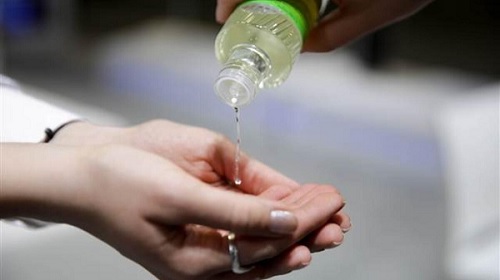
Cologne (Kolonya) is an indispensable part of Turkish culture. For many years, we have offered this refreshing, pleasant scent to guests visiting our homes during holidays or in daily life.
Cologne was first produced in 1690 by a peddler named Jean Paul Feminis living in Cologne, Germany. Nevertheless, there is still no definitive record regarding who originally invented cologne before that. Feminis left the recipe he used to make cologne to a man named Giovanni Antonio Farina, who then passed it on to his nephew, Giovanni Maria Farina. Farina worked on cologne formulation and produced the first cologne under the name ‘pleasant lavender water’. The blend created by Farina, who had an exceptionally refined sense of smell, spread rapidly among the opulent court life and grand receptions of that period. In the 18th century, just like many other European cities, Cologne was overwhelmed by appalling odors due to garbage dumped in the streets and inadequate sanitation systems, which deeply troubled Johann Maria Farina. Unlike other people, Farina possessed a highly sensitive olfactory sense and the ability to distinguish scents. As a passionate fragrance specialist, Farina was captivated by the scent he distilled from bergamot, lime, orange, and a type of grapefruit, and decided he had found the formula he had been seeking throughout his entire life to make Cologne, and indeed the world, smell wonderful. Farina had discovered Eau de Cologne. An Italian immigrant, Farina described his discovery at that time as follows: ‘Like an Italian spring morning after the rain.’ Farina had indeed discovered a fresh, cooling scent destined to endure across centuries, in stark contrast to the heavy, ostentatious, and oil-based scents of the Middle Ages. This discovery is considered the world’s first true perfume. The bottle proudly bore the inscription: “Farina Original Eau de Cologne” – Original Kölnisch Wasser. In German, “Kölnisch Wasser” means Cologne Water, but why did Farina also write the words “Eau de Cologne” on his fragrance—a term still seen on perfumes today? Tina Farina, a descendant from today’s generation of the family, attributes this to French being an internationally recognized language of that era. She also highlights the role of the close cross-border interactions that developed between Cologne and France.
Cologne production spread to France in the early 19th century and was manufactured there under the name ‘cologne water’. Subsequently, the entire world came to know this fragrance as cologne.
When cologne was first invented, it was used not for cosmetic purposes as it is today, but for medicinal purposes. In that era, the mixture containing rosemary, orange blossom, bergamot, and lemon was taken dropped onto sugar or mixed into wine for digestive tract disorders. It was also used as a solution for mouthwash, wound cleansing, and muscle and joint pain.
Following its therapeutic properties, cologne began to be used for cleansing and hygiene purposes in the 18th century. During the years of fierce class struggle, heavy perfumes yielded to the rising bourgeois class, and cologne, with its refreshing scent, became a symbol of purity.
Cologne entered Ottoman lands during the early years of the reign of Sultan Abdulhamid II.
The first cologne imported into our country during the reign of Abdulhamid II was again Farina’s cologne. Although offering rose water to guests was widespread at that time, cologne established its renown the moment it entered our borders. Naturally, there were visionary entrepreneurs in the Ottoman Empire as well. In the first perfumery factory founded in 1882, Ahmet Faruki produced the country’s first “national” cologne. Eau de Cologne, initially referred to as “odikolon” by the public, gradually evolved into the name “kolonya”. And it swiftly became an essential offering of hospitality rituals. After domestic production commenced in 1882, the offering of cologne replaced the offering of rose water, which had been the first step in the country’s guest-welcoming ritual.
The cologne brand “4711”, which began production in Cologne in 1799, is the oldest cologne brand whose production continues today.
Cologne, which is formulated at 80 degrees ethyl alcohol and consists of 40-45% ethyl alcohol by volume rule with the remainder being water and essence, does not spoil for an average of five years as long as it remains sealed and kept away from sunlight.
The reason a sensation of freshness is felt after applying cologne is that the ethyl alcohol within it is volatile and carries body heat away as it evaporates.
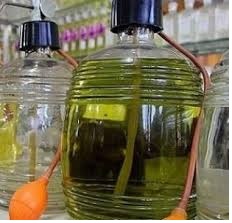
To prepare cologne, one starts with natural essential oils or synthetic essences. Cologne is prepared by dissolving essential oils in alcohol or through distillation of the mixture.
Formula:
Rp.
Alcohol (60%) 1000 ml
Compound cologne essence * 5 g
Magnesium carbonate 2.5 g
Glycerin 2.5 g
Borax 1.25 g
Preparation of cologne via the boroglycerin method:
The essence is triturated with magnesium carbonate and mixed thoroughly with the addition of glycerin and borax. The resulting paste is vigorously shaken in alcohol. This mixing is continued by repeating 2-3 times daily for 1 week. It is allowed to rest for 1 month and then filtered through kaolin.
Compound cologne essence*: For 400 C: Lemon essence 600, bergamot essence 600, orange essence 450, petitgrain essence 450, lavender essence 250, thyme essence 100, verbena essence 50, linalool essence 50, neroli essence 60, rosemary essence 100, C10 aldehyde 25, musk 100 g, benzoin inf. 2.5 liters, alcohol 95% 10 liters.
Wishing you a pleasant week,
Source:
Cosmetic Formulas (Prof. Dr. Kasım Cemal Güven)
Spec. Pharm. Ahmet Nezihi Pekcan
Pekcan Pharmacy – Konya
[email protected]
Tel: (332) 3520657
http://www.majistralformul.com/