Dear Colleagues,
This week, I will talk about a formula featured in the laboratory textbooks of pharmacy students in France, which is used for hyperkeratosis.
Dear colleagues, while translating from the book titled (CAHIERS DU PREPARATEUR EN PHARMACIE), prepared for students studying at faculties of pharmacy in France, I had no difficulty at all because Latin words are extensively used, especially in the formulas. I wanted to share with you how crucial my long-advocated argument is here: “our professional language must definitely be LATIN, and we must keep this language alive, even if through our personal efforts.”
I take care to use Latin in my articles, and I sometimes receive criticism for it. This professional language, which I particularly use and wish to see preserved, is one of the most important factors facilitating our work and enabling our communication in terms of “Universal Pharmacy.” Seeing this sensitivity in this book published in France made me more than happy. I am transcribing the formula below exactly as it appears in the book. Since the names of the substances in the formula are written in Latin, I believe the active ingredients and excipients will be easily understood without the need for translation.
CRÈME CONTRE LES HYPERKÉRATOSES (Cream for hyperkeratosis)
Rp.
Urée ………………………20.00 g
Vaseline …………………… 25.00 g
Cire blanche …………………… 5.00 g
Lanoline ………………………20.00 g
Eau purifiée …………………… q.s.p.
Before moving on to the formula, let us briefly examine the condition of hyperkeratosis.
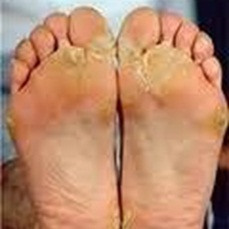
Keratosis is the formation of a lesion resulting from the overgrowth and thickening of the horny layer (stratum corneum) in the epidermis due to a keratinization disorder.
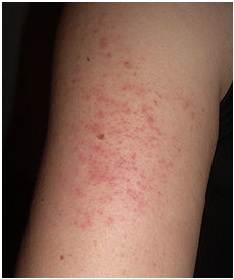
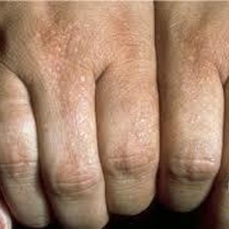
In keratosis pilaris (KP, also known as follicular keratosis, lichen pilaris or chicken skin), a common symptom of this skin disorder is characterized by a rough, slightly red, bumpy appearance on the skin. It is most commonly seen on the back and outer sides of the upper arms (the forearm may also be affected). Furthermore, lesions are frequently encountered on the thighs, hands, and upper legs, as well as on the buttocks, or any body area with hairless skin (such as the palms of the hands or soles of the feet).
It is seen in 40–50% of the adolescent population worldwide. It is more common in women than in men.
Keratin is a natural protein formed in the skin. If the human body overproduces it for any reason, hyperkeratinization—which we call keratosis pilaris—occurs.
In treatment, moisturizers come first; although urea, lactic acid, salicylic acid, or topical retinoids are used, the efficacy of these treatments is limited, and further research is needed for more effective treatments.
Returning to our formula:
Urea – carbamide: Known by its synonyms. It occurs as colorless, transparent, slightly hygroscopic (Hygroscopy, in general chemistry, is the property of a substance to attract and hold water molecules from the surrounding environment via diffusion or condensation on its surface), odorless or almost odorless prismatic crystals. It is highly soluble in water (1 part water), soluble in alcohol (5 parts alcohol), but insoluble in chloroform and ether. If urea is stored for a long time, it may develop a slight ammonia odor. Internally, it is used as a diuretic in doses of 15–30 g. As seen in this formula, it is used externally for its hydrating (water-retaining, moisturizing) properties. When applied topically, it increases water-binding capacity by enhancing the water-retaining properties of the stratum corneum (the outermost layer of the epidermis, composed of dead cells). Thus, it provides hydration in cases where dry skin is an issue. In hyperkeratotic skin, it exerts a mild keratolytic effect.
Vaseline – paraffinum album – white vaseline – vaselinum album – petrolatum album:
It is an oily vehicle that exhibits a moisturizing effect on the skin, used for the treatment of skin irritations and skin care. It is obtained from the residue of petroleum distillation. It is formed by the bleaching of soft yellow paraffin. It is insoluble in water, sparingly soluble in alcohol, and easily soluble in ether, chloroform, benzene, essential oils, and fixed oils. It is not absorbed, does not cause irritation, and is used as an ointment base.
Cire blanche – Beeswax – Wax – Wachs – Cire T.K.:
These are honeycombs made by the bee (Apis mellifica L.). It is a soft mass with a characteristic odor. It is yellow in color. It is insoluble in water. It is partially soluble in alcohol and ether, and completely soluble in oils. White beeswax is obtained by bleaching yellow beeswax in sunlight. In pharmacy, it is used as a base for cerates. It is also included in the composition of ointments and suppositories. As a stiffening agent in ointments, it constitutes 1% to 10% of the total mass. It melts at 65 °C.
Lanoline – Adeps lanae – Refined wool fat – Lanae cera – Lanoléine T.K.:
It is obtained from sheep’s wool. It is light yellow in color and has an ointment consistency. It is soluble in ether, petroleum ether, chloroform, and boiling absolute alcohol. It can absorb twice its weight in water. It is an emulsifier. It forms water-in-oil (W/O) emulsions. In its anhydrous state, its consistency is quite firm. Upon the addition of water, a pasty texture is formed. It absorbs water by its weight. It is easily absorbed by the skin and is odorless. It is used as an ointment base.
The base listed under the name lanolinum in the Turkish Pharmacopoeia (T.K.) contains 13 parts lanolin, 3 parts liquid paraffin, and 4 parts water.
Eau purifiée – Purified water – Distilled water – Aqua – Wasser – Aqua Destillata – Eau distillée T.K.:
When water is mentioned in pharmacy, distilled water should be understood. Distilled water has a limited shelf life and should always be boiled before use. It possesses the characteristic of high-purity water, used as a solvent or carrier in many preparations.
Preparation of the formula:
When necessary, the proportions of the ingredients in this formula can be increased or decreased.
Distilled water is included in the formula without specifying an amount, indicated as q.s.p. (quantity sufficient for). Here, we should take approximately 20 g of distilled water.
Urea is dissolved in the weighed 20 g of water. Beeswax, lanolin, and vaseline are melted in a beaker over a water bath heated up to 60 °C. The base, removed from the water bath and continuously stirred without creating air bubbles until it cools to room temperature, is gradually mixed with the urea solution previously dissolved in distilled water. The mixture is stirred until a homogeneous preparation is obtained, completing the formulation.
It should be stored at room temperature, protected from the effects of air and light.
While publishing this formula, which I believe will be beneficial particularly to my young colleagues studying at Faculties of Pharmacy, I would like to wish everyone a great week.
Pharm. Ahmet Nezihi Pekcan, Specialist
Pekcan Pharmacy – Konya
[email protected]
Tel: (332) 3520657