Anthrasol – Anthralin – Cignolin – Dithranol
Dear colleagues;
This week, I would like to introduce this substance, which forms our subject title and is predominantly known as cignolin, described in the DAC (German Pharmaceutical Codex) as a fine, bright yellow oily powder with a faint tar odor.
Anthralin was first introduced in 1916 by Galewsky under the name ‘chrysarobin’ as an agent that could be used in the treatment of skin diseases.
DITHRANOL (1,8-dihydroxy-9-anthrone) can be naturally obtained from the bark of the Araroba tree found in South America. It can also be synthesized from anthrone. Anthralin is a hydrocarbon that is a synthetic derivative of chrysarobin. Anthralin is an odorless crystalline powder with a yellowish-orange or yellowish-brown color. Since it is prone to degradation by light, it must be protected from light. Dithranol, which has a potent irritant effect, can cause severe reactions in the eyes, mucous membranes, and other skin areas. Especially upon contact with perilesional skin, dithranol produces a burning effect. For this reason, the patient should always be reminded to wash their hands after use. It should not be used on inflamed skin.
Anthrasol is insoluble in water. It dissolves in absolute alcohol (96%), acetone, oily media, and petrolatum.
Anthrasol can cause severe allergic reactions at high doses. In order to reduce this effect, if it is combined with pix juniperi (juniper tar) and other tar types, its allergic potential is observed to diminish or disappear. In pastes containing anthralin along with zinc oxide, an addition of salicylic acid or benzoic acid is required to preserve the efficacy of anthralin. In the absence of this, its efficacy significantly decreases as a result of interaction with zinc oxide, manifesting as a color change in the preparation. In contrast, it has been observed that 0.25% and 0.5% anthralin in yellow soft paraffin can retain its efficacy without the addition of salicylic acid.
In pruritic skin diseases, it is preferred for its antieczematous, anti-inflammatory, and mild antibacterial and antimycotic effects.
While it is preferably used at a concentration of 2-5% on the scalp, it is used at 5-10% in seborrheic dermatitis, eczema, psoriasis, and scalp ringworm also known as Herpes tonsurans (Tinea capitis).
Anthralin is a topically acting antipsoriatic drug. It is also used in the treatment of alopecia. It exerts its effect by reducing the mitotic rate of the epidermis.
Although the exact mechanism of action of anthralin is not fully known, it is suggested to possess antiproliferative and immunosuppressive effects. It is contraindicated in renal patients and during pregnancy.
Side effects include irritant contact dermatitis, folliculitis, erythema, pruritus, scaling, and regional lymphadenopathy. Besides staining clothes, it also causes skin pigmentation. Skin pigmentation regresses after the discontinuation of treatment.
Side effects observed at the start of treatment in patients using topical anthralin, such as pruritus, erythema, burning, and discoloration, generally disappear as treatment continues.
Let us briefly examine ALOPECIA AREATA, which along with PSORIASIS constitutes the most important indication for ANTHRALIN.
ALOPECIA AREATA
Human skin contains approximately 5 million hair follicles. One million of these hair follicles are located in the head region, and 100,000 of them are on the scalp. Each hair follicle is at a different stage of the cycle. Each hair grows to a maximum length. It remains without lengthening for a certain period of time. Then the hair sheds and a new one emerges.
The follicular cycle is divided into three phases:
1- Anagen phase: The growth phase of the hair follicle. On the scalp, 85-90% of hair follicles are in the anagen phase. The duration of this phase is 2-6 years on the scalp and 4-14 weeks in the mustache.
2- Catagen phase: Known as the regression phase. The catagen phase lasts 7-21 days. About 1% of hairs are in the catagen phase.
3- Telogen phase: Known as the resting phase. Approximately 13% of scalp hairs are in the telogen phase. On the scalp, this phase lasts about three months.
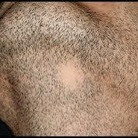
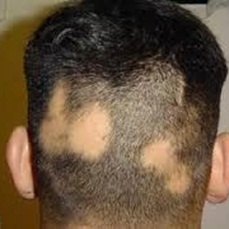
Alopecia areata is a disease that can occur at any age, appears non-scarring across all body areas bearing hair follicles, and may show asymptomatic spontaneous remission and recurrences. The most common type is alopecia areata characterized by patchy hair loss.
If hair loss involves the entire scalp, it is called Alopecia Totalis (AT); if it affects all body hair, it is named Alopecia Universalis (AU).
Alopecia areata is common worldwide. A single patch seen in most patients resolves spontaneously. Alopecia totalis or universalis develops in 30% of all patients. The risk of progression to alopecia totalis is higher in cases with childhood onset, in individuals with Down syndrome, and in atopic patients.
The age of onset in alopecia areata shows two peaks: the first around five years of age and the second around thirty years of age. Accounting for approximately 6-7% of pediatric dermatoses, AA ranks 3rd among the most common skin diseases.
Alopecia areata (AA) is an organ-specific autoimmune disease characterized by chronic, patchy, frequently progressive, non-scarring hair loss. It affects both genders equally. It typically has a treatment-resistant course, and applied therapies are aimed at suppressing the underlying cause. Long-term treatment must be administered to achieve a cosmetic response in patients.
Alopecia areata (AA) is a disease characterized by localized hair loss on the scalp, beard, mustache, eyelashes, and sometimes on the chest and back. Although its etiopathogenesis is still not fully understood, emphasis is placed on genetic predisposition, environmental and immunological factors, melanocyte abnormalities, neurological factors, infections, and emotional stress, which is thought to trigger these existing factors.
Treatment
Among the various methods used in the treatment of alopecia areata, we will only discuss treatment with anthralin formulation, which constitutes our topic here.
Due to the progression of hair loss severity, which can extend to cover the entire body, achieving remission and cosmetic recovery is difficult. All local treatments act upon the application site. Due to the chronic nature of AA, therapeutic agents must be used for prolonged periods.
The effect of anthralin in alopecia areata cases is thought to be directly related to its irritant action; however, it is known to be ineffective at concentrations below 0.5% that produce only mild contact dermatitis. Nevertheless, the precise mechanism of action of anthralin in alopecia areata cases remains unknown. Anthralin likely induces inflammation through the formation of free radicals in a unique manner.
In alopecia areata cases, anthralin’s induction of terminal hair growth can be attributed to various mechanisms. Short-contact therapy is sufficient. Anthralin 0.5-1% cream can be applied overnight or as a 30-minute short-contact therapy, and treatment results begin to appear within 3 months.
Anthralin is also a good option for children. In conducted studies, the cosmetically acceptable success rate ranges between 20-25%.
FORMULATIONS CONTAINING ANTHRALIN
UNGUENTUM CRINALE CUM ANTHRASOLO (ANTHRASOL HAIR CREAM)
Rp. Anthrasoli
Lanolini …………………/ a a 3.0 g
Unguenti Glycerini …. ad 30.0 g
This formula is also used in the treatment of alopecia areata and other types of alopecia.
Let us first see how Unguenti Glycerini (Glycerin Ointment) in the formula is prepared according to the T.K. (1954 – Turkish Pharmacopoeia).
Glycerin Ointment – Glycerole D’amidon – Unguentum Glycerini T.K. (1954)
Wheat starch ……………… 7 parts
Water ………………………………… 7 parts
Glycerin ………………………… 93 parts
Preparation: In a tared beaker, the starch is thoroughly triturated with water, and glycerin is added over it. The mixture is kept in a boiling water bath for 15-20 minutes. It is then carefully heated over a low heat source with stirring until it attains a jelly-like appearance and the mass is reduced to 100 parts. Care must be taken not to scorch the mass. It is clear that water in this formula refers to distilled water.
Returning to the main formula;
Equal amounts of anthralin and lanolin are weighed and triturated in a glass mortar, after which the formula is completed by adding the previously prepared glycerin ointment. The total mass must not exceed 30 g.
Application: Treatment is initiated by applying it to the scalp for 5 minutes in the evenings; if no severe allergic reaction is observed, the treatment duration is extended up to 20-30 minutes. Treatment can be continued in this manner for up to 3 months.
Dear colleagues, next week I will continue my article with other formulation examples containing cignolin used in the treatment of AA and psoriasis.
Wishing you a great week…
Specialist Pharmacist Ahmet Nezihi Pekcan
Pekcan Pharmacy – Konya
[email protected]
Tel: (332) 3520657
http://www.majistralformul.com/