
(The word Celt refers to a part of the European tribes living during prehistoric and ancient periods)
Dear Colleagues, in this article I will explain ROSACEA or otherwise known as ROSACEA DISEASE.
Historically in Europe, Rosacea generally appeared in individuals with fair skin tones compared to dark-skinned people, particularly seen among Celts and Northern Europeans, and for this reason, this disorder was named the curse of the Celts.
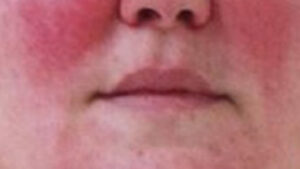
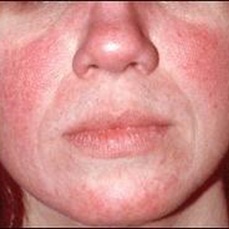
Rosacea usually begins as redness in the central face such as the cheeks, nose, or forehead, but can also less frequently affect the neck, chest, ears, and scalp. In some cases, additional symptoms such as semi-permanent erythema, telangiectasia (dilation of superficial blood vessels on the face), red domed papules (small bumps) and pustules, red gritty eyes, burning and stinging sensations, and in some advanced cases, a red lobular nose (rhinophyma) may develop. It presents as a chronic inflammatory disease that begins in middle age or later, characterized by lesions such as telangiectasia, erythema, papules, and pustules, particularly visible in the central region of the face. Although acne rosacea is reminiscent of acne, the comedones typical of acne are not seen. Vascular and follicular dilatations on the nose, forehead, and cheeks can range from very mild persistent erythema to papules and pustules, to extensive hyperplasia of sebum-secreting glands; telangiectasia is observed in the affected erythematous areas. As with most other skin diseases, the physician first imposes restrictions on dietary pleasures. Fatty foods, spices, and alcohol should be avoided as much as possible. Sudden weather changes must be avoided, and one should apply sunscreen with an SPF of at least 15 even in the middle of winter. It is a skin condition characterized by facial redness and swelling. The disease is also known as adult acne. Commonly referred to among the public as rosacea, this condition presents as redness starting from the central face and affecting the cheeks, forehead, chin, and nose. Occasionally, the ears, back, and chest may also be involved. As the disease advances, small capillary dilatations and small red elevations develop over them. This condition rarely regresses on its own or may improve and subsequently flare up again. Treatment of the disease typically takes years. If left untreated, there is a risk that the condition may worsen and progress into rhinophyma, an advanced stage of rosacea.
I will share two formulas prescribed in France for the treatment of this disease with compounding formulas.
If we examine the first formula;
Rp
Métronidazole …………… 1.00 g
Phisiane crème ………….100.0 g
Ingredients in the formula:
Metronidazole – metronidazolum – metronidaz: Metronidazole is a synthetic antibacterial and antiprotozoal drug. It is one of the most effective drugs available against anaerobic bacterial infections. Metronidazole also exhibits immunosuppressive and anti-inflammatory effects and is used in patients with rosacea.
Phisiane crème: Produced in La Roche-Posay laboratories, it has light, oil-free, soothing, protective, and moisturizing emulsion properties. Non-comedogenic. It is preferred in preventing comedones in smokers and in the care of rosacea-prone normal and combination skin. It should be applied to cleansed skin in the morning and/or evening.
Preparation: After levigating metronidazole with a small amount of alcohol, it is mixed with the phisiane crème constituting the vehicle (base) of the formula until a homogeneous preparation is obtained.
France is known as the birthplace of dermocosmetics. Therefore, formulas used in dermocosmetics are frequently featured in compounding preparations. This formula used in the treatment of rosacea above is an example of these preparations.
If we examine another formula prescribed in France for the treatment of rosacea;
Rp
Erythromycine …….. 1.5 g
Metronidazole ………1.2 g
Alcool à 60% ………..4.5 g
Biobase ……………… 1 tube
Erythromycine – Erythromycin – Eritromicina: It is a broad-spectrum macrolide antibiotic. It exhibits a stronger effect against Gram-positive microorganisms because it easily penetrates such microorganisms. Since its antimicrobial spectrum is similar to penicillin, it is mostly used in individuals with penicillin allergy. Erythromycin, particularly used for diseases such as syphilis, gonorrhea, and chlamydia, is produced by Saccharopolyspora erythraea. It acts by interfering with protein synthesis in bacteria. They generally have a bacteriostatic effect (it only has a bactericidal effect against beta-hemolytic streptococci and Streptococcus pneumoniae). It is ineffective against anaerobic bacteria. Ingested erythromycin is metabolized in the liver. Therefore, its use in patients with hepatic impairment is contraindicated. Topical and oral forms are used in the treatment of acne. It is preferred in skin, soft tissue, and burn wound infections.
Biobase: Bioderma, one of France’s renowned dermocosmetics brands, has a product line adapted to skin types sensitive to all kinds of reactivity. In this formula, the base cream selected according to the appropriate skin texture is used as the vehicle.
Preparation of the formula: The calculated amounts of Erythromycin and Metronidazole are levigated with 60% alcohol and mixed with an appropriate vehicle from the Bioderma line suitable for the skin type, then applied to the skin morning and evening.
Wishing you a good week..
Exp. Pharm. Ahmet Nezihi Pekcan
Pekcan Pharmacy – Konya
[email protected]
Tel: (332) 3520657
http://www.majistralformul.com/