Compounding Formula Option for Ichthyosis (Fish Scale Disease)
Ichthyosis,is a family of hereditary skin diseases seen in humans and domestic animals. They are a group of genodermatoses characterized by excessive squama (scaling) and dryness on the skin surface, and patients’ skin resembles fish scales. These diseases derive their name from the Greek word “Ichth”, meaning fish. The skin of these patients has a fish-scale appearance.Because ichthyosis previously had a leprosy-like appearance on the skin,it was also referred to as leprosy.
An increase in transepidermal water loss due to abnormalities in the stratum corneum structure leads to severe dryness. Ichthyoses may rarely be associated with malignant diseases. Ichthyosis can also be seen in more than one infant of the same parents. There are types of ichthyoses classified into four common and two raretypes.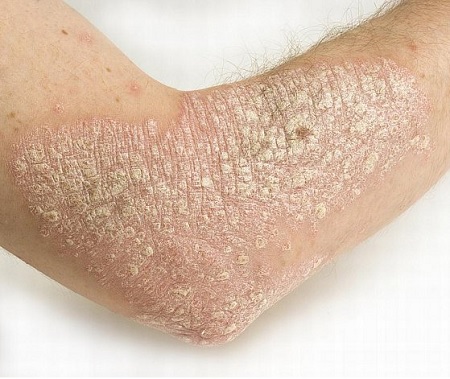
Ichthyosis vulgaris; This form, which is the most common among ichthyoses, is inherited in an autosomal dominant manner and is the mildest type of the disease. The skin appearance of these patients is normal at birth; however, after the infant is 3 months old, the baby’s skin appears scaly and dry. The scaly formations on the skin resemble fish scales, the lesions are adherent in the center with raised borders, and they occur mostly on the anterior surfaces of the extremities (arms and legs) and on the trunk. Skin lines are accentuated, and there is skin thickening on the palms and soles. Dry skin is observed in patients along with an atopic appearance. Because there are fewer sweat glands and sebaceous glands in the skin, skin dryness is quite prominent, but there is no pruritus (itching). Humid climates help relieve the disease, and scaling decreases with age.Treatment in ichthyosis disease;Different treatment methods can be applied depending on the type of ichthyosis, the extent of the lesions, and the general condition of the patient. In the ichthyosis group of diseases, treatment is administered as symptomatic treatment. As with all types of dry skin, the goal in ichthyosis treatment is to prevent water loss, moisturize the skin, and ensure the softness of the stratum corneum.
In treatment, topical (applied to the body) petrolatum to soften the skin and prevent evaporation, as well as urea with water-retaining properties, can be used.To remove scales (flaky formations),keratolytic agents may be applied. Among these medications, the most commonly used is 3-5% salicylic acid in petrolatum. A 60% propylene glycol solution in water can also be used.
In severe cases of ichthyosis, oral retinoids are used; however, due to their effects on growth, their use before puberty is limited. These types of medications also have side effects such as increasing cholesterol levels, hair loss, and skin rashes. The use of antibiotics and local antiseptics may also be required in the treatment of ichthyosis. In addition,in the treatment of patients with ichthyosis,increased nutritional requirements and fluid and electrolyte balances must also be taken into consideration.
Bathing with lipid-rich soaps and applying moisturizer to damp skin after bathing is very beneficial in maintaining skin moisture in all types of ichthyosis.
Dear Colleagues, this week we will examine together a formula prescribed in France that is highly effective in the treatment of ichthyosis.Formula:
Rp.
Glycerite of starch 32 g
Vitamin A 500,000 IU
Vitamin E 11.25 g
Modified Galen’s cerate 300 g
Ingredients in the formula:
Glycérolé d’amidon- Glycerinum amyli- Unguentum glycerini (GLYCERIN OINTMENT) T.P.(1954):It is a fat-free, water-washable base. Preparing the glycerin ointment registered in the Turkish Pharmacopoeia over an open flame is not desirable. Temperature 1000 – 1050 should not be exceeded. It has a gel appearance. It is used as a water-soluble ointment base. Wheat starch is used as the starch. It swells with difficulty and turns into a gel slowly with rice and corn starch. For this reason, the starch glycerite used must not turn litmus paper red and must not have an acrolein odor. This preparation can deteriorate over time. It absorbs moisture and softens. Therefore, it should be freshly prepared, not prepared in large quantities, and stored in well-closed containers.Formula:

Preparation:In a tared beaker, the starch is thoroughly triturated with water, glycerin is added and mixed. The mixture is kept in a boiling water bath for 15-20 min. Then, it is stirred while heating until it takes on a transparent jelly appearance. Heating should continue until the water portion evaporates, taking care not to burn the mass. It is clear that water in this formula refers to distilled water.
Precautions: Do not heat at a temperature above 100-105 °C.
Appearance: Transparent grayish gel, homogeneous, hygroscopic.
Solubility: Miscible with water.Vitamin A- Vitamin A- Alphasterol- Retinol [ASK; BAN1999; DCF; INCI; INN]:Vitamin A is a fat-soluble vitamin found in both plant and animal sources. Animal-derived vitamin A sources are called retinoids. The term carotenoids is used for vitamin A precursors (including beta-carotene). In fact, the ultimate source for vitamin A is beta-carotene. Retinol is found in eggs, butter, whole milk, fortified margarines, meat, and saltwater oily fish. Apart from the treatment and prophylaxis of vitamin A deficiency, vitamin A is used in the treatment of certain diseases such as ichthyosis and keratosis (keratosis follicularis). However, its toxicity potential has led to the investigation of alternative vitamin A analogues such as tretinoin and isotretinoin. Vitamin A is indeed a compound carrying toxicity potential and should not be viewed merely as a simple nutritional supplement. Attention has recently turned to vitamin A and other antioxidant vitamins as anticancer agents.
According to the United States Pharmacopeia (USP), Vitamin A (Vitamin A, USP 23) is retinol (vitamin A alcohol; C20H30O = 286.5; CAS-68-26-8) or contains its esters formed primarily with edible fatty acids such as acetic and palmitic acid. It is an oily liquid ranging in color from light yellow to red; solidifies in the cold; although practically odorless or having a faint fishy odor, it is not unpleasant in taste or odor. In liquid form, it is insoluble in water and glycerin; very soluble in chloroform and ether; soluble in dehydrated alcohol and vegetable oils. Its solid form can be dispersed in water. It can be diluted with edible oils or incorporated into solid carriers or excipients; it may contain suitable antioxidants, dispersing agents, or antimicrobial agents. According to the British Pharmacopoeia (BP), natural vitamin A ester concentrate (Vitamin A Ester Concentrate, Natural, BP 1993) contains retinol ester or mixtures of esters in peanut oil or another suitable vegetable oil. It contains not less than 485,000 units of vitamin A per gram. It consists of a faintly scented yellow oil or a mixture of an oil and crystalline substance. It is practically insoluble in water; soluble or partially soluble in alcohol; soluble in chloroform, ether, and petroleum ether.
According to the BP, synthetic vitamin A concentrate (Synthetic Vitamin A Concentrate, Oily Form, BP 1993) is a retinol ester (acetate, propionate, or palmitate) or a mixture of its esters. It may be diluted with suitable vegetable oils. It contains not less than 50,000 units of vitamin A per gram. It is a substance ranging in color from yellow to brown with a faint characteristic odor; its solubility is similar to the natural concentrate mentioned above.
According to the BP, synthetic vitamin A concentrate in powder form (Synthetic Vitamin A Concentrate, Powder Form, BP 1993) likewise consists of retinol ester (acetate, propionate, or palmitate) or a mixture of its esters, dispersed in a matrix. It exhibits a vitamin A activity of not less than 250,000 units per gram. It is a yellowish powder. It is practically insoluble in water; however, depending on the formulation, it may swell or be emulsified.
It is well known that vitamin A deficiency causes xerophthalmia. Retinol and retinoic acid are essential for bone development, the normal functioning of the testes and ovaries, embryonic development, and the maintenance of mucosal and epithelial surfaces. In certain diseases, the storage and transport of vitamin A are impaired.Vitamin E- Alpha-tocopherol- Alpha-Tocopherolum [Ph. Eur. 3]- DL-alpha-tocopherol [ASK; JP XIII]:Vitamin E is a fat-soluble vitamin found in vegetable oils, wheat germ (embryo), cereals, fruits, green vegetables, meat, eggs, and certain fish. The term ‘Vitamin E’ actually represents a group of compounds consisting of eight different tocopherols. These compounds are fat-soluble vitamins synthesized by plants and essential for humans and most animals. Among these, naturally occurring d-alpha-tocopherol is the derivative that exhibits the strongest vitamin E activity. Its synthetic form is dl-alpha-tocopherol. Commercial vitamin E preparations are mainly synthesized from synthetic dl-alpha-tocopherol acetate. This acetate ester provides stability to the compound.
Pure vitamin E was first isolated from wheat germ oil in 1936, and the elucidation of its chemical structure and its synthesis were accomplished in 1938. Nevertheless, its benefits in humans were not defined in biochemistry textbooks published until the early 1970s. Since vitamin E is abundant in the diet, its primary deficiency is unlikely. Most abnormalities associated with vitamin E deficiency in humans are subclinical; nutritional vitamin E deficiency, with the exception of premature infants, is only seen in those with various genetic or acquired diseases. Vitamin E was recognized for the first time in the USA by the ‘Food and Nutrition Board of the National Research Council’ in 1968.
Alpha-tocopherol (Vitamin E) is a practically odorless, clear, colorless or yellow-brown viscous oil. It is practically insoluble in water; freely soluble in dehydrated alcohol, acetone, dichloromethane, ether, and fixed oils. Vitamin E is physiologically very important in humans, and its deficiency causes certain pathological disorders. Its most important effect in the human body is its antioxidant, i.e., protective activity against oxidation.Cérat de Galien modifié- Modified Galen’s cerateIt is in the form of a white, rose-scented soft cream. It is emollient and protective. Replacing the paraffin in the formula with sweet almond oil yields the classic Galen’s Cerate. It does not absorb water. Modified Galen’s Cerate is contraindicated in children under 3 years of age. Do not heat above 60 °C.Formula:
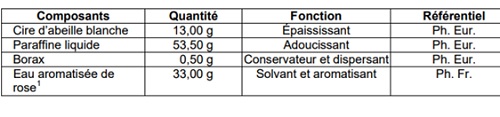
Preparation:In an evaporating dish, white beeswax is melted in liquid paraffin at 50 °C. On the other hand, borax is dissolved in rose water and heated to 500 °C. In a heated mortar, the liquid mixture is added in small amounts to the beeswax mixture previously melted in liquid paraffin, and stirred rapidly until a homogeneous mass is obtained to complete the formula.Preparation of the Formula:Glycérolé d’amidon and Cérat de Galien modifié are prepared separately. Both vehicles are mixed together. The formula is completed by adding Vitamin A and Vitamin E.
Source:
1- The French Pharmacopoeia.
2-RxMediaPharma®2016 Interactive Drug Information Source.
Spec. Pharm. Ahmet Nezihi Pekcan
Pekcan Pharmacy – Konya
[email protected]
Tel: (332) 3520657http://www.majistralformul.com/