
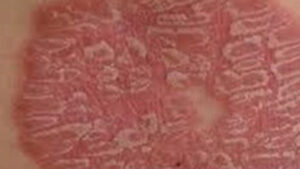
Dithranol has been used in therapy for more than 75 years. In this article, we will examine together the effects of Dithranol, featured in the Belgian Pharmacopoeia (Belgische Farmacopeecommissie), in the treatment of psoriasis.
This substance exerts its effect by reducing the mitotic rate of the epidermis. In particular, it normalizes keratin by reducing leukocyte infiltration as a result of enzyme metabolic inhibition. Topical use of dithranol is still considered an effective and safe treatment, offering longer remission periods compared to corticosteroids.
Indications
Dithranol is primarily prescribed for the topical treatment of psoriasis. It can be used alone or in combination with coal tar products, salicylic acid, UV-B, and UV-A. For the treatment of warts, it is also used in combination with salicylic acid in the form of a hydrophilic ointment or collodion.
CONTRAINDICATIONS
As a result of hypersensitivity to dithranol or any of the ingredients of the preparation; acute eruption, pustular psoriasis, and inflammatory skin disorders may occur.
SIDE EFFECTS
Dermatitis is observed as a result of irritation caused by dithranol. Allergic contact dermatitis is rare. In addition, blistering rashes have been reported. Dithranol may cause photoallergic sensitivity or photoallergy. Concurrent use with other drugs (for example, oral hypoglycemic agents, thiazide diuretics, sulfonamides, tetracyclines, phenothiazines, griseofulvin, methoxsalen) may lead to these adverse effects. To avoid this side effect, treatment duration may be reduced (10-30 minutes).
PRECAUTIONS
Caution is advised against the risk of severe skin irritation when applying to the genitals, skin folds, and face. Contact with the eyes and mucous membranes must be avoided. Contact of dithranol with the cornea may result in severe conjunctivitis and keratitis. Overdose may cause very severe irritation. The use of gloves should be recommended before applying dithranol. Gloves should be removed immediately after use, and hands should be washed thoroughly. Dithranol can stain skin, hair, and clothing. This brownish staining of the skin is harmless and gradually disappears during epidermal regeneration. Cleaning stains from clothing and bedding is more problematic. If the fabric permits, stains can be cleaned with products containing sodium hypochlorite (e.g., bleach). Certain plastics cannot be used for packaging dithranol.
PREGNANCY AND LACTATION
Safe use during pregnancy has not been established. According to the Food and Drug Administration (FDA), dithranol exhibits harmful effects on animal fetuses. Due to this adverse effect, its use should be evaluated by a physician within the framework of the benefit-risk ratio. Application over extensive body surfaces should be avoided in pregnant women. Specific study results regarding lactation are not available.
METHOD OF USE AND INSTRUCTIONS FOR ADMINISTRATION
In the treatment of psoriasis, therapy is initiated with an ointment containing 0.10% dithranol. Subsequently, it is necessary to transition to higher concentrations up to 1%. For ointments containing 2-3% dithranol, taking into account the risk of skin irritation, treatment durations must be limited to a maximum of 10-30 minutes (short-contact therapy). Remission is usually achieved after 3-5 weeks.
PRACTICAL RECOMMENDATIONS
A brownish ointment indicates that it has reached an effective consistency. Dithranol is light-sensitive. Consequently, aluminum tubes are suitable packaging containers for dithranol. They are preferred over plastic tubes. Dithranol does not possess good stability, especially at low concentrations.
These preparations should be stored at a temperature between 2 °C and 8 °C. While preparing the formula, compounding processes should not be interrupted or paused. In laboratory work, personnel must protect themselves with surgical gloves and goggles. After compounding, the laboratory bench and utensils should be carefully cleaned with surfactant cleaners. Neither humans nor animals should come into contact with waste products.
GALENIC FORMS IN TREATMENT
While dithranol is unstable in aqueous media, it exhibits good stability in oily galenic forms (e.g., white soft paraffin). However, these very greasy vehicles are typically poorly accepted by patients. Dithranol is generally prescribed in the form of a lipophilic paste containing 1% salicylic acid. These lipophilic ointments are better tolerated. Salicylic acid at a concentration of 1% possesses keratolytic activity. Furthermore, the addition of zinc oxide paste to the formula prevents the degradation of dithranol.
Generally, the ointment should not be applied to healthy skin, but directly onto the affected skin, and should be applied once daily (preferably in the evening). Healthy skin can be protected with white soft paraffin. At the end of the prescribed duration (for example, 10 minutes per night), the applied ointment should be washed off by taking a bath or shower with an acidic soap without leaving it on until the following day. Dithranol is not indicated for use on the hairy scalp in psoriasis. Dithranol is prescribed in lipophilic paste and ointment forms at concentrations ranging from 0.10% to 1%.
Stability of 1,8-dihydroxyanthraquinone (danthron); since it contains unstable molecules, it is oxidizable and forms degradation products. The degradation of dithranol can easily occur through factors such as oxygen, light, and an aqueous medium, particularly at a pH higher than 5.
Dithranol (hydrophobic ointment 0.10%, 0.25%, 0.50%, or 1%)
INDICATIONS
Used in the local treatment of chronic or subacute psoriasis. In therapy, the concentration is usually increased up to 1%, depending on patient tolerance. Here, treatment begins with a hydrophobic ointment at a concentration of 0.10%. Later, the concentrations are increased up to 0.10%, 0.25%, 0.50%, or 1%.
COMPOSITION
Rp/
Dithranol 0.110g/ 0.275g/ 0.550g/ 1.10g*
Vloeibare paraffine 30g
Witte vaseline q.s. ad 100g
We should remember that:
Vloeibare paraffine ; liquid paraffin
Witte vaseline ; white soft paraffin (petrolatum)
.
METHOD OF PREPARATION
Liquid paraffin is gradually added onto the dithranol, which is the single active substance, inside a mortar. It is then made up to 100 g with the addition of white soft paraffin. It is mixed in the mortar until a homogeneous preparation is obtained.
STORAGE
It is stored at a temperature between 20 C and 80 C.
SHELF LIFE
2 months
IN-USE SHELF LIFE
2 months
ANALYTICAL STANDARDS
Despite analytical prescription standards of 90% – 110%, the hydrophobic dithranol ointment must contain a minimum of 90% and a maximum of 115% of the intended quantity.
Comments
Avoid contact with metals and heat generation in any way.
To be continued.
Wishing you a pleasant week…
Specialist Pharmacist Ahmet Nezihi Pekcan
Pekcan Pharmacy – Konya
[email protected]
Tel: (332) 3520657
http://www.majistralformul.com/