Dear Colleagues,
I would like to start my article today in my column titled ‘Magistral Formula’—which I started exactly two months ago wondering how much interest it would receive, and to be honest, somewhat fearing a lack of response—by thanking you for the overwhelming interest and complimentary emails and phone calls received from you. I would like you to know that as long as your interest continues, as long as my health and life permit, and of course, as long as the esteemed managers of Eczacının Sesi newspaper do not terminate our work, this column will continue.
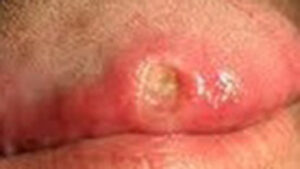
Bacterial and fungal infections on the oral mucosa, and especially on the tongue, are quite common cases.
In this article, I would like to talk about a preparation that we can easily compound in our pharmacy:
ETHACRIDINLACTAT-MONOHYDRAT-LÖSUNG 0.25% MIT LIDOCAIN 0.5% (NRF 7.7.)
Ethacridine lactate monohydrate ……………. 0.25 g
Lidocaine ………………………………………… 0.50 g
Glacial acetic acid 1% …………………….. 15.0 g
Glycerol …………………………………ad 100.0 g
In this formula;
Ethacridine lactate, commonly known as RIVANOL, is included in the formula due to its potent bactericidal effect.
GLACIAL ACETIC ACID is primarily an antibacterial and antifungal agent. A point to be noted is that concentrated acetic acid burns the skin, causes permanent eye damage, and leads to blister formation on the skin. Its effects are felt after several hours. Acetic acid more concentrated than 25% is difficult to use in laboratories due to its pungent odor and corrosive vapors; it must be used under a fume hood. The dilute acetic acid we use in this formula is harmless. However, it should not be forgotten that its strong solutions can harm humans and animals. The GLACIAL ACETIC ACID SOLUTIONS we use in our laboratory are 100%, whereas what is required in this formula is a 1% solution. In other words, when 1 g of glacial acetic acid is diluted with 99 g of distilled water, the resulting solution will become the 1% solution desired in the formula.
LIDOCAINE is preferred as a pain reliever in the mouth due to its local anesthetic effect.
GLYCEROL is odorless or faintly scented, sweet-tasting, syrupy in consistency, and used in the formula as an ideal vehicle for the oral mucosa.
Preparation; after the powders are triturated in a glass mortar, mixed with glycerin and glacial acetic acid, the preparation should be stored in a tightly closed amber glass bottle.
Method of Administration; The preparation is applied to the oral mucosa with a cotton swab 4–6 times a day.
Effect; Used for antibacterial and antifungal purposes on oral mucosa. It is effective in aphthae.
The stability of the formula is 6 months. It should be prepared in 100 g doses.
Wishing you a good week…
Exp. Pharm. Ahmet Nezihi Pekcan
Pekcan Pharmacy – Konya
[email protected]
Tel: (332) 3520657