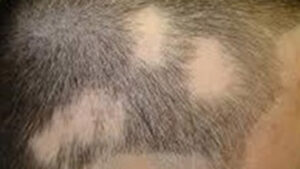
Treatment of hair loss with DIPHENYLCYCLOPROPENONE 0.1% AND 2.0% solutionsDear Colleagues, Diphencyprone (DPCP), also known as diphenylcyclopropenone, is an agent used by some dermatology centers in the treatment of skin diseases with immunotherapy. DPCP is generally used in the treatment of alopecia areata.
DPCP is applied in the treatment of allergic contact dermatitis and alopecia areata. The hair regrowth effect of DPCP is thought to occur by preventing autoimmune attacks on hair follicles.
Although treatment with DPCP has some side effects, in many cases it is well tolerated and shows a good response to treatment.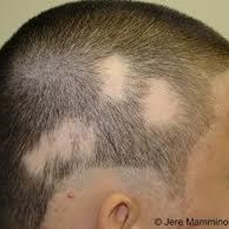 RX
RX
DIPHENYLCYCLOPROPENONE 0.1% TO 2.0% SOLUTIONS
Diphenylcyclopropenone…..100 mg to 2 g
Acetone ……………………qs 100 mL
Initial sensitization to DPCP is required in treatment protocol. To test the patient for contact allergy, the clinician applies a high concentration of DPCP (2%) to a small area for 2-3 days. The patient or physician then applies a low concentration of DPCP to the affected areas once a week, using up to 1 mL per session. The solution should remain on the skin for 6-24 hours as indicated, and then be washed off. Since DPCP is degraded by sunlight, the application area should be covered for the first 24 hours.
Gloves must be worn by the patient and/or caregiver during every application. The patient’s relative or healthcare worker may also develop dermatitis upon contact with the medication during application.
Because DPCP causes contact allergy, local dermatitis is an expected process. A mild reaction with redness and itching is desirable and usually lasts 24-48 hours.
In some patients, burning, blistering, or swelling in the treated areas, and severe itching may occur. DPCP is mostly applied to the scalp. It should not be applied over swollen lymph nodes or behind the ears.
These side effects usually disappear when treatment is discontinued.
Once the skin has been initially sensitized, a very low DPCP concentration—for example, 0.001%—is often selected to reduce the severity of dermatitis. It is proper practice to gradually increase the strength over time; for example, 0.01%, 0.1%, 0.2%, 0.5%, 1%, and 2%.Other side effects include:contact urticaria
widespread auto-eczematization
rarely erythema multiforme-like reaction
hyperpigmentation, hypopigmentation, and vitiligo can be permanent (white marks).
severe contact reactions and blistering can be treated with potent topical steroids.
In a retrospective study involving 54 patients with alopecia areata, the success rate was found to be 55%.
DPCP is not effective for everyone. It is recommended to continue treatment for 6 months before declaring treatment failure.
Treatment on the scalp can take up to 12 months; in the event of hair regrowth, DPCP treatment is usually continued once weekly. Treatment is discontinued upon hair growth, and the patient is monitored for relapse. Relapse with further hair loss is common, with one study reporting a rate of 33% and another 68.9%.
Two studies on contact immunotherapy in children with alopecia areata reported response rates of 33% and 32%. There are no data regarding the safety of immunotherapy during pregnancy, and it should not be used in pregnant women or women wishing to become pregnant.
There are safety concerns regarding DPCP. In the Ames test during commercial DPCP production, although the precursor is not mutagenic, α, α’-dibromodibenzyl ketone may be mutagenic.Other indications for DPCPDPCP can be useful in the treatment of recalcitrant verrucae. A center in Melbourne, Australia, reported an 88% success rate in palmoplantar warts with 0.1% DPCP and 15% salicylic acid in white soft paraffin. Salicylic acid reduced buildup on the warts, thereby allowing easy absorption of DPCP through the skin.Other topical sensitizing effectsDPCP is an irritant chemical commonly used in the treatment of psoriasis. It has also been applied to areas of alopecia areata. Its efficacy is uncertain.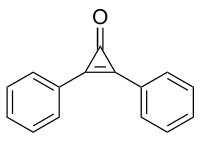 2,3-Diphenylcycloprop-2-en-1-one
A solution of DPCP in acetone is used. It should be stored in an amber glass bottle away from sunlight and kept in a secure place out of reach of children. The preparation has a shelf life of approximately 6 months.
Wishing you a good week…
Source
Compounding Articles (Pharm. Ahmet Nezihi Pekcan)
Spec. Pharm. Ahmet Nezihi Pekcan
Pekcan Pharmacy – Konya
[email protected]
Tel: (332) 3520657http://www.majistralformul.com/