

Used as a laxative for the relief of simple constipation in adults and children under 12 years of age, this formula is particularly indicated for localized obstructions in the descending colon (descending large intestine), where a hardened mass prevents bowel evacuation. It is indicated in cases of hemorrhoids, anal fissures, and proctitis where the intra-intestinal fecal mass (feces) needs to be softened. Since its onset of action occurs within a few minutes, these suppositories are particularly used in patients requiring rapid relief.
In stubborn constipation, easier defecation is achieved through concurrent use alongside adjustments to milk and other dietary intake according to the child’s age.
In children under 2 years of age, it should be used as recommended by a physician. In small infants, the suppository can be used by dividing it into two. It is administered rectally. After thoroughly washing hands, the suppository is pushed into the rectum while being held between the thumb and index finger.
Soft suppositories can be hardened by keeping them in the refrigerator for 15 minutes before removing them from their packaging for use.
In children aged 2-6 years; the recommended daily dose is one suppository.
In children aged 6-12 years; the recommended daily dose is one or two suppositories.
Before administering the suppository, it can be lubricated by wetting it with cold water.
In infants, if the suppository is held in place for 1-2 minutes after insertion to prevent it from being expelled, time is allowed for it to take effect.
It is not necessary for the suppository to melt to exert its laxative action. It is expelled along with the feces. It should not be used in the presence of abdominal pain, nausea, vomiting, anal or rectal fissures, or ulcerated hemorrhoids. Prolonged and frequent use may disrupt bowel habits.
It is recommended to use it only when strictly necessary, as infrequently as possible, and not exceeding one week. Since it is intended for pediatric use, its use in pregnant women is not anticipated. In case of accidental use by a pregnant woman, no systemic effect is expected due to the rectal route of administration and its very poor systemic absorption in terms of pharmaceutical properties. In case of overdose, symptoms such as diarrhea and abdominal cramps may be observed. Symptomatic treatment should be administered.

The mechanism of action of glycerin, the active ingredient of the suppository, is not through the absorption of the drug by melting at rectum temperature as in other suppositories. Upon rectal administration, it draws (absorbs) water from the tissue into the feces, and due to the irritant effect of glycerin, which is an alkaline substance, the suppository produces a mechanical local stimulant effect, increasing peristaltic movements, and partly exerts a lubricating effect, facilitating defecation.
A glycerin dose of 3300 mg per suppository for adults and 1400 mg for children is sufficient.
Two formulas from the Serbian National Formulary;
Formula 1;
Rp.
Glycerin 85% 70.00 g
Gelatin 14.00 g
Propyl hydroxybenzoate 0.02 g
Distilled water ad. 100.00 g
Substances included in the formula;
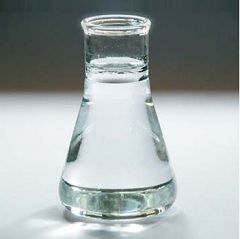
Gliserol- Glycerol [ABDATA-SK; ASK; BP; DCF; FP; INN; P.Cx.79; Ph.Eur.]- Glycerolum [INN; IP3]:
Glycerin is a clear, colorless or very pale, hygroscopic, syrupy liquid that is odorless or with very faint odor and has a sweet taste. It is miscible with water and alcohol; slightly soluble in acetone; practically insoluble in chloroform, ether, fixed oils, and essential oils. Its aqueous solutions give a neutral reaction to litmus. According to the United States Pharmacopeia (USP), the pH of Glycerin Oral Solution, USP is between 5.5 and 7.5. Strong oxidizing agents form explosive mixtures with glycerin. Glycerin is an agent with various medical applications. It moisturizes the skin when applied topically. It is included in the composition of otic preparations used for cerumen removal. It has a laxative effect via the rectal route. Ophthalmic preparations are used against corneal edema. Glycerol is a hyperosmotic laxative. It is used rectally in the form of suppositories or solutions to facilitate bowel evacuation. It usually shows its effect within 15-30 minutes. Through its hygroscopic and osmotic action, it draws water into the feces, causing rectal contractions. The local irritation it produces in the rectum also plays a role in its laxative action. In addition, it provides lubrication and softening of the feces. Glycerol is also widely used as an excipient in pharmaceutical preparations. Its primary uses include serving as a solvent, vehicle, preservative (in certain liquid preparations), binder (in tablets), and viscosity-increasing agent.
Gelatin [BP; INCI; NF; P.Cx.79]- Gelatina [FU; IP3]:
Gelatin is a purified protein obtained by partial acid hydrolysis (type A) or partial alkaline hydrolysis (type B) of animal-derived collagen. It also exists as a mixture containing both types A and B. It occurs as sheets, flakes, granules, or powder ranging in color from amber to light yellow, with a faint odor, and translucent appearance. When immersed in cold water, it swells and softens slowly by absorbing 5-10 times its volume of water. When this aqueous solution is heated, it forms a colloidal solution. When this solution is cooled, a more or less solid gel is formed. Gelatin is soluble in a hot water-glycerol mixture and in 6N acetic acid solution; practically insoluble in alcohol, chloroform, fixed and volatile oils, and ether. Its solution has a faint, characteristic, bouillon-like odor. Although stable in dry air, it undergoes microbial decomposition in humid environments or in solution.
Gelatin is a protein used in both clinical and pharmaceutical technology. Since it can absorb several times its weight in blood, it is used as an absorbable film or sponge for hemostasis in surgical applications.
Propil hidroksibenzoat- Propil paraben- Propylis parahydroxybenzoas:
Propylparaben is a white, odorless, crystalline powder without a distinct taste. It is very poorly soluble in water; readily soluble in ethanol, methyl alcohol, propylene glycol, acetone, and diethyl ether. Propylparaben is an antimicrobial preservative. It is widely used as a preservative in pharmaceutical formulations, cosmetic products, and foods. It is used alone or in combination with other parabens or other antimicrobial agents. It is the second most commonly used preservative, especially in cosmetic products. In the presence of nonionic surfactants, its antimicrobial activity is significantly reduced. The estimated acceptable daily maximum intake for methyl, ethyl, and propylparaben has been reported as 10 mg per kg of body weight.
Saf su- Eau distillée- Water, purified [BP; NF; USP]:
In pharmacy, water implies distilled water. The shelf life of distilled water is limited. In any case, it must be boiled before use. Due to the requirement of certain additional properties for water to be used in parenteral preparations, water for injection should be used for this purpose. Furthermore, deionized water may also be used instead of distilled water in pharmaceutical preparations where its use is permitted because it is cheaper and easier to obtain.
Distilled water is high-purity water prepared by the distillation of potable water and used as a solvent or vehicle in many pharmaceutical formulations. It is a clear and colorless liquid with no characteristic odor or taste.
Preparation of the formula:
Propyl hydroxybenzoate is dissolved in 30 grams of distilled water, and gelatin is left to swell in this solution for 15 minutes. Glycerin preheated to 1000C is added. The mixture is heated over steam until the gelatin dissolves. The evaporated water is then compensated by adding water up to the intended amount. The mass is stirred homogeneously and poured into the prepared mold. It should be stored between 20 and 80C, protected from light and moisture.
Formula 2;
Rp.
Sodium stearate 3.00 g
Glycerin 85% 97.00 g
Substances included in the formula;
Sodium stearate- Natrii stearas:
Sodium stearate is the sodium salt of stearic acid. It is found in many cosmetic products, rubber, latex paints, and inks. It is also a component of certain food additives and food flavorings.
Preparation of the formula:
Glycerol (85%) is heated to 115-1200C, sodium stearate is added, and it is immediately poured into the prepared molds while maintaining the appropriate temperature and gently stirred until a smooth mass is obtained in order to prevent the formation of air pockets.
Wishing you a good week…
Source:
- Farmaceutsko drustvo Srbije
- RxMediaPharma®2020 Interactive Drug Information Source
Pharm. Ahmet Nezihi Pekcan, Specialist
Pekcan Pharmacy – Konya
[email protected]
Tel: (332) 3520657
http://www.majistralformul.com/