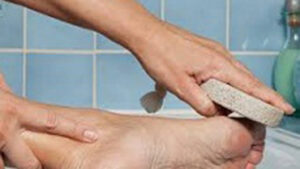
Dear Colleagues, this formula published by the American Pharmacists Association is not suitable for every patient and is particularly indicated in the treatment of dry skin and hyperkeratosis.
Formula
Urea Cream
Urea……………40%
Carbomer 941, 2% in Water..30%
Velvachol®……………30%
The carbomer dispersion is mixed geometrically into the Velvachol until homogeneous. Fine urea powder is then mixed geometrically into this mixture.
Urea Gel
Urea……………..40%
Carbomer 941, 2% in Water..60%
Pulverized urea is mixed into the carbomer dispersion. This urea will dissolve in the aqueous vehicle, resulting in a clear gel product.
Preparation
Before preparing any of these formulations, the particle size of the urea should be reduced to a very fine powder using an electric mill (various types are available). In some cases, high-speed coffee grinder mills can be used; they provide sufficient particle size reduction and are easy to clean.
A dispersion of carbomer 941 in water (Carbopol 941®) is prepared, and the viscosity is adjusted by adding trolamine (triethanolamine) (approximately 0.5 mL for 30 g of vehicle).
Use: Topical urea preparations at concentrations of 10–30% are used to promote skin hydration, shed excess keratin in dry skin, and treat hyperkeratotic conditions. Urea increases water retention by the stratum corneum and provides high water-binding capacity. Urea is also likely to have an antipruritic effect.
At high concentrations, urea is a denaturant and keratolytic agent. At a 40% concentration, as prepared here, it is used in the treatment of onychomycosis and other nail disorders. This product helps eliminate dystrophy and potentially avulses/removes nails without local anesthesia and surgery.
The combination of urea with anthralin (dithranol) is used in chronic plaque-type psoriasis.
Packaging: These products should be placed in airtight ointment jars or tubes.
Labeling: For external use only. Keep away from fire. Keep out of reach of children.
Stability: These mixtures have been demonstrated to remain physically stable for at least 30 days.
Discussion
Urea is found as white-colorless prismatic crystals or a white, crystalline powder. It is freely soluble in water and alcohol, almost odorless, but a slight ammonia-like odor may develop over time. When urea dissolves in water, the resulting reaction is endothermic, and the dissolution process can be accelerated by warming the solvent slightly.
Urea is a relatively simple molecule: CH4N2O. Its melting temperature is 132.7°C, and it decomposes into ammonia, biuret, cyanuric acid, ammelide, and triuret at its melting point and atmospheric pressure. It hydrolyzes into ammonium and cyanate over a wide pH range. In fact, if the pH is below 0, for example -1, it is very stable, but it is relatively stable over a wide pH range at room temperature. For an 8 M solution of urea, t1/2 is 29 years. Based on the pH or pKa profile, the final pH of the product should be less than 12.
Velvachol (Owen) is a widely used hydrophilic dermatological vehicle. It is an oil-in-water emulsion base containing petrolatum, mineral oil, cetyl alcohol, cholesterol, parabens, stearyl alcohol, purified water, and sodium lauryl sulfate.
Carbomer (Carbopol) resins are in the class of water-soluble resins used to thicken liquid dosage forms by suspending insoluble ingredients and stabilizing emulsions. They are very effective at increasing viscosity at low concentrations. They provide reproducibility, superior shelf life, microbial resistance, temperature stability, and versatility. They are acrylic acid polymers available as a soft, dry powder. There are several different carbomer resins, such as 907, 910, 941, 934, 934P, and 940. Their approximate molecular weights increase from 450,000 for 907 to about 4,000,000 for 940. 934P, 941, and 940 are used in the pharmaceutical and cosmetic industries for emulsion stabilization of shampoos and lotions, and for cleansing gels. They are also used for suspension stabilization and the preparation of sparkling clear aqueous or hydroalcoholic gels. In aqueous systems, carbomer 941 provides higher viscosity than carbomer 934. Carbomer resins tend to clump when the powder is poured rapidly into water. Therefore, carbomer 941 should be sprinkled slowly into water and mixed thoroughly. This is the best way to prevent the entrapment of excess air in the product, which is difficult to remove later.
There are many possibilities for combinations of urea in various commercially available topical vehicles. A few uses include white petrolatum, Lanaphilic®, polyethylene glycol ointment USP, Aquaphor® , and Velvachol, with or without modifiers such as glycerin or propylene glycol. The formulations mentioned here appear to be superior and stable.
Many commercial topical products contain urea in various concentrations and different vehicles. Cream products containing 2% urea include Aquacare ® (SmithKline); those containing 10% urea include Aquacare HP (SmithKline) and Nutraplus®; those containing 20% urea include Carmol® (Syntex) and Urcacin-20 (Pedinol); and those containing 30% urea include Urecacin-40® (Pedinol).
Wishing you a good week…
Source: Compounding Articles (Pharm. Ahmet Nezihi Pekcan)
Specialist Pharmacist Ahmet Nezihi Pekcan
Pekcan Pharmacy – Konya
[email protected]
Tel: (332) 3520657
Fax: (332) 3512816