Thomas Goulard (1697–1784), the famous French surgeon and anatomist… What would he think if he saw that this formulation named after him is still being debated in our country nearly more than two centuries after his death, the grievances we pharmacists suffer because of it, and that prescriptions containing this formula are subjected to financial deductions by the SSI (Social Security Institution) due to non-standard, disparate practices?
I would like to remind you that lead and lead salts are debated worldwide on the grounds of containing heavy metals and causing environmental pollution, and have been banned in many countries.
In the Turkish Codex;
Kurşun suyu (Lead water), Solution plumbi subacetatis diluta, Aqua plumbi, Eau blanche, Eau de Goulard. T.K.
Rp
Lead subacetate solution 2 g.
Water 98 g.
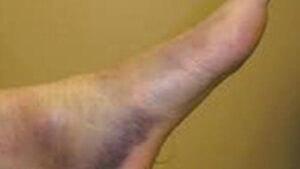
In the description of this formula, our esteemed professor Prof. Dr. Kasım Cemal Güven commented in his book MEDICAL FORMULARY / DRUG ENCYCLOPEDIA: “(It is a clear or slightly cloudy liquid. It should be shaken before use. It is used in dressing bruises, sprains, burns, and chaps.)”
When our professor mentions “clear or slightly cloudy” here, he indicated that it can be prepared with boiled and cooled distilled water or tap water, and that both methods can be accepted. Indeed, if prepared with boiled and cooled distilled water, a clear solution is obtained, whereas if prepared with tap water, a cloudy solution is obtained.
However, when “Water” is mentioned in our Pharmacopoeia, distilled water must be understood, because there is no other definition of water in our Pharmacopoeia.
Regarding the preparation of this compound, which is known as the only formula using tap water, see what Prof. Dr. Enver İzgü, author of the book GALENICAL AND INDUSTRIAL PHARMACEUTICAL TECHNOLOGY published by ANKARA UNIVERSITY FACULTY OF PHARMACY, stated: “In the preparation of this solution, freshly boiled and cooled distilled water must definitely be used; otherwise, it becomes cloudy. The French make it with ordinary water and it turns into a white solution, which is why they called it white water, but THIS IS AN INCORRECT PREPARATION.” (page 110, volume 1)
In France, this formula, generally used for anti-traumatic purposes in veterinary medicine, is as follows;
Formule du formulaire national
Soluté d’acétate basique de plomb 2.00 g
Eau potable 98.00 g
In this formula, “Eau potable” is included as tap water.
In the Netherlands , this formula appears in the FNA (Formularium der Nederlandse Apothekers 2009);
Solutio Plumbi subacetatis 2 g
Spiritus dilutus ketonatus 9 ml
Aqua ad 100 ml
In this formula, Spiritus dilutus ketonatus refers to dilute alcohol, i.e., 70% ethanol, while Aqua appears with the meaning of (distilled water).
Although it is also used in the Netherlands for dermatitis, burns, astringent purposes, etc., restrictions have been imposed on its use considering that it may lead to environmental pollution since it contains heavy metals.
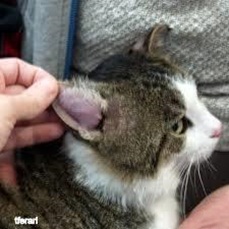
In Spainthis formula (Farmacopea Espanola IX Ed.pag.219)
Agua de Goulard
Subacetato de Plomo Liquido 10 p
Alcohol 95020 p
Agua 970 p
Or
Subacetato de plomo Liquido 10 g
Alcohol 900 22 g
Agua destilada 968 g
The water in this formula is defined as purified water.Preparation of the formula:The lead subacetate solution is mixed with alcohol and added to water. It is stored in a cool, dry place in a transparent plastic bottle, but away from light.
Another preparation method is:
Alcohol is added to purified water and mixed, then liquid lead subacetate is added and stirred with a glass rod until homogeneous.
Both methods are acceptable.
It is used externally for dermatitis, minor burns, and, due to its astringent effect, for hematomas and skin bruising.
In summary; except for France, distilled water is predominantly used in the preparation of this formula, whereas in the Netherlands and Spain, ethanol is added to the formula to provide weak antiseptic properties.Physical – Chemical PropertiesIt is in the form of an almost colorless liquid. If prepared with tap water, a white sedimented solution is formed. Lead subacetate is very soluble in water, alcohol, and glycerin. Its density is 1.235-1.250 g/ml.DoseTopically, while it is included at 10-20%, it is generally used at a rate of 10%. (A 2.5% rate is used for burns.)Side EffectsIn case of ingestion, anorexia, colic, vomiting, anemia, peripheral neuropathy, and encephalopathy with seizures and coma may be observed due to lead poisoning.
Ingestion can also lead to kidney and mental disorders.
Accidental high doses have been reported to cause behavioral disorders in children.IncompatibilitiesIncompatible with phenols, alkali benzoates, salicylates, iodides, phosphates, borates, carbonates, sulfates, chlorides, bromides, iodides, tannins, alkaloids, albumin, soaps, ichthammol, and gum arabic.ReferencesThe Merck Index, 13th ed. (2001)
Compounded Medications, COF Bizkaia, 5th Edition formulation, (2004)
Drug Monographs, Alicante COF (1998).
Pharmacy Practice Magistral Formulation, Jos M.aIn FNA (Formularium der Nederlandse Apothekers 2009)
Farmacopea Española IX Ed. p. 219
ANKARA UNIVERSITY FACULTY OF PHARMACY PUBLICATIONS GALENICAL AND INDUSTRIAL PHARMACEUTICAL TECHNOLOGY Vol. 1
Tel: (332) 3520657
Fax: (332) 3512816[email protected]