ANTISEPTIC WOUND CREAM FOR SKIN WOUNDS, BURNS, AND ABRASIONS: CALENDULA CREAMCire blanche d’abeille …………… 13,00 g
Huile d’olive ……………………… 52,50 g
Eau distill’ee de rose …………… 33,00 g
Calendula teinture ………………… 1,00 g
Borate de sodium ………………… 0,50 gActive ingredients in the formula:
Cire blanche d’abeille-Cera alba-White wax-White beeswax-Wax-Cera flava-Wachs-Cire T.K.:It is the honeycomb made by bees. Its melting point is 62-66 °C. It is insoluble in water. It is partially soluble in alcohol and ether, and completely soluble in oils. White beeswax is obtained by bleaching yellow beeswax in the sun. It is used as a base for cerates and is included in the composition of ointments and suppositories. It serves as a thickening agent in creams and ointments.Huile d’olive-Olive oil-Oleum olivae-Olive oil: History shows that the most prominent traces of olive oil production date back to the Minoan Civilization in the heart of the Mediterranean, around 4500 BC. The olive tree (Olea europea) is a delicate tree. Despite its slow and laborious growth, it is remarkably long-lived. The average lifespan of an olive tree is 300-400 years, but olive trees as old as 3,000 years have also been found. For this reason, the olive tree is referred to as the “immortal tree” in mythology and botany.
Olive oil contains 75% oleic acid glycerides. It contains vitamins A and E, as well as a small amount of phytosterol. When 1-2 tablespoons of olive oil are taken on an empty stomach in the morning, it acts as an emollient and soothing agent. It particularly regulates bowel movements and exerts a cholagogue effect. Traditionally, in cases of gallbladder obstruction or gallstones, 50-100 g is taken on an empty stomach in the morning, and the treatment is continued for 1 week.
Topically, it exhibits an emollient and soothing effect on inflamed surfaces. It is used to soften crusts and the skin in eczema and psoriasis.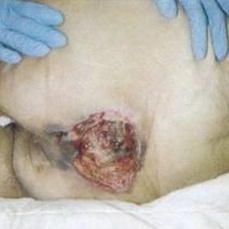
Eau distill’ee de rose-Aqua rosae-Eau de rose T.K.-Rose water: 1 liter of rose water is obtained on average from 6,000 roses. Rose water was first obtained by the Persians through the distillation of roses. Its spread to Europe is believed to have been facilitated by the Berbers who conquered Spain. Rose water is generally consumed in Western, Southern, and Eastern Asian countries and is often used to flavor confections and pastries. In Iran, its place of origin, rose water is also added to tea, ice cream, and cookies. It also holds religious significance in Islam and Hinduism. Rose water(Persian:Gûlâb) are hydrosols obtained by distilling the petals of the rose plant. Due to the perfume industry’s high demand for rose oil, rose water is an inexpensive by-product. It contains 0.4% essential oil in its composition.
In the Western world, rose water is widely used in cosmetics rather than as a culinary ingredient. The Ottoman medical scholar Avicenna (Ibn Sina) and subsequent physicians used rose water in the treatment of mental disorders due to its refreshing and calming properties. Obtained from the rose plant, which contains pharmaceutical compounds such as geraniol, rhodinol, eugenol, citronellol, and phenylethyl alcohol, rose water is still used today in the treatment of certain ailments. Known to be effective in relieving throat and tonsil inflammations, rose water is also classified among antiseptics.Calendula tincture-Marigold flower tincture-Marigold Tincture:The drug is defined in the French Pharmacopoeia. It has been used as a healing ointment for cuts, burns, bruises, warts, and aches.
Calendula flower tea has traditionally been used for sore throat, laryngitis, and tonsillitis, cough, as a sedative, and as a gargle against inflammation of the oral and pharyngeal mucosa. In the form of tea, it has been used against fever, cramps, and spasms of the digestive and urogenital systems.
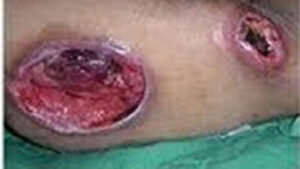
Externally, it is used as a skin rejuvenator and for wounds, burns, and abrasions. Scientific studies have shown that ointments made with calendula extract are particularly effective on non-healing wounds, including hard-to-heal leg ulcers and bedsores. A recent study has shown that it is effective on surgical wounds following cesarean section. Another study demonstrated that drops containing calendula extract were effective in treating ear pain associated with acute otitis media.Sodium borate-Borax anhydrous-Sodium tetraborate:It is a white to off-white crystalline powder. It is soluble in water at a ratio of 1:16 and in glycerol at 1:1. While highly soluble in boiling water (1:1), it is insoluble in alcohol. Borax exhibits a weak bacteriostatic and fungistatic effect. In creams, it is preferred externally as an astringent and emulsifier.Preparation: Borax is dissolved in the calculated amount of rose water. Calendula tincture is added to the solution and mixed thoroughly. On the other hand, white beeswax and olive oil are melted in a hot water bath prepared at 60 °C by stirring until homogenized. While cooling the warm mixture in a glass or porcelain mortar by stirring until it reaches room temperature, the previously prepared rose water + borax + calendula tincture mixture is added gradually to complete the preparation.Usage: Due to the antiseptic effect of calendula tincture, for wounds, burns, abrasions, and non-healingdecubitus ulcers(bedsores) wounds as well.
Wishing you a good week..
Specialist Pharmacist Ahmet Nezihi Pekcan
Pekcan Pharmacy – Konya
[email protected]
Tel: (332) 3520657http://www.majistralformul.com/