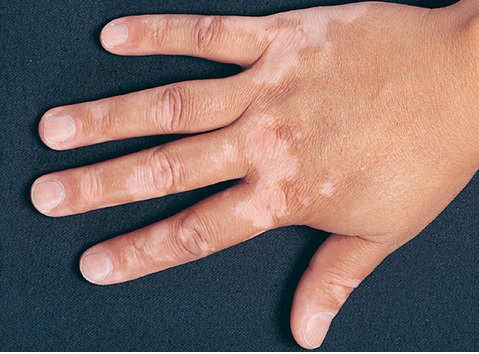
Herbal Solutions and New Approaches in the Treatment of VitiligoDear Colleagues; as is well known, Vitiligo is a progressive pigment disorder that can be acquired or hereditary, is frequently encountered worldwide, and can affect all age groups. Clinically, it is characterized by well-defined (sharp) borders, milk-white macules of varying sizes and locations, typically symmetrical, and sometimes showing a unilateral and dermatomal distribution. Primarily involving the skin, it can also affect the eyes, ears, and leptomeninges.EPIDEMIOLOGY: Although the incidence of vitiligo has been reported to vary between 0.14% and 8.8%, it is generally accepted to occur in 1-2% of the general population. In our country, it has been reported to account for 0.15% of patients presenting to the Dermatology Outpatient Clinic.
It usually begins in childhood and young adulthood. Although it can be seen at any age, it peaks between the ages of 10 and 30. It is generally accepted that approximately 50% of cases begin under the age of 20, 1/4 are under 8 years of age, and both sexes are equally affected. Studies have reported that the onset age is between 10-19 years for 28% of both sexes, specifying the youngest age of onset as 3 and the oldest as 54. While the disease is reported to occur from birth up to 81 years of age, rates as high as 73% have also been reported in women. This higher incidence has been attributed to women paying more attention to cosmetic concerns compared to men.Precipitating Factors:Interesting points are noted in patient histories in vitiligo. It is suggested that factors such as emotional stress, trauma, nutritional and allergic causes, toxic agents, pregnancy, oral contraceptive use, and sunburn may predispose to the onset of vitiligo. One study found the rate of patients developing vitiligo as a result of trauma to be 2.4%. Another study mentions toxic factors, determining that vitiligo could begin after febrile illnesses such as typhoid and malaria. It is also emphasized that sunlight causes vitiligo cases by triggering the Koebner phenomenon.ETIOLOGY AND PATHOGENESIS: The etiopathogenesis of vitiligo has not yet been fully elucidated, and currently there are three theories in this context:
1. Autoimmune Theory
2. Autocytotoxic (Self-destruction) Theory
3. Neural Theory
In addition, a “Combined Theory” has also been proposed, which suggests that the first and last theories may be effective together.
ASSOCIATION WITH SYSTEMIC DISEASES
Up until 1929, Parkon and Derevici identified thyroid disease alongside vitiligo in 25 patients; later, various researchers reported co-occurrences of 30-40% involving hypothyroidism, hyperthyroidism, Graves’ disease, toxic goiter, and thyroiditis. Although hypothyroidism is particularly seen in advanced ages and in women, the most important diagnostic test is the measurement of TSH levels. Abnormal iodine uptake has been reported in 40% of patients. Antimicrosomal and antithyroglobulin antibodies are frequently encountered in vitiligo patients. In thyroid disease, vitiligo has been reported at a frequency of 0.62-1.25%.
While both juvenile-onset (Type I) and adult-onset (Type II) DM are observed in 1.0-7.1% of patients, vitiligo is also observed in 4.8% of diabetics. Dawber found a primary relationship between late-onset vitiligo developing after age 40 and DM. El Mofty reported a family history of DM in 34% of vitiligo patients.
Although the incidence of vitiligo in Addison’s Disease has been reported as 2.0%, studies conducted on vitiligo patients detected no autoantibodies against adrenal cortex cells and steroids.
Pernicious Anemia, although an uncommon disease, is observed with increased frequency in patients with vitiligo. Indeed, while vitiligo has been reported in 1.6-10.6% of patients with pernicious anemia, conversely, defective Vitamin B12 absorption was demonstrated via the Schilling Test in 1/3 of vitiligo patients. In six out of seven series, an increased incidence of antiparietal cell antibodies was found in vitiligo patients with gastric achlorhydria.
Multiple Endocrinopathy Syndrome has been reported especially in cases of universal vitiligo. Although 26 cases were reported up to 1979, 20 of these presented with thyroid disease, 15 with pernicious anemia, 10 with Addison’s Disease, 9 with Diabetes Mellitus, and 2 with gonadal dysfunction. Chronic Mucocutaneous Candidiasis, hypoparathyroidism, and alopecia areata can also be part of this syndrome.
The co-occurrence of vitiligo and melanoma has been observed in both humans and animals. In these patients, mottled and less symmetrical leukoderma-like depigmentation was identified. It can sometimes be seen prior to malignant melanoma (MM). MM can be located within, around, or distant from the lesion. In addition to certain histopathological differences, it has a more central localization compared to vitiligo. By the time vitiligo starts in MM, metastasis to at least one lymph node has already occurred. This group of patients has a better prognosis compared to other patients.
Vitiligo has also been reported in dysgammaglobulinemia and malignant neoplasms of the immune system. Although vitiliginous skin is more prone to chronic actinic damage, the incidence of cutaneous malignancies in vitiligo patients is low. This may be due to vitiligo patients having minimal sun exposure to avoid sunburn.
TREATMENT IN VITILIGO
Sunscreens: Sunscreens will exhibit a dual effect by protecting both against sunburn and subsequent Koebnerization, and by limiting the darkening of normal skin tone. Vitiligo patients should especially use opaque sunscreens with a sun protection factor higher than 30 containing ZnO and/or TiO2.
Cosmetic products: Depigmented macules, especially in visible areas such as the face, neck, and hands, can be concealed with cosmetics. These include standard makeup materials, dyes, and preparations providing rapid tanning. Specific cosmetic brands such as Covermark, Dermablend, Derma Color, Demage, and Elizabeth Arden Concealing Cream can temporarily conceal vitiliginous areas. Dermablend is among the cosmetic products also available in Turkey that are removed by wiping rather than washing. Topical dyes require regular application less frequently and are often more resistant to external factors. Among these products, Broemmels Walnut Stain, Clinique Bronze Gel, Dyoderm, and Vitadye can be listed as specific brands. Vitadye (ICN/Elder) is an easily applied, single-color liquid dye that does not rub off with friction but fades over time. Self-tanning preparations containing dihydroxyacetone provide better color match in some patients and are available in various shades. Specific popular products of this alternative method include Chromolin (Summer Labs), Elizabeth Arden Self Tanning Lotion, Estee Lauder Tanning Cream, Esteem (Karen Kimbrough), and Self Tanning Milk (Clarins). Low cost, ease of application in focal vitiligo, and the absence of side effects are advantages of topical cover-up materials. However, patients’ lack of makeup habits, application difficulties in widespread cases, and high levels of physical activity may hinder application. A traditional home remedy is staining lesions with walnut husks at regular intervals. Patients should be informed that cosmetic use will not cause vitiligo to progress and will not interfere with other treatment options, thereby minimizing patient discomfort arising from the reactions of others.
PUVA (Photochemotherapy): The goal of photochemotherapy in vitiligo is melanin stimulation through UVA combined with the topical or systemic use of psoralens, which are natural photoactive substances.
Corticosteroids: Topical, intralesional, and oral steroids have been used for repigmentation in vitiligo. They provide maximum improvement in dark-skinned individuals and especially in the head and neck regions. They should be considered in the early stages of the disease, in children, and in situations where PUVA therapy is contraindicated. Treatment should begin with potent steroids depending on the localization and be maintained intermittently with milder preparations to prevent steroid adverse effects. Success rates range between 10-90% and can be used in combination with other treatments. Systemic corticosteroids can halt the progression of vitiligo and induce repigmentation in the majority of patients. To prevent side effects, mini-pulse therapies have been developed; in one study, progression was halted within the first three months in 89% of patients, and repigmentation was achieved in 80% of cases in 2-4 months.
Other Medical Treatments: In a study conducted in Japan in 1995, Munto et al. reported successful results in generalized vitiligo patients by administering Metharmon-F tablets, a sex steroid-thyroid hormone mixture, twice daily.
The first application regarding Melagenina, a hydroalcoholic extract of human placenta, was carried out in Cuba. This extract facilitates the conversion of DOPA to melanin and enhances melanogenesis. While repigmentation was reported as 84% in this study, another study in the same country reported 31% total and 53% partial repigmentation. Studies from other countries have not confirmed these rates. The treatment lasts as long as ten years, and observing repigmentation in areas where topical application was not made suggests that the drug is absorbed through the skin and exerts a systemic effect.
Since defects in the immune system are thought to play a role in the pathogenesis of the disease, various immunoregulatory agents have been used. For this purpose, Cyclosporine, Cyclophosphamide, Anapsos, Isoprinosine, and Levamisole have been utilized. The repigmentation rates obtained vary depending on the treatment modality used. Among other treatment methods reported for inducing repigmentation in vitiligo lesions; tar emulsions, copper, clofazimine, carotenoids, and multivitamins (Vitamin B6, Vitamin B12, Vitamin C, Folic Acid) have been used.
Topical minoxidil treatment has been reported to facilitate repigmentation in patients undergoing photochemotherapy. The mechanism by which 5-FU induces repigmentation remains unknown. In one study, 5-FU cream was applied occlusively for 1-10 days following dermabrasion; repigmentation was observed at the earliest in one month, and repigmentation was detected in 60-64% of patients in one year. This treatment was unsuccessful in segmental vitiligo.
SURGICAL TREATMENTS: In a vitiligo patient, if the existing melanocyte reservoir in hair follicles is completely destroyed, it will not respond to various medical treatment methods. When medical treatment remains insufficient or when no response is obtained, surgical treatments may be considered. It is also possible to benefit from surgical treatments in combination with medical therapies.
Tattooing (Tatuage – Micropigmentation) is a surgical method employed. It has been described as an alternative method in cases resistant to other treatment modalities. In this method performed using Iron Oxide, caution should be exercised regarding foreign bodies, allergic reactions, and the Koebner Phenomenon.
DEPIGMENTATION TREATMENT: This is another treatment option for patients with extensive involvement who are resistant to other alternative treatments. For this purpose, with the twice-daily application of 20% Hydroquinone Monobenzyl Ether cream, depigmentation response begins in 2-3 months and is completed in 9-12 months. It has been shown that Hydroquinone and its Monobenzyl Ethers competitively inhibit Tyrosinase, reduce the number of melanized melanosomes, and cause the lysis and dispersion of melanocyte organelles by altering melanosomal configuration. Side effects such as dryness, burning, and itching observed at an average rate of 50%, and contact dermatitis observed at 14%, limit its use. It is also recommended that these patients use high-protection sunscreens and b-carotene.
TREATMENT IN CHILDREN: Generally, at very young ages, it is the parents rather than the children who desire treatment. It is appropriate to alleviate the families’ concerns, ensure their participation in support groups if available, and initiate medical treatments only when the child understands the situation and desires treatment. Sunscreens and camouflage should be applied first. In the treatment phase, local steroids come first, and local PUVA can be applied in focal lesions. Oral psoralen + UVA can be attempted after an average age of ten.
The treatment of vitiligo from a Phytotherapy perspective continues to maintain its popular and current importance.
Dear Colleagues, I will share an important study with you by our colleagues Alev ÖNDER, Ahsen Sevde ÇINAR, and Ayşe Mualla GÜRSOY, faculty members of the Department of Pharmacognosy at Ankara University Faculty of Pharmacy. I would like to take this opportunity to express my gratitude to them.

Herbal Solutions and New Approaches in Vitiligo Treatment;
People’s interest in plants and natural products, which began in ancient times, alongside the tendency to treat many diseases with natural products, is increasing day by day. Vitiligo is also a pigmentation disorder with roots dating back to BC, historically referred to by names such as “shwetakustha”, “suitra”, “kilas”, and “baras”. It is known as a condition characterized by depigmented macules on the skin—white spots—resulting from the chronic loss of melanin pigment and melanocytes. Today, this disease is among the conditions that many people suffer from, whose origin is not fully known, which can recur even if treated, and which is difficult to treat completely. In addition to various synthetic compounds, phototherapy, and chemotherapy applications for the treatment of vitiligo, natural products and plants are significantly utilized either in combination with these or independently. While furocoumarin and furochromone compounds are frequently encountered among natural products used in treatment, many plants are used in the plant kingdom for the treatment of this disease, with furocoumarin-containing plants standing out noticeably. In addition, intensive studies are still being conducted on different plants containing or not containing coumarin-type compounds and various natural products for the treatment of the disease. In this study, information is provided regarding the definition, history, etiology, epidemiology, and current treatment of the disease; however, it is primarily aimed at investigating the plants and natural products mentioned in the treatment of vitiligo, how they are used in treatment, and presenting the latest developments emerging on this subject.
NATURAL PRODUCTS
The effects of plants have been known throughout history. In records dating back earlier than 2000 BC, it is documented that people living in the Nile River Valley in Egypt collected the fruits of Ammi majus (Apiaceae) and sunbathed after applying its juice to vitiliginous areas. Again around 1400 BC, information exists regarding the use of extracts obtained from Psoralea corylifolia, a plant growing in India, in vitiligo treatment. It is known that psoralens have been used in repigmentation treatment in Egypt and China for 4,000 years. PUVA treatment has gained importance in the treatment of psoriasis, vitiligo, and recently T-cell leukemia. In addition, narrowband UVB therapy has been tested alongside antioxidants in vitiligo treatment. Among natural products, furocoumarin (psoralens) and furochromone compounds are encountered more frequently.
Furocoumarins
Furocoumarins are classified in the plant kingdom as a subgroup of secondary compounds characterized by a furan ring attached to a coumarin unit, and as a group of coumarins. In addition, there are synthetically produced furocoumarins. Furocoumarins are examined under two groups: linear (Psoralen derivatives) and angular furocoumarins (Angelicin derivatives). Furocoumarins are widely used in photochemical treatments against various skin disorders such as psoriasis and vitiligo. The use of the psoralen group compounds, known for their most fundamental structure among furocoumarins, in vitiligo dates back to ancient times. Mechanistically, it exerts its effect by binding to the thymine DNA nucleotide, thereby preventing the proliferation of pathogenic cells or the production of highly reactive singlet oxygen in damaged tissues. Psoralens are linear furocoumarins quite commonly found in plants. In general, psoralen-containing plants are used internally and externally to support skin pigmentation and tanning. Psoralen, thanks to its broad chromophore, absorbs nearby ultraviolet light, allowing this radiation to stimulate the formation of melanin pigments. The best-responding body areas have been determined to be the face and trunk, with side effects most commonly observed as vomiting and erythema. It is recorded that the most severe photodermic reactions occur with 5-MOP/bergapten obtained from Citrus bergamia (bergamot fruit) and 8-MOP obtained from Fraxinus xanthoxyloides. The most important plant where psoralens are found in large amounts is known as Citrus aurantium ssp. bergamia (Rutaceae). A linear furocoumarin, 5-MOP (bergapten), is successfully applied in vitiligo treatment (in addition to PUVA therapy). Methoxsalen (xanthotoxin, 8-MOP), one of the compounds in Ammi majus (Apiaceae) fruits, is used medically to facilitate skin repigmentation in cases of severe maculation. Long-wave ultraviolet radiation is applied following an oral dose of methoxsalen; however, it is emphasized that such treatments must be extremely carefully regulated and administered to minimize the risk of burning, cataract formation, and inducing skin cancer.
Furochromones
Khellin is a furochromone compound known to be found in the mature fruits of Ammi visnaga (toothpickweed, khella), a Mediterranean plant. This plant also contains the compound visnagin. It is administered orally at a dose of 50-100 mg 2.5 hours prior to UVA exposure, or 2-5% khellin is applied topically three times a week. Khellin is a compound activated by UVA and structurally similar to psoralen. However, unlike psoralen, it does not increase DNA mutations. In studies by Valkova and colleagues, it was noted that a repigmentation state similar to systemic PUVA treatments was observed with topical khellin+UVA (KUVA) therapy. Furthermore, there are studies indicating that the most potent photosensitizers are khellin and 5-MOP.
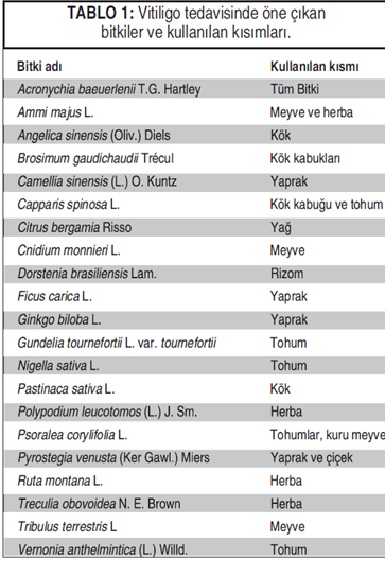
PROMINENT PLANTS IN VITILIGO TREATMENT
Many plants used in vitiligo treatment are encountered worldwide; information regarding their traditional use is available, and extensive literature can be accessed. Therefore, this section first describes prominent plants in vitiligo, followed by examples of other plants mentioned and used in vitiligo.
Acronychia baeuerlenii T.G. Hartley (Rutaceae)
The Acronychia baeuerlenii plant is a 9-meter-tall tree growing in the New South Wales state of Australia. It is used in vitiligo patients due to the furanocoumarins it contains. Ammi majus L. (Apiaceae), Bishop’s Weed, False Queen Anne’s Lace, Khella: Due to its furochromones, oral or topical administration of Ammi majus plant extract, combined with sunlight or ultraviolet light, has been observed to provide rapid repigmentation in vitiliginous skin. A 70% disease regression is observed in patients where 1-3 g of dried fruit powder is used orally per day.
Angelica sinensis (Oliv.) Diels (Apiaceae),
Dong Quai (Female Ginseng)
It has been recorded that the aqueous extract of Angelica sinensis root is widely used in traditional Chinese medicine for vitiligo treatment. This plant is rich in coumarins. Extracts obtained from the roots of the A. sinensis plant have been proven to induce repigmentation by acting on melanocytes unable to produce melanin in vitiliginous skin.
Brosimum gaudichaudii Trécul (Moraceae)
Brosimum gaudichaudii is widely used in Brazilian medicine. Ointments, lotions, and decoctions prepared from its root bark exhibit photosensitizing properties due to the psoralen and bergapten they contain, and are used in the treatment of vitiligo. When the required doses for treatment are listed according to formulations in studies; oral intake of tablets containing 400-500 mg powdered root, use of cream containing 20% powdered root by weight, and use of solutions at a concentration of 20% w/v are significant for treatment.
Camellia sinensis (L.) O. Kuntz (Theaceae), Tea
Camellia sinensis contains polyphenols, especially epigallocatechin gallate (EGCG). In a study conducted on mice, although the mechanism is not fully understood, it was observed that with the use of 5% EGCG, the depigmentation duration was prolonged, while its prevalence and depigmented areas decreased. Therefore, EGCG is considered a preventive agent in vitiligo treatment. Easy accessibility, feasibility, low cost, and especially the lack of side effects indicate that its efficacy in vitiligo treatment should be further investigated.
Capparis spinosa L. (Capparaceae), Caper
The buds, unripe fruits, and shoots of the Capparis spinosa plant have been used as food or seasoning; its fruits, seeds, and root barks have been used traditionally. In Ancient Greece around 100 AD, Dioscorides is known to have treated white vitiligo spots using caper roots. Around the same dates, records exist showing that Pliny similarly used caper roots in Ancient Rome. Extracts obtained from the root bark of C. spinosa using 70% ethanol are used in vitiligo treatment because they regenerate melanin cells and possess skin-nourishing properties. In a study, extracts in increasing concentrations from 0.005% (w/v) to 0.05% were used, and an increase in melanin synthesis compared to the control group was determined.
Citrus bergamia Risso (Rutaceae), Bergamot
Bergamot oil obtained from Citrus bergamia contains up to 5% bergapten. In studies, a pigmentation effect was determined when used in lotions at a rate of 0.001%. Bergamot oil is frequently used in external tanning preparations.
Cnidium monnieri L. (Apiaceae)
Cnidium monnieri fruits contain coumarin, chromone, essential oil, terpenoid, and glycoside. Fruits containing coumarins such as xanthotoxin, isopimpinellin, imperatorin, and bergapten are used orally or topically, while also being used to achieve repigmentation in idiopathic vitiligo patients through exposure to long-wave ultraviolet radiation (UVA) or sunlight. In a study conducted using a solution prepared with 1 g dry fruit powder of the plant and 100 mL of 95% ethanol, positive results were obtained.
Dorstenia brasiliensis Lam. (Moraceae), Carapia
Dorstenia brasiliensis is a perennial plant commonly found in Southern Brazil, Paraguay, Uruguay, and Argentina. The infusion obtained from its rhizomes contains psoralen, bergapten, and isopimpinellin, and when used in combination with UVA rays at a concentration of 1-20 μg/mL, it is thought to provide repigmentation in vitiligo.
Ficus carica L. (Moraceae), Fig
Ficus carica is a fruit cultivated since ancient times, serving as a source of minerals, vitamins, and fiber. Because fig leaves contain furocoumarins such as psoralen and bergapten (8-MOP), they are used in psoriasis and vitiligo diseases. In addition, this plant has an effect against oxidative stress. In studies conducted, the solution used was prepared with 2 g fig leaf and 500 mL water.
Ginkgo biloba L. (Ginkgoaceae), Maidenhair Tree
Ginkgo biloba is one of the traditional Chinese plants and is among the plants used in cardiovascular diseases, anxiety, dementia, macular degeneration, and vitiligo. The leaf extract of the Ginkgo biloba plant has been used in vitiligo treatment due to its antioxidant and immunomodulatory effects. Some researchers believe that G. biloba benefits vitiligo by preventing free oxygen radical damage in the skin. In a study, it was stated that the Ginkgo plant has the potential to treat vitiligo, emphasizing that detailed studies on this subject would be beneficial. In studies on vitiligo patients, repigmentation was observed in some patients administered 40 mg G. biloba extract orally three times daily.
Gundelia tournefortii L. var. tournefortii
(Asteraceae), Tumble Thistle (Gundelia)
When Gundelia tournefortii L. var. tournefortii seeds are dried, ground, and consumed as coffee, it is known to be effective for vitiligo treatment. The latex of the plant is also applied topically. G. tournefortii is called “kenger” in the Elazığ Sivrice Region of Turkey; although the literature indicates its use in mumps and vitiligo treatment, it is used as an antidiarrheal in this region.
Nigella sativa L. (Ranunculaceae), Black Seed (Black Cumin)
The seeds of the Nigella sativa plant, known as black seed, are widely used in folk medicine for the treatment and prevention of many diseases. The seeds contain proteins, alkaloids, and saponins, as well as certain essential oils. The seeds characteristically have very low recorded toxicity. Mechanistically, the thymoquinone compound contained in N. sativa has been reported to stimulate cholinergic receptors, leading to melanin secretion and providing skin repigmentation. In a study, a pigmentation scale between 5 (absence of pigment) and 0 (presence of pigment) was established, and black seed oil was applied to lizards for 6 months. As a result of using black seed oil, it was observed that pigmentation values dropped from 4.98 to 3.75, generating pigmentation in vitiliginous areas.
Pastinaca sativa L. (Apiaceae), Wild Parsnip
Pastinaca sativa is used in the treatment of vitiligo and other skin diseases due to furanocoumarins (8-MOP) in its roots.
Polypodium leucotomos (L.) J. Sm. (Polypodiaceae),
Leucotomos Fern
Polypodium leucotomos contains psoralen. This plant is a fern native to Central America. It has also been used as a health supplement for more than 30 years. It is used orally in combination with UVA and UVB to provide repigmentation in vitiligo treatment. In a randomized, double-blind, placebo-controlled clinical study in 50 vitiligo patients over a 25-week treatment period, 250 mg P. leucotomos extract taken orally twice daily, combined with UVB (311 nm), was observed to provide significant repigmentation in the neck and hands. It is also used to prevent many harmful effects of sunlight.
Psoralea corylifolia L. (Leguminosae)
Psoralea corylifolia is an endangered annual plant with showy bluish-purple flowers, widely grown in subtropical and tropical regions. This plant is recognized as a rich natural source of psoralen. Due to its photosensitizing, protective, anti-stress, and antioxidative properties that sensitize the skin to ultraviolet and sunlight, it has long been traditionally used in the form of oral or topical preparations in vitiligo treatment. In India around 1400 BC, records exist of extracts obtained from P. corylifolia being used in vitiligo treatment. Fructus Psoraleae is known to be frequently used alone or in combination with other herbs in the treatment of postmenopausal osteoporosis, vitiligo, and psoriasis. Although hepatotoxicity due to induction of hepatotoxins has been encountered in some cases, it is thought that this condition may stem from other plants with which it is combined. In another study, extract obtained from seeds of P. corylifolia was shown to regulate the immune system in mice. In traditional Chinese medicine, dried fruits of P. corylifolia have been known to be used to prevent and treat vitiligo for approximately 1,600 years. P. corylifolia is an important plant used in many traditional medicine practices. In a clinical study, topical application of the primary compound of P. corylifolia in 30 patients showed healing of newly formed perilabial vitiligo within a time frame of 1 to 10 months.
Pyrostegia venusta (Ker Gawl.) Miers
(Bignoniaceae), Flame Vine
Pyrostegia venusta, used in Brazilian folk medicine, is a plant utilized in the healing of certain diseases, including vitiligo. In a study where extracts obtained from leaves and flowers of P. venusta were applied for 4 days, the maximum effective concentration was 3 μg/mL for leaf extract and 0.1 μg/mL for flower extract. It began to be used in treatment after being observed to stimulate melanin cells in vitiligo through a yet unclarified mechanism. However, the plant’s mechanism of action and safety profile require further investigation.
Ruta montana L. (Rutaceae), Mountain Rue
Due to the psoralen, bergapten, and xanthotoxins contained in Ruta montana, extracts obtained from the aerial parts of the plant are used in vitiligo treatment.
Treculia obovoidea N. E. Brown (Moraceae)
Furanocoumarin compounds such as psoralen and bergapten have been obtained from the crude extract of Treculia obovoidea. These compounds are used in the treatment of vitiligo and psoriasis. In addition, in a study, extract prepared using 1.5 kg of dried twigs and 5 L of methanol was tested on depigmented areas and yielded results.
Tribulus terrestris L. (Zygophyllaceae),
Puncture Vine, Caltrop
Tribulus terrestris is an annual wild plant found in the native flora of Turkey, China, Japan, Korea, Western Asia, Southern Europe, and the African continent. Extracts of 2 mg/mL prepared from its fruits are used in vitiligo treatment as they stimulate melanocyte cells and promote their proliferation. Its property of preventing oxidative stress is also known.
Vernonia anthelmintica (L.) Willd. (Asteraceae),
Wild Cumin
When the extract obtained by ethanol:water (80:20 v/v) extraction of seeds of Vernonia anthelmintica (Wild Cumin), known as “Kaliziri” in Uyghur medicine, was tested in a dose-dependent manner between 5-40 μg/mL, improvement in the vitiliginous area occurred at a minimum concentration of 20 μg/mL. The plant is used in vitiligo treatment due to its effects on melanin synthesis.
EXAMPLES OF OTHER PLANTS USED IN VITILIGO TREATMENT
– Anthurium affine Schott (Araceae),
– Aristolochia indica L. (Aristolochiaceae),
– Asphodelus aestivus Brot. (Asphodelaceae) – Common asphodel,
– Balanites aegyptiaca Del. (Zygophyllaceae),
– Citrullus colocynthis L. Schrad. (Cucurbitaceae),
– Cochlospermum regium (Schrank) Pilg. (Bixaceae),
– Cunninghamia lanceolata Lamb. (Cupressaceae),
– Gossypium barbadense L. (Malvaceae),
– Himatanthus obovatus (Mull. Arg.) Woodson (Apocynaceae),
– Imperata brasiliensis Trin. (Poaceae),
– Jatropha gossypiifolia L. (Euphorbiaceae),
– Macrosiphonia longiflora (Desf.) Mull. Arg. (Apocynaceae),
– Miconia albicans (Sw.) Triana (Melastomataceae),
– Rhamnus lycioides L. (Rhamnaceae),
– Rosmarinus officinalis L. (Lamiaceae),
– Rumex abyssinicus Jacq. (Polygonaceae),
– Senna alata (L.) Roxb. (Fabaceae),
– Stachytarpheta cayennensis (Rich.) Vahl (Verbenaceae),
– Stachytarpheta elatior Schrad. ex Schult. (Verbenaceae),
– Tradescantia zebrina Bosse.(Commelinaceae).
CONCLUSION AND DISCUSSION
Vitiligo is a pigmentation disorder in which well-demarcated, milk-white areas appear scattered or in patches across the skin. Although there are hypotheses formulated regarding its causes, it is defined as a disease that medicine has not yet fully solved. While various definitions of vitiligo can be found, essentially identical definitions exist across sources. As understood from its definition, although a definitive cure still does not exist, it is evident from the reviewed literature that great strides have been made in the field of treatment today. Even though vitiligo is not a disease with an exceptionally high prevalence, the increase in this disease today should not be overlooked. It is generally observed with equal frequency across all races and different genders. Hereditary factors are known to play a role; in fact, its etiology is largely attributed to genetic predisposition. In vitiligo treatment, although synthetic compounds are still used, the appropriate use of herbal treatment is generally accepted to be less toxic and have fewer side effects. Moreover, accessing plants is always easier and more economical for patients. For this reason, people have turned to plants in search of alternative therapies. Among natural compounds, furocoumarins (psoralen, bergapten, xanthotoxin, etc.) are significant compounds used in vitiligo treatment. Psoralens, when taken orally or topically and used in combination with ultraviolet light, achieve repigmentation and are recognized as the most widely used compound group in therapy. Even as new modalities are attempted, it is evident that therapies fundamentally utilizing furocoumarins have not been abandoned. Nevertheless, phototherapies utilizing furocoumarins maintain their importance as the most effective route. Most plants used in treatment are considered effective due to their furocoumarin content. When extracts prepared from these plants are administered orally or topically and exposed to sunlight or ultraviolet light, repigmentation is observed in vitiliginous areas. However, results indicate that certain compounds other than furocoumarin-type compounds are also beneficial in vitiligo treatment. In addition to cases where patients improve with vitiligo treatment, unsuccessful outcomes are also occasionally encountered. Furthermore, when pigmentation is unsuccessful, cases where disease progression could at least be arrested or the cosmetic appearance partially improved can also be found. In addition, newly identified effective plants are added to the literature daily, and formulations containing the plants featured in this study or novel/different plants are proliferating day by day. To prevent the onset of vitiligo, which is mostly attributed to genetic and stress origins and sometimes described as an autoimmune disease; it is necessary first and foremost to stay away from stress, pay attention to sleep patterns and food consumption, steer clear of chemicals that have occupied a large part of our lives, and protect against harmful sun rays. Considering that stress, which is caused by both environmental and individual factors and is an inevitable part of our lives, also triggers this disease as it does many others, protecting ourselves in this sense will be more rational.
As seen, treatment in vitiligo should be selected according to the patient’s age, distribution of lesions, and the patient’s circumstances, utilizing the most appropriate medical, surgical, combined, or other alternative methods to provide maximum benefit and in accordance with the patient’s preference.
References:
1- Assoc. Prof. Dr. Lütfiye ERSOY, Dr. Özer ARICAN Haseki Training and Research Hospital, Dermatology and Venereology Clinic
2- Alev ÖNDER, Ahsen Sevde ÇINAR, Ayşe Mualla GÜRSOY Department of Pharmacognosy, Ankara University Faculty of Pharmacy, Ankara
Specialist Pharmacist Ahmet Nezihi Pekcan
Pekcan Pharmacy – Konya
[email protected]
Tel: (332) 3520657
http://www.majistralformul.com/