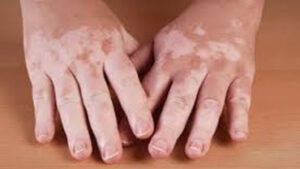
Vitiligo Treatment with Hydroquinone Monobenzyl EtherVitiligo is a condition characterized by non-pigmented, white patches of varying sizes on normal-appearing skin areas, often symmetrically distributed and usually bordered by hyperpigmented margins; hair in the affected area is also frequently white. Vitiligo is a disease characterized by the destruction of melanocytes in the skin. The affected area of the skin is completely devoid of melanin pigment, and pigment-producing melanocyte cells are absent in this region.
Its prevalence ranges between 1% and 4%. Although its etiopathogenesis is not fully understood, emphasis is placed on neural, genetic, autoimmune, and biochemical factors. It is also associated with several autoimmune diseases such as alopecia areata, thyroid disorders, juvenile diabetes, pernicious anemia, and Addison’s disease. Clinically, vitiligo can manifest as localized, generalized, universal, and mixed types. The type in which depigmentation is observed across more than 80% of the body is called universal vitiligo. In these patients, lightening the remaining normal skin areas with depigmenting therapies is also a treatment option. In a study conducted on 11 patients with universal vitiligo, patients were treated with monobenzyl ether of hydroquinone (MBEH); clinical improvement was observed in 8 patients, while 3 patients did not respond to the treatment.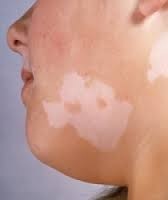 In patients, if depigmentation is not achieved after using a 20% concentration for 3-4 months, the concentration can be increased up to 40%. While common side effects include irritation and contact dermatitis, exogenous ochronosis and MBEH resistance have also been reported. Although the resulting depigmentation is generally irreversible, repigmentation may also be observed following excessive exposure to sunlight. In universal vitiligo, quality of life may be negatively affected due to only a limited area of normal skin remaining. An article published on psychiatric symptoms in vitiligo patients reported 10% depression, 7-9% dysthymia, 18-22% depressive episodes, 10% suicidal ideation, 3.3% suicide attempts, and anxiety symptoms at the same rate. In conclusion, vitiligo is a disease that can significantly affect patients’ quality of life. Although it is often treated as a cosmetic problem, the psychosocial impacts it causes should not be overlooked. Although various treatment options are available in the treatment of vitiligo, monobenzyl ether of hydroquinone is an effective option among depigmenting treatments. In conducted studies, monobenzyl ether of hydroquinone treatment was generally found to be significantly effective in as short a period as three months and positively affected patients’ quality of life. The difficulty in obtaining this drug in our country adversely affects patients’ access to medication, and using other ineffective treatments also leads to a waste of time.Monobenzone, also4-(Benzyloxy)phenolandmonobenzyl ether of hydroquinone (MBEH)asknown, C6H5CH2OC6H4OH with the chemical formula, in the phenolfamilyan organicchemical. It is used as a topical medication for medical depigmentation. It is a colorless solid classified as the monobenzyl ether of hydroquinone. Monobenzone is soluble in alcohol, benzene, and diethyl ether, and is practically insoluble in water.
Topical application of monobenzone in animals increases the excretion of melanin from melanocytes. Monobenzone can cause the destruction of melanocytes and permanent depigmentation. The histology of the skin following depigmentation with topical monobenzone is identical to that seen in vitiligo; the epidermis is normal except for the absence of identifiable melanocytes. Therefore, monobenzone is used as a topical medication for depigmentation in patients with idiopathic vitiligo where normal skin surrounding vitiliginous lesions remains permanently pigmented (covering more than 50 percent of the body surface area). Monobenzone is also being considered in the treatment of melanoma.
Wishing you a pleasant week…
Source:
1- İlgen Ertam, Tuğçe Özkapu, İdil Ünal. Monobenzylether of hydroquinone in universal vitiligo: A case report. TURKDERM. 2013; 47(4): 243-245
2- RxMediaPharma®2016 Interactive Drug Information Source.
Specialist Pharmacist Ahmet Nezihi Pekcan
Pekcan Pharmacy – Konya
[email protected]
Tel: (332) 3520657http://www.majistralformul.com/