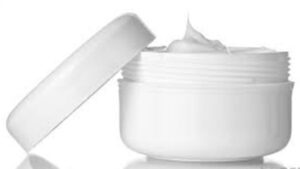
Non-Ionic Emulsifying OintmentDear Colleagues, this week we will examine an O/W type ointment that is in an anhydrous ointment form and chemically does not interact with the substances it carries.
Formula; It is used in the preparation of anhydrous ointments and O/W emulsions. This type of ointment is washable. It is chemically inert; therefore, it is compatible with many active ingredients such as dithranol, azelaic acid, ichthammol, antibiotics, etc. It is harmless to the skin.
An emulsion is the phenomenon of holding two immiscible substances (water and oil) together with the aid of a third compound (emulsifier). They are heterogeneous systems with a homogeneous appearance, formed by the dispersion of at least one of two immiscible liquids into the other in the form of droplets with the help of an emulsifier. The phase consisting of droplets (globules) is called the dispersed phase or internal phase; the medium in which it is dispersed is called the dispersion medium or external phase. The droplets are opaque, white, and 0.1-10 mm.
Emulsion components are: oil phase, water phase, and emulsifier.
Advantages;
– To mask the undesirable taste and odors of bad-tasting substances. e.g., Fish oil, castor oil, fat-soluble vitamins (A, E)
– To increase the absorption of active substances; e.g., the absorption of macromolecular substances such as insulin and heparin in the GI tract can be increased.
– They are preferred in order to increase the chemical stability of the active ingredient.
Additionally; when applied topically, they form a thin layer on the skin and are easily washable.
Topical emulsions: Lotions, liniments, most of which are used for cosmetic purposes. Both O/W (for local effect) and W/O (for occlusive effect and skin cleanser) are used, and their efficacy depends on their penetration ability.Formula:
Rp.
Tween 60 10 g
Liquid paraffin 10 g
Cetostearyl alcohol 30 g
Vaseline filante 50 g
Ingredients in the formula;
Tween 60- Polyoxyethylene 20 sorbitan monostearate- Polysorbate 60- Polysorbatum 60:Polysorbates are non-ionic surfactants used as emulsifying agents in the preparation of stable oil-in-water pharmaceutical emulsions. They are used as solubilizing agents for a variety of substances, including essential oils and oil-soluble vitamins (such as vitamins A, D, and E). Polysorbate 60 is a mixture of partial stearic esters of sorbitol and its anhydrides. Each mole of sorbitol and its anhydrides is copolymerized with approximately 20 moles of ethylene oxide. The stearic acid used in the esterification may also contain other fatty acids (especially palmitic acid). It is a yellow-orange oily liquid, semi-gel, or yellowish-brown gelatinous substance. Above 250°C, it is a clear liquid. It has a faint, characteristic odor. It is miscible with water, anhydrous alcohol, methyl alcohol, ethyl acetate, and toluene. It is practically insoluble in liquid paraffin and fixed oils.
Polysorbates are stable in the presence of electrolytes and weak acids and bases. Strong acids and bases can cause saponification.Liquid paraffin- Liquid paraffin- Liquid petrolatum- Liquid vaseline- Mineral oil [INCI; NF; NF16; USP]- Paraffinum liquidum [INCI; EU]:Liquid paraffin is widely used in topical pharmaceutical preparations. It is incorporated into the composition of ointment bases to benefit from its emollient properties. It is used in oil/water type emulsions. It acts as a lubricant in tablets and capsules. Due to its lubricating property, it is also used in ophthalmic formulations. Liquid paraffin is a mixture of saturated liquid hydrocarbons obtained from petroleum. It is a transparent, colorless, odorless, and viscous liquid. It exhibits no fluorescence in daylight. It is a tasteless and odorless substance, but emits a faint odor when heated. It is practically insoluble in water, glycerin, and alcohol; soluble in benzene, acetone, chloroform, ether, carbon disulfide, and petroleum ether. It is miscible with most volatile and fixed oils (except castor oil). The addition of small amounts of surfactant provides an increase in miscibility/solubility. It should be stored in airtight containers and protected from light.Cetostearyl alcohol- Cetostearyl alcohol [BP; NF; P.Cx.79]- Lanette(R) O:Cetostearyl alcohol occurs as a white or pale yellow waxy mass, or as white flakes or granules with a faint characteristic odor. When heated, it melts to yield a colorless or pale yellow liquid free from turbidity or dispersed particles. It is practically insoluble in water; freely soluble in ether; and soluble in alcohol and petroleum ether. When melted, it is miscible with fixed oils, liquid paraffin, and melted lanolin. Cetostearyl alcohol is a mixture of solid aliphatic alcohols consisting mainly of cetyl alcohol and stearyl alcohol. It is obtained by the reduction of suitable fatty acids. The British Pharmacopoeia (BP) and the United States National Formulary (USNF) specify that it should contain not less than 90% cetyl + stearyl alcohol and not less than 40% stearyl alcohol. Cetostearyl alcohol is used in creams, ointments, and other topical preparations as a stiffening agent and emulsion stabilizer. Combined with hydrophilic emulsifying agents, it is useful in preparing oil-in-water emulsions that remain stable over a wide pH range. Additionally, it is used to increase the emollient effect of ointments prepared with paraffin. Although it is essentially a non-irritant substance, hypersensitivity reactions associated with its main components, cetyl and stearyl alcohol, have been reported.Vaselina filante:It is a white or yellow homogeneous, moisturizing oily cream with a soft and creamy emulsion appearance. It is odorless. It melts between 35 and 45°C. It is insoluble in water and glycerin. While slightly soluble in alcohol, it is highly soluble in ether, chloroform, essential oils, fixed oils, and acids. Its absorption by the skin is poor. Therefore, to enhance the absorption of the active ingredient it contains, absorption is increased with the addition of a small amount of lanolin. It protects the skin by preventing potential irritation and dryness. It is used as an alternative vehicle for ointments with an unpleasant odor.Preparation of the formula:The substances melted in a dish in a bain-marie (water bath) at 30-40 degrees by stirring with a glass rod are then removed from the water bath and cooled by continuing to stir until reaching room temperature. Transferred into an ointment jar.
Wishing you a happy holiday…Source:1-La Formulación Magistral en la Oficina de Farmacia 2.apart. Valencia, 1985
2-RxMediaPharma®2019 Interactive Drug Information Source
Spec. Pharm. Ahmet Nezihi Pekcan
Pekcan Pharmacy – Konya
[email protected]
Tel: (332) 3520657http://www.majistralformul.com/