Dear Colleagues, if we summarize psoriasis;
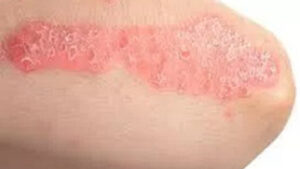
A skin disease characterized by red patches covered with sun-colored (silvery) scales and small, scaly spots (mostly in children). Acute symptoms include redness and the spread of scales all over the body. Psoriasis, also known as sedef hastalığı, is a common skin condition characterized by flare-ups and periods of remission. The most common areas affected are the elbows, knees, trunk, and scalp. It may cause pitting or ridging in nails. Flare-ups of psoriasis manifest with pustules, skin cracking, itching, mild bleeding, or joint pain. It is not a contagious disease and is believed to stem from a genetic predisposition. It ranges in severity from mild to severe. Although it cannot be cured completely, effective results can be achieved with treatment during flare-up periods. In mild cases, coal tar soaps, shampoos, cleansers, ointments, and bath oils are used. In treatment-resistant cases involving the scalp, lotions containing tar and phenol are used. In psoriasis cases that impair normal quality of life, methotrexate, a drug used in cancer treatment, may be utilized; however, this strictly requires physician supervision. In severe cases, phototherapy is also utilized.
The formula I will share with you this week is included in the Spanish National Formulary and is applied topically using the occlusion method (covered) in various dermatological diseases.
It is especially used in the treatment of dermatitis, psoriasis, and Lichen simplex chronicus, also known as Neurodermatitis. Neurodermatitis is defined as an eczema that develops due to chronic scratching. Chronic itching, which arises through diverse mechanisms, triggers an itch-scratch cycle by leading to progressively more scratching. It occurs in individuals with anxiety disorders and non-specific emotional stress. It is characterized by pruritic, hyperpigmented, lichenified plaques with irregular oval or angular borders. It is most commonly seen on easily reachable areas such as the arms, legs, neck, and upper trunk.
Formula:
Pivalato flumetasona 0.02%
Antralina 0.3%
Ac. Salicilico 4%
Unguento hidrofilo csp. 100 g
Substances in the formula:
Flumethasone pivalate – Fluméthasone (pivalate de) [Ph. Eur. 4] – Flumethasone trimethylacetate:
Flumethasone pivalate is a white or almost white crystalline powder. It is practically insoluble in water; soluble 1:89 in alcohol, 1:350 in chloroform, and 1:2800 in ether; slightly soluble in methyl alcohol, and very slightly soluble in methylene chloride. It is known to be a glucocorticoid 800 times more potent than cortisone acetate.
Flumethasone pivalate exhibits anti-inflammatory, antipruritic, and vasoconstrictor effects. Flumethasone pivalate is applied topically. Even when applied to large skin surfaces at high doses and under occlusive dressings, it is reported not to significantly enter systemic circulation due to its rapid metabolism. Nevertheless, a minor effect has been observed on various parameters such as plasma hydrocortisone concentration or urinary excretion of 17-ketosteroids and 17-hydroxycorticosteroids. Flumethasone pivalate is used in the treatment of various inflammatory skin conditions responsive to topical corticosteroid therapy, such as eczema. Cream, ointment, or lotion forms of 0.02% are available. It is also used at the same concentration in combination with clioquinol (1%), an antibacterial and antifungal agent. Creams and ear drops containing this combination are available.
Anthrasol – Anthralin – Cignolin – Dithranol:
Anthralin was first introduced in 1916 by Galewsky under the name “chrysarobin” as an agent that could be used in the treatment of skin diseases. Anthralin (1,8-dihydroxy-9-anthrone) can be obtained naturally from the bark of the Araroba tree found in South America. It can also be synthesized from Anthrone. Anthralin is a hydrocarbon that is a synthetic derivative of chrysarobin. Anthralin is a yellowish-orange or yellowish-brown, odorless crystalline powder. Since it tends to degrade in light, it must be protected from light. Having a strong irritant effect, Anthralin can cause severe reactions in the eyes, mucous membranes, and other skin areas. In particular, it produces a burning effect upon contact with perilesional skin. For this reason, the patient should always be reminded to wash their hands after application. It should not be used on acutely inflamed skin. Anthralin is insoluble in water. It is soluble in absolute alcohol (96%), acetone, oily media, and petrolatum.
Anthralin can cause severe allergic reactions at high doses. To reduce this effect, when combined with pix juniperi (juniper tar) and other types of tar, it is observed that its allergenic properties decrease or are eliminated. In pastes containing Anthralin along with zinc oxide, salicylic acid or benzoic acid must also be added to preserve the efficacy of Anthralin. In the absence of this, its efficacy is greatly reduced as a result of interaction with zinc oxide, and this manifests as a color change in the preparation. Conversely, it has been observed that 0.25% and 0.5% Anthralin can maintain its efficacy in yellow soft paraffin without the addition of salicylic acid.
In pruritic skin diseases, it is preferred for its antieczematous, anti-inflammatory, and mild antibacterial and antimycotic effects.
It is used at concentrations of 0.05–3% in seborrheic dermatitis, eczema, and psoriasis; preferably at 2–5% on the scalp; and at 5–10% in Herpes tonsurans (Tinea capitis = scalp ringworm).
Anthralin is a topically acting antipsoriatic drug. It is also used in the treatment of alopecia. It exerts its effect by reducing the mitotic rate of the epidermis. Although the exact mechanism of action of Anthralin is not fully known, it is suggested to possess antiproliferative and immunosuppressive effects. It is contraindicated in kidney patients and pregnant women.
Its side effects include irritant contact dermatitis, folliculitis, erythema, pruritus, scaling, and regional lymphadenopathy. It also causes pigmentation on the skin in addition to staining clothes. Skin pigmentation regresses after the discontinuation of treatment.
In patients using topical Anthralin, side effects observed at the beginning of treatment, such as pruritus, erythema, burning, and discoloration, generally disappear with continued treatment.
Psoriasis treatment: Adults: Conventional treatment: 0.1–1% ointments are applied to the affected area once daily or twice daily at 8–12 hour intervals. In another application, 0.1–1% cream is applied to the affected area once daily. It should preferably be applied at night. Short-contact anthralin therapy (“S.C.A.T.”): 0.1–1% cream is applied to the affected area for 10–30 minutes and then washed off at the end of this period. For the treatment of alopecia areata: Adults: 0.1–1% ointment or creams are applied topically once daily.
Acidum salicylicum – Acide salicylique – Salicylic acid – Salicylsäure [IUPAC; ASK; Ph. Eur.]:
These are white crystals. Soluble in 500 parts water, 15 parts boiling water, 27 parts alcohol (99%), 2 parts ether, 80 parts olive oil, 100 parts glycerin, and 55 parts chloroform. Salicylic acid accelerates desquamation. It exhibits a mild fungicidal effect. Salicylic acid is a beta-hydroxy acid (BHA) with the chemical formula C7H6O3 / C4H6(OH)CO2H. This colorless, crystalline organic acid is generally used as a plant hormone. It is a product of salicin metabolism. It shares similar chemical properties with acetylsalicylic acid, known as aspirin. It is used in the treatment of fungal infections such as tinea barbae, tinea capitis, and tinea cruris. Salicylic acid is a keratolytic agent. It is used in the treatment of hyperkeratotic and scaling skin conditions such as dandruff, seborrheic dermatitis, ichthyosis, psoriasis, and acne. Solutions and ointments used for this purpose are available. To minimize the risk of systemic absorption following topical application, salicylic acid should not be used for prolonged periods or at high concentrations, and application to large body surfaces or inflamed/broken skin should be avoided.
Unguento hidrofilo – Hydrophilic ointment:
Hydrophilicity is the ability of a molecule to bind to water by forming hydrogen bonds. Molecules with polar groups dissolve in water by forming hydrogen bonds with water.
Formula:
Cera lanette 25 g
Vaselina filante 25 g
Propilenglicol 12 g
Lauril sulfato sodico 1 g
Agua destilada 37 g
Nipagin sodico 0.04 g
Preparation of the formula:
First, the hydrophilic ointment should be prepared. For this, propylene glycol, Lanette wax, and petrolatum are placed in a glass beaker and melted while stirring with a glass rod on a water bath until homogeneous. In another glass beaker, sodium lauryl sulfate, distilled water, and sodium nipagin are mixed with a glass rod and added to the oily phase. Separately, Flumethasone pivalate, Anthralin, and Salicylic acid are pulverized in a glass mortar. A few drops of propylene glycol are added to obtain a smooth, homogeneous paste. The formula is completed by incorporating the hydrophilic ointment using geometric dilution.
The ointment is applied to the affected areas three or four times daily using the occlusion method.
Wishing you a good week…
Source:
1- La Formulación Magistral en la Oficina de Farmacia Valencia, 1981
2- RxMediaPharma®2017 Interactive Drug Information Source.
Tel: (332) 3520657
Fax: (332) 3512816
http://www.majistralformul.com/