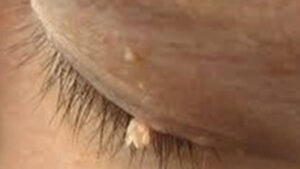
Dear Colleagues, this week, before sharing a formula prescribed in France for the treatment of verruca (warts) which we frequently encounter in our pharmacies, let us review our knowledge about verruca (wart) disease.
Warts / Verruca Vulgaris or Human Papillomavirus Infection
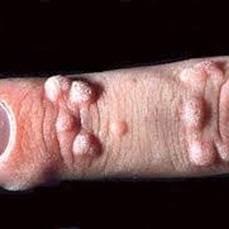
Warts are infections caused by a virus known as Human Papillomavirus/HPV that settles in the upper layer of the skin or mucosa. Although the appearance of warts varies depending on their location or type, they are generally skin-colored, raised, and have a calloused, hard appearance.
We can group warts into 4 main categories:
1- COMMON WARTS / VERRUCA VULGARIS:
This type of wart, seen on the hands, fingers, and around the nails, is very common. They occur more easily when skin integrity is compromised (nail biting/picking, etc.). They are frequently seen in children.
2- PLANTAR WARTS / SOLE WARTS:
They can occur singly or in multiple clusters (mosaic warts). Unlike other warts, they appear embedded in the skin and can cause pain. They develop this way due to the pressure of body weight. They may have red/black dots on them indicating bleeding foci. Pain varies depending on the size and depth (pressure) of the wart.
3- FLAT WARTS / PLANE WARTS:
These are relatively small, soft, and flat-surfaced warts. They can be very numerous. Although they can appear anywhere on the body, they are predominantly found on the face and scalp. Because they are flat, they may be easily overlooked.
4- GENITAL WARTS / CONDYLOMA:
They are more common in adults and affect quality of life. They can occur in different sizes and numbers. They can appear outside the genital organs, as well as on internal areas such as the vagina and cervix in women. They are encountered in individuals who have multiple sexual partners and engage in unprotected sexual intercourse. This type, if left untreated for a long period, especially when affecting the cervix in women, can lead to changes progressing to cancer.
HOW IS IT TRANSMITTED?
Warts are transmitted by direct person-to-person contact. They can rarely be transmitted through indirect routes. Warts do not appear immediately after transmission; the incubation period can last for months. The transmission risk of hand, plantar, and flat warts is low. However, the contagiousness of genital warts is very high, and the route of transmission is sexual contact. Among the indirect transmission routes of warts, shared towels, bathrobes, slippers, as well as swimming pool, public bath (hammam), and spa habits may pose risks.
WHY DOESN’T EVERYONE GET WARTS?
Warts cannot enter every body; even if they do, they cannot proliferate. Infections establish easily in cases of compromised skin integrity (people who bite/pick nails), weakened immune systems (anemic or cancer patients, those taking immunosuppressive drugs, etc.), and allergic constitutions. The risk of transmission is high in individuals experiencing severe stress, those on strict diets or with irregular/unbalanced nutrition, states of extreme overwork and fatigue, those who engage in unprotected sexual contact with multiple partners, those who share towels and bathrobes, and frequent users of pools, public baths, and jacuzzis.
MUST WARTS BE TREATED?
The vast majority of warts in children disappear spontaneously over time without requiring treatment. However, since it cannot be predicted in whom spontaneous resolution will occur, treatment is necessary to prevent spreading to other people and areas. In adults, spontaneous resolution does not occur as easily and quickly as in children. In particular, HPV types belonging to the high-risk group may resist treatment and recur. If such warts remain untreated for a long time, they carry the risk of malignant transformation in the affected area. Therefore, they definitely must be treated.
HOW DO WE TREAT WARTS?
We have over 100 options to treat warts. However, treatment varies depending on the patient’s age, type of wart, anatomical location, and financial means. Another classification is based on whether the treatment is administered by the patient or the physician. Surgical treatment methods, cryotherapy, laser, electrocautery, and surgical excision are methods that physicians can apply. Topical applications of salicylic acid, 5-FU, and podophyllin are methods patients can apply themselves at home. Alternatively, immunotherapy, interferon, and imiquimod (ALDARA) may be considered.
CAN I AVOID SEEING A DOCTOR FOR A WART?
Non-scientific methods such as having prayers read, applying garlic, or touching hot ash/cigarettes are constantly asked about by patients. However, in low-risk HPV types, lesions often regress spontaneously without any intervention anyway. Therefore, “it was prayed over and disappeared” stories are likely such self-regressing lesions. Nonetheless, in warts that develop due to stress, strong suggestion or hypnosis by an elder or healer may act as a form of psychotherapy. Since it is harmless, patients in our country often do this without consulting a physician. In any case, the correct approach is to consult a specialist physician.
IF THE WART CONTINUES TO RECUR…
In these cases, the following possibilities come to mind:
– The patient is not adhering fully to the treatment
– The patient has problems with body resistance (anemia, parasites, chronic infections and renal failure, atopic constitution, immunodeficiency, nutritional
disorders, etc.)
– The patient continues to experience intense stress.
– The wart belongs to an HPV type included in the high-risk group (such as HPV 16).
– There may be an active source of infection in the immediate environment.
Examining the verruca solution used in treatment as an extemporaneous (compounded) formula:
Rp
Acide saliclylique ……15 g
Acide lactique………….. 3.5 g
Acide acétique…………. 3.5 g
Ether……………………… 7.5 g
Alcool à 95%………..7.5 g
Collodion…………qsp 100 g
Examining the ingredients in the formula:
Acidum salicylicum – Salicylsäure – Acide salicylique – Salicylic acid: White crystals. Soluble in 500 parts water, 15 parts boiling water, 27 parts alcohol (99%), 2 parts ether, 80 parts olive oil, 100 parts glycerin, and 55 parts chloroform. Salicylic acid accelerates desquamation. It exhibits a mild fungicidal effect. Salicylic acid is a beta-hydroxy acid (BHA) with the chemical formula C6H4(OH)CO2H. This colorless, crystalline organic acid is generally used as a plant hormone. It is a metabolite of salicin. It has similar chemical properties to acetylsalicylic acid, known as aspirin. It is used in the treatment of fungal infections such as tinea barbae, tinea capitis, and tinea cruris. In dermatology, salicylic acid is often used in combination with lactic acid for the treatment of warts and corns. The exact mechanism of action of salicylic acid and lactic acid in wart treatment is not fully understood. It is thought to be due to the mechanical removal of wart virus-infected epidermal cells as a result of their keratolytic effects. They are also effective against corns through their keratolytic activity.
Acidi lactici – Acide lactique T.K. – Milchsäure – Lactic acid: Lactic acid is a colorless or light yellow, hygroscopic, sour-tasting, syrupy-consistency, odorless liquid. Lactic acid is miscible with water, alcohol, and ether, and practically insoluble in chloroform. It is a corrosive agent. Lactic acid is applied topically. Lactic acid should be stored at room temperature below 30°C and in tightly closed, airtight containers.
Glacial acetic acid – acetic acid – acido acetico glaciale – acidum aceticum concentratum: Glacial acetic acid occurs as semi-transparent crystals or a colorless liquid with a very pungent odor. Its boiling point is between 117-118°C. Miscible with water, alcohol, methylene chloride, and glycerin. According to USP, the pH of the irrigation solution is between 2.8-3.4; the pH of the otic solution should be between 2.0-4.0 when diluted with an equal volume of water. Glacial acetic acid is primarily an agent with antibacterial or antifungal activity. Its dilute solutions are used in the treatment of superficial bacterial infections of the external ear. Glacial acetic acid is also used as an escharotic. Its diluted forms have been used as antibacterial (especially against Haemophilus sp. and Pseudomonas sp.), antifungal, and antiprotozoal in vaginal gels and douches, irrigation solutions, and preparations formulated for skin and nails. In addition, it has expectorant, spermicidal, and astringent effects. It is also used against warts and corns. It has been reported to be effective against jellyfish stings.
Aetheris – Ether – Diethyl ether: Used as a solvent in the formula.
TF.1974 ETHANOLUM (Pages 235-237) ETHANOLUM – ETHANOL
Ethanol is a mixture of ethyl alcohol and water. It must contain not less than 95% v/v, not more than 96.8% v/v, not less than 92.5% w/w, and not more than 95.0% w/w of C2H6O.
ETHANOLUM ABSOLUTUM – ABSOLUTE ETHANOL
C2H6O Absolute ethanol must contain not less than 99.0% w/w of C2H6O.
ETHANOLUM DILUTUM – DILUTE ETHANOL
Dilute Ethanol is a mixture of ethyl alcohol and water. It must contain not less than 69.1% v/v and not more than 71.0% v/v, not less than 61.5% w/w and not more than 63.5% w/w of C2H6O.
In the formula, 95% w/w alcohol is used.
Flexible collodion – Collodion elastique – Flexible collodion – Collodion élastique T.K.: Flexible collodion is used for dressing small cuts and abrasions and as a vehicle for drugs intended to have a prolonged local action. Flexible collodion is prepared by adding castor oil to collodion. In the T.K., it consists of 97 g Collodion and 3 g Castor oil.
It is highly flammable and must be stored in tightly closed containers away from fire.
Preparation of the Formula
The calculated amount of salicylic acid weighed on a watch glass is thoroughly pulverized in a glass mortar, and lactic acid, glacial acetic acid, ether, and alcohol are added onto it. It is brought to the desired final quantity with flexible collodion.
Usage
Applied twice daily onto the wart or corn. It should be kept in mind that it can cause irritation on healthy skin. During application, the medication should not overflow beyond the wart or corn.
Goodbye, wishing you a good week…
Source
Dr. Meltem ÜSTÜNSOY
Dermatology and Venereology Specialist
Exp. Pharm. Ahmet Nezihi Pekcan
Pekcan Pharmacy – Konya
[email protected]
Tel: (332) 3520657
http://www.majistralformul.com/