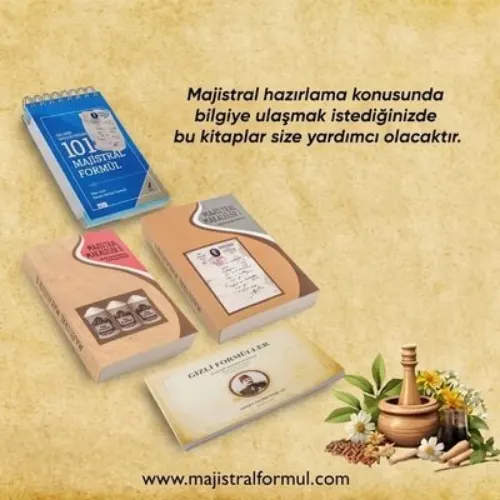
Magistral compounding in pharmacies is of utmost importance in terms of safeguarding the public interest economically and improving the patient’s quality of treatment. Today, I would like to share my thoughts and suggestions on the importance of Magistral compounding, the art of the pharmacist, which will help prevent the frequent emergence of pharmacy models that marginalize pharmacists.
Why Magistral?
The preparation of medicines, namely magistral formulas, in our pharmacies has been continuously carried out ever since pharmacy professional education reached an academic level. In this century, the fact that industrial drug manufacturing has peaked in every aspect across the world has led to a decline in compounding in pharmacies and has even gradually reduced physicians’ habit of prescribing magistral formulas.
Pharmacists in developed countries offering top-tier pharmacy education launched their first initiatives in 1986 to halt community pharmacists’ growing estrangement from preparing medicines in their workplaces. Although the same initiative was brought to the agenda in our country in October of the same year by the Turkish Pharmacists’ Association (TEB) under the title ”Compounding in Pharmacies” and certain studies were carried out, unfortunately, no significant progress has been achieved to this day.
Now, before answering the question of what the justifications might be for preparing medicines in today’s pharmacy laboratories—which are technologically far from sufficient—while such modern factories exist, let us look at the meaning of the word magistral… Preparations produced in laboratories where the physician writes the formula and the pharmacist applies their professional knowledge are called magistral. In other words, it means MEDICINE FORMULATED BY A MAGISTER (MASTER).

Compounding in pharmacies, as defined in developed countries, can be classified into:
- 1- Traditional purpose
- 2- Pharmacist’s hobby
- 3- Economical production
- 4- Personal purpose
- 5- Providing intermediate doses suitable for the patient
- 6- Ensuring patient compliance
- 7- For emergencies.
The importance of customized magistral formulas includes:
- Personalized dosage adjustment,
- Compounding drugs with stability issues,
- Mixing officinal drugs with one another,
- Ability to prepare different dosage forms of the same active ingredient,
- Developing new formulations for patients sensitive to various dyes and preservatives found in commercial preparations,
- Preparation of potentiated or attenuated dermatological medicines,
- Preparation of special pain-relief formulations for hospitalized patients,
- Preparation of cosmetic prescriptions,
- Preparation of pediatric medicines,
- Preparation of specialized veterinary medicines.
If we ask how we can find solutions through magistral compounding:
- By avoiding whichever dyes, preservatives, and fillers the patient may be allergic to,
- By using different fruit essences preferred by the patient for medicines intended for internal use,
- By preparing topical formulations to prevent adverse side effects that could occur if taken orally,
- By designing unique dosage forms tailored to play a role in resolving the specific problems of humans and animals.
it is possible to find magistral solutions.
In this century, when industrial drug manufacturing has peaked in every aspect worldwide, pharmacists must adhere to validation criteria when compounding magistral formulas in pharmacies.
These criteria will enhance the quality of the formulas we produce and optimize treatment efficacy in patients.
To list these criteria:
. Raw materials (inputs)
. Method
. Equipment (tools and apparatus)
. Control methods
If standardization can be achieved across these four stages, the continuous production of the medicine and product with consistent quality and characteristics will be possible.
To elaborate on these criteria:
. To ensure standardization in raw materials, EGAŞ, established under TEB for this purpose, is expected to function rationally. However, EGAŞ, whose founding purpose should not be limited solely to sales and distribution, falls short of delivering what is expected today. For EGAŞ to fulfill its most crucial function, it must have a scientific advisory board. This board should be formed from our academic staff at universities.
. A committee should be established to determine the compounding methods and Standard Formulas; all characteristics of formulas must be tested, developed, and updated over time. Creating a National Drug Formulary similar to the German standard formulary (NRF) is among the primary duties of TEB.
. We must execute technology transfers to our laboratories and rapidly modernize them. The tools and materials to be used in compounding should be delivered to the pharmacist from a single source. Calibration, maintenance, and validation controls of these devices must be conducted from a single center. EGAŞ appears to be the most suitable entity for this purpose. When obtaining a pharmacy license, standards (devices, tools and equipment, physical conditions, etc.) for the laboratories to be established in pharmacies should be determined, and a laboratory license should be obtained separately.
. Regarding quality control methods in compounding, in advanced countries, this is carried out by one pharmacist preparing the medicine and completing the available preparation protocol, and the same medicine being verified by another on-duty pharmacist in the same pharmacy, finalizing this control with a control certificate. This, in turn, brings the necessity of employing more than one pharmacist in a pharmacy that performs magistral compounding.
Another important issue is:
The inability to prepare medicines upon patient demand in pharmacies. The pharmacist’s role in compounding retains its place in current pharmacy legislation. However, in our country, the low number of magistral prescriptions written by physicians reduces magistral compounding in pharmacies, thereby leading to a decline in pharmacists’ practical knowledge. The pharmacist is the only link and professional within the drug compounding process who is educated in this field at the university level. This subject, which started in developed countries and came to our agenda with a six-month delay, has been politically undermined due to the word “PRODUCTION” in its title; those who deem production and being productive inappropriate for pharmacists have diverted and eroded the subject, hindering and delaying our attainment of the standards seen in modern nations. In this sense, it is necessary to encourage pharmacists, who currently remain passive in magistral compounding, to become proactive. To overcome this adverse situation, besides bridging physicians’ knowledge gaps regarding magistral compounding, legal regulations must be prepared promptly to allow pharmacists to produce non-therapeutic cosmetic preparations in licensed pharmacy laboratories.
Compounding in pharmacies essentially means elevating the ongoing practice of magistral preparation to a modern standard.
In conclusion;
If physicians cannot find suitable therapeutic options in the commercial pharmaceutical sector, if patient characteristics necessitate an alternative approach, and/or when high quantities of a drug must be prescribed, they can utilize magistral formulations for indications.
And THE PHARMACISTS OF THIS COUNTRY possess the knowledge and equipment necessary to fulfill their duties in extraordinary situations or in the manufacturing of medicines that are in shortage.
We must revive the magistral paradigm, which elevates the prestige of pharmacists in society by transforming pharmacies from mere logistical points for dispensing medicine to patients back into productive, medicine-compounding establishments.
And it must not be forgotten that medicine is humanity’s alternative against death.
Wishing you a wonderful holiday…
Source:
Expanding Compounding in Pharmacies (Prof. Dr. Tamer BAYKARA)
Exp. Pharm. Ahmet Nezihi Pekcan
Pekcan Pharmacy – Konya
[email protected]
Tel: (332) 3520657
http://www.majistralformul.com/