Preparing antiseptic, antibacterial solutions and gels in pharmacy laboratories
FORMULA 1
Rp.
Benzalkonium chloride 0.05 g
Glycerin 10 g
Distilled water 8.57 g
Alcohol 96% q.s. 100 g
Preparation of the formula:It is a quaternary ammonium compound that acts as a local antimicrobial agent on the skin and mucous membranes. It exhibits detergent and emulsifying properties. Topical doses range from 0.0025% to 0.5% in solution. It is also used in creams.
Benzalkonium chloride is dissolved in distilled water, alcohol is added, and with the addition of glycerin, the solution is mixed with a glass rod. It is stored in an airtight glass container protected from heat and light.
Benzalkonium Chloride has the appearance of a white or yellowish-white amorphous powder. Solutions are weakly alkaline to litmus paper. It is highly soluble in water, alcohol, and acetone. It is incompatible with ammonium surfactants. It precipitates with nitric acid and nitrates, permanganates, salicylates, citrates, silver salts, etc. Its solutions are sterilized by autoclaving or filtration.Source:La Formulación Magistral en la Oficina de Farmacia 2.apart.jpg)
FORMULA 2
Hand washing gel
Rp.
Glycerin 4 g
Carbopol 0.19 g
Alcohol 66 g
Triethanolamine 0.1 g
Distilled water 28 g
Preparation of the formulation:First, 28 grams of distilled water is placed into a beaker. With the mechanical stirrer set at a speed of 180 rpm, 0.19 g of carbopol is added, and the mechanical stirrer speed is adjusted to 635 rpm, continuing stirring for 15-20 minutes until a homogeneous appearance is obtained. Then, the stirrer speed is reduced to 180 rpm and 66 g of alcohol is added into the beaker. After 5 minutes, 0.1 g of triethanolamine is added. After 15 minutes, 4 g of glycerin is added to the mixture. After 10 minutes, an essence containing lemon, orange, or pomegranate is optionally selected, and the formulation is completed.References:1-Medical Formulary 11th Edition Prof. Dr. Kasım Cemal Güven
2-Ege University Publications. Practical Handbook of Pharmaceutical Technology 2nd Edition. Editor Prof. Dr. Özgen ÖZERFORMULA 3
Antibacterial gel
Rp.
Carbomer 0.35 g
Benzalkonium chloride solution 2 ml
Triethanolamine q.s.
Propylene glycol 1.33 g
Distilled water 20 g
Alcohol (90%) 0.2 g
Preparation of the formula:0.35 g of carbomer is left to swell in 20 g of distilled water for 1 day. At the end of this period, a few drops of triethanolamine are added to the carbomer to neutralize it. Then, 0.2 g of alcohol, 2 ml of benzalkonium chloride, and 1.33 g of propylene glycol are added in order. It is packaged by placing it into an ointment jar.Source:Ege University Publications. Practical Handbook of Pharmaceutical Technology I- II- III- IV 2nd Edition. Editor Prof. Dr. Özgen ÖZER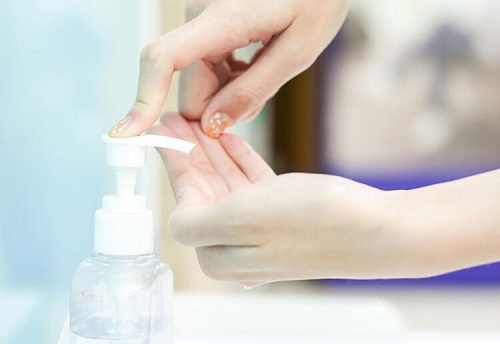
FORMULA 4
Chlorhexidine gel
Rp.
Chlorhexidine gluconate solution BP 2.5 ml
Tragacanth 2.5 g
Glycerin 25 ml
Freshly boiled and cooled distilled water ad 100 g
Preparation of the formula:Tragacanth is mixed with glycerin and most of the distilled water is added. The mixture is heated to boiling point and then cooled. Chlorhexidine gluconate solution is added and made up to 100 g with water and mixed.Source:Australian Pharmaceutical Formulary and Handbook (APF)FORMULA 5A concentrated antiseptic-disinfectant solution prepared to be diluted and used according to the intended purpose.Rp.
Cetrimide 15% w/v
Chlorhexidine gluconate 1.5% w/v
Ethanol (96%) q.s. 100 gCetrimide (Cetavlon), which is strongly effective against Gram-positive bacteria and possesses intrinsic detergent properties, has been combined with Chlorhexidine Gluconate, effective against Gram-positive and Gram-negative bacteria, thereby producing a multi-purpose antiseptic solution with high bactericidal activity and a broad spectrum.
The concentrated solution is a cleansing solution used for general antiseptic purposes in hospitals and homes. It is used diluted according to the intended purpose for wounds and burns, as well as the disinfection of items and instruments.
The product must not be swallowed; it should be applied to the skin.
Dark stains may form if laundry that has come into contact with the concentrated solution is washed with bleach.
Diluted concentrated solutions should be used within a maximum of 7 days.
Where a potent disinfectant action is required;
1/30 aqueous solution
35 ml of Concentrated solution is made up to 1 L with water before use.Source:
RxMediaPharma®2020 Interactive Drug Information Source
Wishing you a good week…
Specialist Pharm. Ahmet Nezihi Pekcan
Pekcan Pharmacy – Konya
[email protected]
Tel: (332) 3520657
http://www.majistralformul.com/