History of Asepsis and Antisepsis, and Lugol’s Solution
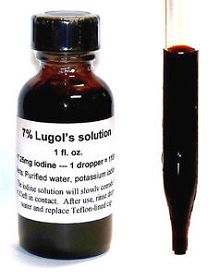
Dear Colleagues; Antisepsis refers to all the ways and methods of destroying microorganisms using chemical agents, heat, etc. Together, we will examine this formulation, known as Lugol’s solution containing acetic acid, which is prescribed in France.
Taking a brief look at the history of asepsis and antisepsis;
Asepsis is the complete elimination or destruction of disease-causing microorganisms (such as pathogenic bacteria, viruses, pathogenic fungi, and parasites) from an environment. The term asepsis is generally applied to the surgical field, instruments used, or pharmaceutical products. An environment, instrument, or medication subjected to asepsis is sterile. Achieving this on a patient (on their skin or at the surgical site) without harming the patient is not possible. Therefore, reducing microorganisms to a level that prevents infection in the patient is called antisepsis. Thus, the goal in antisepsis is not the eradication of all microorganisms, but the prevention of infection (for example, wound infection).
In subsequent years, it was realized how premature the celebration over the discovery of anesthesia had been. Infection and sepsis stood as the second major obstacle facing surgery.
The modern concept of asepsis-antisepsis developed in the 19th century. Ignaz Philipp Semmelweis (1818-1865, Hungarian Obstetrician) demonstrated that handwashing before delivery reduced puerperal fever. However, because he could not provide a theoretical explanation for this, his colleagues fiercely opposed him. He would stand guard at the door of the delivery room to ensure his assistants washed their hands after performing autopsies; as a result, he was branded as mad and dismissed from the Vienna General Hospital where he worked.
Semmelweis’s practice gained widespread acceptance approximately thirty years after his death, alongside the germ theory of Louis Pasteur (1822-1895). Around that time, the British surgeon Joseph Lister (1827-1912) was investigating wound infections at the University of Glasgow. Lister was aware of the publications and studies by French microbiologist Louis Pasteur on fermentation experiments. Pasteur stated that wherever fermentation and putrefaction occurred, microscopic organisms were present, and their quantity was directly proportional to the intensity of fermentation or decay. Furthermore, boiling the fermenting substance arrested the growth of these organisms. Additionally, Lister knew that in England, the odor of decomposition in fields irrigated with sewage was neutralized using carbolic acid (derived from coal tar). Seeing no adverse effects on animals grazing in fields treated with carbolic acid, he concluded that carbolic acid was safe. Thereafter, he began dressing wounds with gauze soaked in carbolic acid. Suppuration in wounds ceased, and healthy granulation tissue rapidly formed. Lister did not stop there; he began washing his hands and surgical instruments with carbolic acid, cleansing the skin of the surgical site with carbolic acid, leaving the incision open while covering the surrounding area with cloths soaked in carbolic acid. He even devised machines to spray carbolic acid over the surgical field. Later, he began using catgut soaked in carbolic acid.
In the town of Wollstein, in a makeshift laboratory converted from a chicken coop, Robert Koch (1843-1910), an initially unknown German physician, discovered the microbes that Pasteur had theorized and upon whose theories Lister had built his work. Koch had also been called upon to deal with thousands of sheep dying from an unknown illness. All that was known was that the spleens of the dead sheep turned black. Although Pollender had previously noted small rod-shaped bodies (bacilli) in the blood of deceased sheep (1855), and the Frenchman Davaine had shown that inoculating this blood into other sheep transmitted the disease (1863), no one had taken them seriously. Koch succeeded in culturing these rods in the aqueous humor of healthy cattle eyes. However, he did not even have a single sheep to experiment on. Therefore, he purchased mice and inoculated the rods into a wound on their tails. The mouse died the following day. At autopsy, the spleen was black, and under the microscope, he saw it teeming with rods. Koch had discovered the bacterium that causes anthrax. Subsequently, Koch developed various staining techniques and photographed microbes under the microscope. Following his papers on the anthrax bacillus and ‘Investigations into the Etiology of Traumatic Infective Diseases,’ he received the acclaim he deserved and was appointed as director at the Imperial Health Office in Berlin. During his work there, Koch discovered the tubercle bacillus (1882) and the cholera bacillus (1883).
Ernst von Bergmann (1836 – 1907, German surgeon) was a pioneer of aseptic surgery. Not only was he a strict adherent of Lister’s method, but he also banned the black coats worn to conceal dirt and blood. Instead, his surgical team and nurses were required to wear clean, white, freshly laundered gowns. Bergmann was the first physician to significantly reduce surgical site infections by sterilizing surgical instruments with heat. He used steam-sterilized dressing materials and demonstrated its superiority over chemical antisepsis.
Following these developments, it was discovered that airborne bacteria were very unlikely to cause wound infections. Thereafter, the use of carbolic acid spray in operating rooms was discontinued. Because carbolic acid sometimes failed to ensure complete sterilization of instruments (especially dirty ones), could not reliably destroy bacterial spores, and caused lesions on the hands, alternative solutions were sought. Ernst von Bergmann’s assistant, Curt Theodor Schimmelbusch (1860 – 1895, German physician and pathologist), put into practice the use of hot steam—which had been shown in Robert Koch’s experiments to be more effective than chemical agents—and invented steam sterilization (autoclave). This was a remarkable breakthrough because dressing materials and instruments could be sterilized in 20-30 minutes. Since wooden-handled surgical instruments could not withstand steam, instruments began to be manufactured entirely from metal.
Formula:
Rp.
Acide acetique 3,00 %
Solution de lugol qsp 500,00 ml
Substances in the formula:
Glacial Acetic Acid – Ethanoic Acid – Concentrated Acetic Acid – Essigsäure – Acétique Acide Glacial [FP]:
Glacial acetic acid exists as semi-transparent crystals or as a colorless liquid with a very pungent odor. Its boiling point is between 117-118°C. It is miscible with water, alcohol, methylene chloride, and glycerin. According to the USP, the pH of the irrigation solution is between 2.8-3.4; the pH of the otic solution, when diluted with an equal volume of water, should be between 2.0-4.0. Glacial acetic acid is primarily an agent with antibacterial or antifungal activity. Its dilute solutions are used in the treatment of superficial bacterial infections of the external ear. Glacial acetic acid is also used as an escharotic (caustic; corrosive) agent. Its diluted forms have been utilized in vaginal gels and douches, irrigation solutions, and skin and nail preparations as an antibacterial (particularly against Haemophilus sp. and Pseudomonas sp.), antifungal, and antiprotozoal agent. It also has expectorant, spermicidal, and astringent properties. It is also used against warts and calluses. It has been reported to be effective against jellyfish stings.
Iode – Jodum – Iodum – Iode T.K.:
Iodine occurs as easily friable flakes or small crystals with a sharp, pungent odor, metallic luster, and a violet-gray-purple or grayish-black color. Its solubilities according to the British Pharmacopoeia (BP): Soluble in alcohol and chloroform; slowly soluble in glycerol. Its solubilities according to the United States Pharmacopeia (USP): Soluble in water 1:3000, alcohol 1:13, glycerol 1:80; freely soluble in chloroform and ether; soluble in iodide solutions. It forms a caustic and irritating compound with acetone. Iodine exhibits potent bactericidal activity. It is active against fungi, viruses, protozoa, and spores. Iodine exerts a lethal effect even at low concentrations against all types of microorganisms, including viruses, and against spores. When applied to the skin, iodine is slowly absorbed. It should not be applied to edematous skin.
Iodeto de potassio – Iodure de potassium [FP] – Jodkalium – Kalii iodidum [IP3] – Potassium iodide [BP; INCI; P.Cx.79; USP]:
Potassium iodide occurs as colorless, odorless, transparent or slightly opaque crystals, or as a white granular powder. It is slightly hygroscopic. One gram of potassium iodide contains 6 mmol of potassium and 6 mmol of iodine. It dissolves in water 1:0.7, in boiling water 1:0.5, in alcohol 1:22, and in glycerol 1:2. Its aqueous solutions are neutral or show an alkaline reaction to litmus. Iodine dissolves readily in an aqueous solution of potassium iodide, forming a dark brown solution. Saturated potassium iodide oral solution (SSKI) contains 1 mg KI per milliliter (240 mL). Standard preparations are prepared in 240 mL bottles. One drop of SSKI solution contains 47 mg KI.
Potassium iodide (KI) is also beneficial in dermatological diseases; its efficacy against cutaneous and lymphocutaneous sporotrichosis has been established. In tropical regions, it is used in the treatment of entomophthoramycosis caused by Basidiobolus and Conidiobolus fungi. The drug is used off-label as a second-line agent for various inflammatory dermatoses such as erythema nodosum, subacute nodular migratory panniculitis, nodular vasculitis, erythema multiforme, and Sweet syndrome. Potassium iodide was officially approved by the FDA in 1939. Additionally, in the US, the FDA has approved certain potassium iodide tablets (e.g., Iostat™ and Thyro-block®) and oral potassium iodide solution (ThyroShield®) for exposure to radioactive iodine (e.g., nuclear power plant accidents or “dirty bombs” containing iodine-131). These products are distributed to individuals at high risk by government or public health authorities and have been approved for over-the-counter sale to the public.
Preparation of the formula:
Formula calculation for 500 ml.
Acetic acid 1.50 g/1.051 = 1.43 ml
Lugol 500-1.43 mL = 498.57 ml
Iodine 1.00 g x 498.57/100 = 4.985 g
Potassium Iodide 2.00 g x 498.57/100 = 9.97 g
Distilled water qsp 500 ml
Formula:
Acetic acid 1.50 g
Iodine 4.985 g
Potassium Iodide 9.97 g
Distilled water qsp 500.00 ml
Preparation:
Potassium iodide and iodine (previously weighed on a watch glass) are triturated in a glass mortar. A portion of 500 ml of distilled water is added gradually to the iodine mixture in the glass mortar to dissolve it. A small amount of distilled water is used to completely dissolve the remaining iodine and rinse the glass mortar. When all the iodine is dissolved, it is transferred into a bottle. Acetic acid is added and mixed. The formula is brought to 500 ml with water. The formula is used externally for antiseptic purposes.
Wishing you a good week…
Spec. Pharm. Ahmet Nezihi Pekcan
Pekcan Pharmacy – Konya
[email protected]
Tel: (332) 3520657
http://www.majistralformul.com/
References:
1- Cahiers du préparateur en pharmacie
Travaux pratiques de préparation et de conditionnement des médicaments
Jean-Marie FONTENEAU Philippe KLUSIEWICZ