Dear Colleagues; this week we cover glutaraldehyde, which is included in the Spanish National Formulary and used in the treatment of onychomycosis. Glutaraldehyde is a rapid-acting bactericidal disinfectant against Gram-positive and Gram-negative bacteria, and is also effective against Mycobacterium tuberculosis, certain fungi, and viruses including hepatitis B virus and HIV.
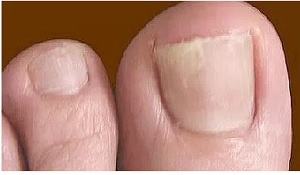
Nail fungus (onychomycosis) is a fungal infection, most often caused by Trichophyton rubrum or T. mentagrophytes, which leads to thickening, roughness, and brittleness in fingernails and toenails. It holds special importance due to its prevalence, chronicity, and the difficulty of treatment. Onychomycosis accounts for 20% of all nail diseases. It is generally seen in adults. Its prevalence in the community between the ages of 40-60 is 15-20%. It most commonly begins on toenails, especially the great toe. It usually develops following tinea pedis. Yellow-brown discoloration of the nail, subungual (under the nail) hyperkeratosis, and easy nail breakage are the main symptoms. The periungual area is normal. It is the most treatment-resistant superficial fungal infection. Systemic antifungals are used for 3-12 months. Filing diseased nails increases treatment efficacy.
Glutaral- Glutaric dialdehyde- Pentanedial- Glutaral concentrate [USP]- Glutaraldehyde [INN]- Glutaralum [INN]:
Glutaraldehyde is soluble in water and ethanol. The clear liquid is resistant to light, oxidizes upon contact with air, and polymerizes with heat. It is used commercially by preparing 25% aqueous solutions. It may cause contact dermatitis. While 2% solutions are used as antiseptics and 10% solutions as antiperspirants, 25% solutions are used for antifungal purposes and against warts.
Its effect against bacterial spores is slow. Aqueous solutions show optimum activity at a pH between 7.5 and 8.5; such solutions are chemically stable for 14 days. Glutaraldehyde solutions are more stable at lower pH levels. Endoscopic and dental instruments, rubber or plastic equipment, and other devices that cannot be heat-sterilized can be disinfected with a 2% aqueous solution buffered at approximately pH 8 (activated glutaral; alkaline glutaral). Glutaral is non-corrosive to most materials. Although complete immersion in the solution for 10 to 20 minutes is sufficient for rapid disinfection of thoroughly cleaned instruments, the exposure time must be increased up to 10 hours for sterilization.
A 10% solution is applied twice daily in the treatment of warts; a 5% solution and a 10% gel have also been used for this purpose. Glutaral should not be used for facial or anogenital warts. Although other agents are generally preferred, glutaral is also used topically in the treatment of hyperhidrosis of the palms and soles.
Glutaraldehyde solutions are included in the British, Chinese, and United States Pharmacopoeias. A solution is also listed in the United States National Formulary (USNF).
British Pharmacopoeia (BP 2012) (Strong Glutaraldehyde Solution): This solution contains 47-53% w/w glutaraldehyde. This solution should be stored at a room temperature not exceeding 150C.
United States Pharmacopeia (USP 35) (Glutaral Concentrate): This solution contains 50-52% w/w glutaraldehyde and the pH of the solution ranges between 3.7 and 4.5. It should be stored at a room temperature not exceeding 400C. It must be protected from light.
United States National Formulary (USNF 30) (Glutaral Disinfectant Solution): The pH of this solution ranges between 2.7 and 3.7. It should be stored in airtight containers at a temperature not exceeding 400C. It must be protected from light.
Boiling point: 187-1890C (101.308 kPa), 106-1080C (6.665 kPa), 71-720C (1.333 kPa) (Merck Index 11). Refractive index: n2D5 1.4338 (Merck Index 11)
Formula 1;
Solucion acuosa de Glutaraldehido al 10% 60 g
Tween 80 0.1%
It should be buffered at pH 7.8.
Preparation of the formula:
The 10% glutaraldehyde solution is mixed with Tween 80 using a glass stirring rod. While checking the pH, it is alkalinized to pH 7-8 with a few drops of sodium hydroxide.
It is applied twice daily for at least four weeks, depending on the severity of the onychomycosis.
It is very effective for all types of warts, especially recurrent vaginal papillomas and plantar warts.
Formula 2;
Sol. de glutaraldehido al 25% 50 g
Glutaraldehyde is generally available diluted in this concentration. Water was used as the solvent in the formula.
In the treatment of warts, prior preparation using a scalpel or urea cream (at 20-40%) will facilitate the treatment.
A single occlusive application per day causes small warts to disappear within 15 days and large warts in approximately three months. The skin surrounding the application site takes on a chestnut-brown color. The lesion must be tightly covered with gauze to prevent moisture caused by perspiration.
In cases of hyperhidrosis, 10% aqueous glutaraldehyde solutions are used. It is a better antiperspirant than formaldehyde, which has been abandoned due to hypersensitivity reactions. In addition, its ability to prevent sweat odor due to its antiviral properties and high bactericidal activity makes glutaraldehyde preferable in treatment.
Formula 3;
Effective formula for foot perspiration;
Glutaraldehido 10% 50 ml
Applied three times a week. It is advisable to buffer the solution with sodium bicarbonate at pH 7.5. Upon application, the colorless solution may temporarily cause a yellowish discoloration on the soles of the feet.
Formula 4;
Effective formula for hand perspiration;
Glutaraldehido 3% 25 ml
Applied three times a week to the palms. It may temporarily stain the palms yellow. Treatment should be applied regularly and continued until the hyperhidrosis is completely resolved.
References:
1-La Formulación Magistral en la Oficina de Farmacia, Valencia, 1981
2-RxMediaPharma®2018 Interactive Drug Information Source
Spec. Pharm. Ahmet Nezihi Pekcan
Pekcan Pharmacy – Konya
[email protected]
Tel: (332) 3520657
http://www.majistralformul.com/